
Comparison Teka TR 50.4 vs In-Sink-Erator Model 56
Add to comparison | 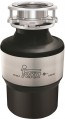 | 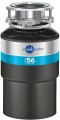 |
|---|---|---|
| Teka TR 50.4 | In-Sink-Erator Model 56 | |
from $151.72 up to $253.52 | from $208.96 up to $270.16 | |
| User reviews | ||
| TOP sellers | ||
Air switch included. A set of branch pipes and adapters for installation. Compact dimensions. Plastic camera. No overload protection. There is no reverse mechanism. | Easy installation. Air switch included. Low noise level. High reliability. There is no reverse mechanism. | |
| Power | 0.5 hp | 0.55 hp |
| Number of revolutions | 1430 rpm | 1425 rpm |
| Chamber capacity | 980 mL | 980 mL |
| Grinding stages | 1 | 1 |
| Chamber material | plastic | plastic |
| Auto-reverse |  |  |
| Overload protection | | |
| Dimensions (HxD) | 318x173 mm | 318x173 mm |
| Weight | 7 kg | 7.2 kg |
| Manufacturer's warranty | 1 year | 3 years |
| Added to E-Catalog | april 2016 | november 2015 |


Compare Teka TR 50.4 and In-Sink-Erator Model 56
You may be interested in
My comparisons
Teka TR 50.4 often compared


In-Sink-Erator Model 56 often compared


Glossary
Power
This refers to the electric motor power of the waste disposal unit, which determines its efficiency and ability to handle large volumes of waste and solid particles. Higher power means faster processing, but it also leads to increased energy consumption and cost. Therefore, it is important to consider specific usage conditions when selecting a grinder based on its power. So, for small volumes and relatively soft waste, engines up to 0.5 hp are enough, and for more serious tasks, more powerful units are already desirable.
The power consumption and the power of the motor are related, and the formula to convert between them is 1 hp = 735 W. The power ratio is important in determining the energy efficiency of the waste disposal unit, and a larger difference between these values indicates lower efficiency and greater energy waste. However, some manufacturers may provide the peak power of the engine instead of the nominal power, which is not a reliable indicator of efficiency since the waste disposal unit can only operate in this mode for a short period. It is important to consider these factors when choosing a device based on power consumption and efficiency.
The power consumption and the power of the motor are related, and the formula to convert between them is 1 hp = 735 W. The power ratio is important in determining the energy efficiency of the waste disposal unit, and a larger difference between these values indicates lower efficiency and greater energy waste. However, some manufacturers may provide the peak power of the engine instead of the nominal power, which is not a reliable indicator of efficiency since the waste disposal unit can only operate in this mode for a short period. It is important to consider these factors when choosing a device based on power consumption and efficiency.
Number of revolutions
The motor shaft's nominal speed is a crucial factor in the operation of the waste disposal unit, as it determines the speed of processing. Models with higher nominal speeds can process waste faster than those with lower speeds, provided that their power and other features are equal. However, high speed can also lead to increased noise levels and a reduced ability to handle solid particles.
Auto-reverse
Waste disposal units often include an auto-reverse function, which automatically changes the direction of the working tool's rotation. This periodic change is believed to enhance processing quality, accelerate the process, and prevent jamming of the device.
Overload protection
Protective system is installed in waste disposal units to prevent damage when the load on the tool becomes critical, such as when hard or large waste gets stuck. Typically, the protection system shuts off the power to the motor, allowing the user to address the issue and resume work. However, in more powerful models, the system may boost the motor's power for a brief period as an initial measure. If the problem persists, the unit will shut down to prevent damage.