
Comparison Svityaz SA-245 vs Stal MMA-245
Add to comparison | 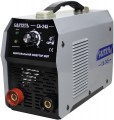 | 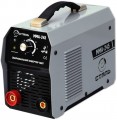 |
|---|---|---|
| Svityaz SA-245 | Stal MMA-245 | |
from $51.96 up to $84.28 | from $50.97 up to $77.64 | |
| TOP sellers | ||
Case included | ||
| Type | inverter | inverter |
| Welding type | MMA | MMA |
Specs | ||
| Welding current | DC | DC |
| Input voltage | 230 В | 230 В |
| Power consumption | 5.5 kW | |
| Power consumption | 5.5 kVA | |
| Open circuit voltage | 75 В | 68 В |
| Min. welding current | 20 А | 20 А |
| Max. welding current | 245 А | 245 А |
| Duty cycle | 60 % | 60 % |
| Max. electrode size | 5 mm | 5 mm |
| More features | Hot Start Anti-Stick | Hot Start Anti-Stick |
General | ||
| Protection class (IP) | 21 | 21 |
| Insulation class | H | H |
| In box | case (bag) | |
| Dimensions (HxWxD) | 200x180x340 mm | |
| Weight | 4 kg | 4 kg |
| Added to E-Catalog | june 2016 | june 2016 |


Compare Svityaz SA-245 and Stal MMA-245
You may be interested in
Svityaz SA-245 often compared


Stal MMA-245 often compared


Glossary
Power consumption
The maximum power consumed by the welding machine during operation, expressed in kilowatts (kW), that is, thousands of watts. In addition, the designation in kilovolt-amperes (kVA) can be used, see below for it.
The higher the power consumption, the more powerful the current the device is capable of delivering and the better it is suitable for working with thick parts. For different materials of different thicknesses, there are recommendations for current strength, they can be clarified in specialized sources. Knowing these recommendations and the open circuit voltage (see below) for the selected type of welding, it is possible to calculate the minimum required power of the welding machine using special formulas. It is also worth considering that high power creates corresponding loads on the wiring and may require connection directly to the shield.
As for the difference between watts and volt-amperes, the physical meaning of both units is the same — current times voltage. However, they represent different parameters. In volt-amperes, the total power consumption is indicated — both active (going to do work and heat individual parts) and reactive (going to losses in coils and capacitors). This value is more convenient to use to calculate the load on the power grid. In watts, only active power is recorded; according to these numbers, it is convenient to calculate the practical capabilities of the welding machine.
The higher the power consumption, the more powerful the current the device is capable of delivering and the better it is suitable for working with thick parts. For different materials of different thicknesses, there are recommendations for current strength, they can be clarified in specialized sources. Knowing these recommendations and the open circuit voltage (see below) for the selected type of welding, it is possible to calculate the minimum required power of the welding machine using special formulas. It is also worth considering that high power creates corresponding loads on the wiring and may require connection directly to the shield.
As for the difference between watts and volt-amperes, the physical meaning of both units is the same — current times voltage. However, they represent different parameters. In volt-amperes, the total power consumption is indicated — both active (going to do work and heat individual parts) and reactive (going to losses in coils and capacitors). This value is more convenient to use to calculate the load on the power grid. In watts, only active power is recorded; according to these numbers, it is convenient to calculate the practical capabilities of the welding machine.
Power consumption
Power consumption of the welding machine, expressed in kilovolt-amperes.
kVA is a unit of power used in welding machines along with the more traditional kilowatts. The physical meaning of both units is the same — current multiplied by voltage; however, they denote different parameters. So, in kilowatts, only a part of the total power consumption is recorded — active power (goes to do work and to losses due to heating of individual parts); according to this indicator it is convenient to calculate the practical capabilities of the device. And kilovolt-amperes denote the total energy consumption — it also takes into account reactive power (it goes to losses in coils and capacitors during the operation of alternating current circuits). This data is useful for calculating the total load on the network or other power source.
The apparent power input in kVA will always be greater than the power in kW. However, some manufacturers go to the trick and indicate full power not at full, but at partial (for example, half) load. This gives the impression of efficiency, but is incorrect from a technical point of view. As for the ratio of energy consumption, the active power in kW is often 20-30% lower than the apparent power in kVA. So, in terms of kilovolt-amperes, it is quite possible to evaluate the performance of the unit.
As for specific values, in the most modest models they do not exceed 3 kVA. An indicator up to 5 kVA...is considered low, up to 7 kVA — average, and in the most powerful units, the power consumption can reach 10 kVA or even more.
kVA is a unit of power used in welding machines along with the more traditional kilowatts. The physical meaning of both units is the same — current multiplied by voltage; however, they denote different parameters. So, in kilowatts, only a part of the total power consumption is recorded — active power (goes to do work and to losses due to heating of individual parts); according to this indicator it is convenient to calculate the practical capabilities of the device. And kilovolt-amperes denote the total energy consumption — it also takes into account reactive power (it goes to losses in coils and capacitors during the operation of alternating current circuits). This data is useful for calculating the total load on the network or other power source.
The apparent power input in kVA will always be greater than the power in kW. However, some manufacturers go to the trick and indicate full power not at full, but at partial (for example, half) load. This gives the impression of efficiency, but is incorrect from a technical point of view. As for the ratio of energy consumption, the active power in kW is often 20-30% lower than the apparent power in kVA. So, in terms of kilovolt-amperes, it is quite possible to evaluate the performance of the unit.
As for specific values, in the most modest models they do not exceed 3 kVA. An indicator up to 5 kVA...is considered low, up to 7 kVA — average, and in the most powerful units, the power consumption can reach 10 kVA or even more.
Open circuit voltage
The voltage supplied by the welding machine to the electrodes. As the name suggests, it is measured without load — i.e. when the electrodes are disconnected and no current flows between them. This is due to the fact that at a high current strength characteristic of electric welding, the actual voltage on the electrodes drops sharply, and this does not make it possible to adequately assess the characteristics of the welding machine.
Depending on the characteristics of the machine (see "Type") and the type of work (see "Type of welding"), different open circuit voltages are used. For example, for welding transformers, this parameter is about 45 – 55 V (although there are higher voltage models), for inverters it can reach 90 V, and for semi-automatic MIG / MAG welding, voltages above 40 V are usually not required. Also, the optimal values \u200b\u200bdepend on type of electrodes used. You can find more detailed information in special sources; here we note that the higher the open-circuit voltage, the easier it is usually to strike the arc and the more stable the discharge itself.
Also note that for devices with the VRD function (see "Advanced"), this parameter indicates the standard voltage, without reduction through VRD.
Depending on the characteristics of the machine (see "Type") and the type of work (see "Type of welding"), different open circuit voltages are used. For example, for welding transformers, this parameter is about 45 – 55 V (although there are higher voltage models), for inverters it can reach 90 V, and for semi-automatic MIG / MAG welding, voltages above 40 V are usually not required. Also, the optimal values \u200b\u200bdepend on type of electrodes used. You can find more detailed information in special sources; here we note that the higher the open-circuit voltage, the easier it is usually to strike the arc and the more stable the discharge itself.
Also note that for devices with the VRD function (see "Advanced"), this parameter indicates the standard voltage, without reduction through VRD.
In box
— Shield mask. A basic personal protective equipment intended to protect eyes and face from sparks, ultraviolet and infrared radiation during welding. These shields are usually simple in design, made of heat-resistant plastic, and equipped with a darkened viewing window. They are commonly included with affordable welding machines and are designed for beginner-level use, providing basic safety for short-term work.
— Brush-hammer. A combined tool intended for removing scale, slag, and contaminants from the surface after welding. One side is used as a toothed or steel brush for cleaning, while the other serves as a hammer with a pointed end for chipping off hard slag. This accessory is often included in budget machine kits, providing a basic set for subsequent treatment of the weld seam.
— Case (bag). Cases are characteristic hard containers in the form of a suitcase; such containers provide excellent protection against moisture, dirt, and impacts. Bags, on the other hand, are made soft; they offer less protection than cases but are less bulky and can be folded compactly when not in use. In any case, the included packaging is usually more convenient and practical than improvised packaging.
It is also worth noting that power cables are almost always included in the kit. However, some models are not equipped with such cables..., as will be stated for the respective models. Obviously, this configuration does not allow the device to be used 'out of the box' — power cords will need to be purchased separately. On the other hand, the user can choose the brand and length of the cables at their discretion, not relying on the manufacturer’s choice — including using cords that are already 'in the household' (for instance, those left from an old broken device).
— Brush-hammer. A combined tool intended for removing scale, slag, and contaminants from the surface after welding. One side is used as a toothed or steel brush for cleaning, while the other serves as a hammer with a pointed end for chipping off hard slag. This accessory is often included in budget machine kits, providing a basic set for subsequent treatment of the weld seam.
— Case (bag). Cases are characteristic hard containers in the form of a suitcase; such containers provide excellent protection against moisture, dirt, and impacts. Bags, on the other hand, are made soft; they offer less protection than cases but are less bulky and can be folded compactly when not in use. In any case, the included packaging is usually more convenient and practical than improvised packaging.
It is also worth noting that power cables are almost always included in the kit. However, some models are not equipped with such cables..., as will be stated for the respective models. Obviously, this configuration does not allow the device to be used 'out of the box' — power cords will need to be purchased separately. On the other hand, the user can choose the brand and length of the cables at their discretion, not relying on the manufacturer’s choice — including using cords that are already 'in the household' (for instance, those left from an old broken device).