
Comparison Janome 5500 vs Janome 2055
Add to comparison | 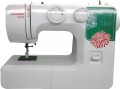 | 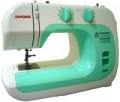 |
|---|---|---|
| Janome 5500 | Janome 2055 | |
from $88.40 up to $96.51 | from $153.36 up to $193.00 | |
| User reviews | ||
| TOP sellers | ||
| Type of sewing machine | electromechanical | electromechanical |
| Shuttle | oscillating | oscillating |
| Loop formation | semi-automatic | semi-automatic |
Technical specs | ||
| Number of stitches | 14 | 17 |
| Number of loops | 1 | 1 |
| Max. stitch length | 4 mm | 4 mm |
| Max. stitch width | 5 mm | 5 mm |
| Max. presser foot height | 6 mm | 11 mm |
| Sewing speed | 600 st/min | |
Features | ||
| Features | reverse stitching free arm twin needle sewing | reverse stitching free arm twin needle sewing |
Adjustment options | ||
| Adjustments | thread tension disabling differential bottom feed | thread tension disabling differential bottom feed |
Included presser feet | ||
| Presser foots | universal foot zipper foot blind hem foot | universal foot zipper foot blind hem foot |
More specs | ||
| Power source | power through mount | power through mount |
| Power consumption | 85 W | 85 W |
| Cover | cloth | |
| Dimensions (WxHxD) | 40x29x16 cm | |
| Weight | 5.8 kg | 5.9 kg |
| Added to E-Catalog | january 2013 | september 2011 |


Compare Janome 5500 and 2055
You may be interested in
My comparisons
Janome 5500 often compared


Janome 2055 often compared

Glossary
Number of stitches
The number of stitches that a sewing machine can sew. The larger this number, the more extensive the capabilities of this model, the wider the choice the user has; however, it wouldn’t hurt to clarify the specific range of supported stitches separately.
The fewest options - mostly up to 25 - are provided in electromechanical machines, as well as specialized devices such as overlockers and carpet lockers (see “Type”). In computer-controlled devices, the number of lines can be in the dozens, and some also allow you to download additional options from the computer.
The fewest options - mostly up to 25 - are provided in electromechanical machines, as well as specialized devices such as overlockers and carpet lockers (see “Type”). In computer-controlled devices, the number of lines can be in the dozens, and some also allow you to download additional options from the computer.
Max. presser foot height
Distance from the working surface to the foot in the uppermost position. Must be taken into account when working with thick fabrics.
Sewing speed
The maximum sewing speed provided by the sewing machine. In the vast majority of models, this parameter can be adjusted, so if necessary, you can sew at a lower speed.
The more stitches a machine makes per minute, the higher its productivity, the better suited it is for large volumes of work. At the same time, it is worth considering that high speed has a corresponding impact on price and energy consumption, and it is not always required. Detailed recommendations on choosing the optimal speed for certain types of work can be found in special sources.
The more stitches a machine makes per minute, the higher its productivity, the better suited it is for large volumes of work. At the same time, it is worth considering that high speed has a corresponding impact on price and energy consumption, and it is not always required. Detailed recommendations on choosing the optimal speed for certain types of work can be found in special sources.
Cover
The type of cover supplied with the sewing machine.
- Soft. A soft fabric cover protects the machine mainly from dust and dirt and provides almost no protection from bumps and collisions. At the same time, having removed such a cover for the duration of work, it can be folded compactly.
- Hard. A cover in the form of a hard cover put on from above or a case in which the machine fits. Such a cover is rather bulky, it cannot be folded like a soft one; on the other hand, it protects the machine well both from dirt and from collisions and contact with solid objects.
- Soft. A soft fabric cover protects the machine mainly from dust and dirt and provides almost no protection from bumps and collisions. At the same time, having removed such a cover for the duration of work, it can be folded compactly.
- Hard. A cover in the form of a hard cover put on from above or a case in which the machine fits. Such a cover is rather bulky, it cannot be folded like a soft one; on the other hand, it protects the machine well both from dirt and from collisions and contact with solid objects.