
Comparison Acer VL7860 vs Optoma UHZ65
Add to comparison | 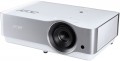 | 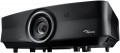 |
|---|---|---|
| Acer VL7860 | Optoma UHZ65 | |
| Outdated Product | from $3,499.00 | |
| TOP sellers | ||
Support for HDR technology | ||
| Main function | home | home |
Lamp and image | ||
| Lamp type | Laser-LED | Laser-LED |
| Service life | 20000 h | 20000 h |
| Service life (energy-saving) | 30000 h | |
| Brightness | 3000 lm | 3000 lm |
| Dynamic contrast | 1 500 000:1 | 2 000 000:1 |
| Colour rendering | 1.07 billion colours | |
| Horizontal frequency | 15 – 135 kHz | 31 – 135 kHz |
| Frame rate | 24 – 120 Hz | 24 – 120 Hz |
Projection system | ||
| Technology | DLP | DLP |
| Real resolution | 3840x2160 px | 3840x2160 px |
| Image format support | 4:3, 16:9 | 4:3, 16:9 |
| HDR support | + | |
Projecting | ||
| Rear projection |  | |
| Throw distance, min | 1 m | 1.3 m |
| Throw distance, max | 9.3 m | 9.3 m |
| Image size | 20 – 300 " | 30 – 300 " |
| Throw ratio | 1.39:1 – 2.22:1 | 1.39:1 – 2.22:1 |
| Optical zoom | 1.6 x | 1.6 x |
| Zoom and focus | manual | manual |
| Lens shift | | |
| Keystone correction (vert), ± | 15 ° | |
Features | ||
| Features | MHL support | MHL support PJ-Link protocol active 3D |
| Wi-Fi | Wi-Fi ready | |
Hardware | ||
| USB-A 2.0 | 2 pcs | 2 pcs |
| Number of speakers | 2 | 2 |
| Sound power | 10 W | 8 W |
| Video connectors | VGA | VGA |
| HDMI inputs | 2 | 2 |
| HDMI version | v 2.0 | v 2.0 |
| Audio connectors | 3.5 mm input (mini-Jack) 3.5 mm output (mini-Jack) | 3.5 mm input (mini-Jack) 3.5 mm output (mini-Jack) optical |
| Service connectors | COM port (RS-232) LAN (RJ-45) | COM port (RS-232) LAN (RJ-45) |
General | ||
| Noise level (nominal) | 30 dB | 31 dB |
| Noise level (energy-saving / quiet) | 26 dB | 29 dB |
| Power source | mains | mains |
| Power consumption | 305 W | |
| Size (HxWxD) | 157x458x289 mm | 498x331x141 mm |
| Weight | 8.5 kg | 9.5 kg |
| Color | ||
| Added to E-Catalog | may 2018 | april 2018 |


Compare Acer VL7860 and Optoma UHZ65
The Acer VL7860 and Optoma UHZ65 projectors are designed for home theater and both use laser-LED technology with a lamp life of up to 20,000 hours. However, the UHZ65 stands out with a higher dynamic contrast ratio of 2,000,000:1 compared to 1,500,000:1 for the VL7860, which can provide deeper blacks and vibrant colors. Both projectors have a brightness of 3000 lm and support a resolution of 3840x2160 pixels. The UHZ65 also supports HDR and active 3D, which may be an advantage for movie enthusiasts. In terms of projection, the VL7860 has a minimum projection distance of 1 m, while the UHZ65 requires 1.3 m, but both can project images up to 300 inches. The noise level is 30 dB for the VL7860 and 31 dB for the UHZ65, making them quite quiet. Overall, the choice between them may depend on preferences for contrast and additional features, such as HDR and 3D support.
You may be interested in
Glossary
Service life (energy-saving)
When working in economy mode, the brightness of the backlight is noticeably reduced, on average by 30-50%. With a decrease in brightness, heat dissipation also decreases, which saves the working life of the illuminator, thereby increasing the lamp life. Thus, the ECO mode allows you to extend the lamp life by an average of 30%. If the typical projector lamp life is 4000 hours, regular use of the ECO mode will extend the backlight life to approximately 5500 hours.
Dynamic contrast
The dynamic image contrast provided by the projector.
Dynamic contrast ratio is the ratio between the brightest white and darkest black colour that a projector can produce. Recall that the quality of colour reproduction and detailing depend on contrast, the higher this indicator, the lower the likelihood that details will be indistinguishable in bright or dark areas. However, dynamic contrast is a rather specific parameter. The fact is that when it is calculated, the brightest white at the maximum brightness settings and the darkest black at the minimum are taken into account. As a result, the figures in this column can be very impressive, but it is impossible to achieve such a contrast within one frame.
By introducing this parameter, the manufacturers went to a certain trick. However, this is not to say that dynamic contrast has nothing to do with image quality at all. Projectors can use automatic brightness control, in which the overall brightness, depending on the "picture" on the screen, can increase or decrease. This format of work is based on the fact that the human eye does not need too bright areas on a general dark background and very dark areas on a bright one, the image is normally perceived even without it. The maximum brightness difference achievable in this mode of operation is exactly what described by dynamic contrast.
Dynamic contrast ratio is the ratio between the brightest white and darkest black colour that a projector can produce. Recall that the quality of colour reproduction and detailing depend on contrast, the higher this indicator, the lower the likelihood that details will be indistinguishable in bright or dark areas. However, dynamic contrast is a rather specific parameter. The fact is that when it is calculated, the brightest white at the maximum brightness settings and the darkest black at the minimum are taken into account. As a result, the figures in this column can be very impressive, but it is impossible to achieve such a contrast within one frame.
By introducing this parameter, the manufacturers went to a certain trick. However, this is not to say that dynamic contrast has nothing to do with image quality at all. Projectors can use automatic brightness control, in which the overall brightness, depending on the "picture" on the screen, can increase or decrease. This format of work is based on the fact that the human eye does not need too bright areas on a general dark background and very dark areas on a bright one, the image is normally perceived even without it. The maximum brightness difference achievable in this mode of operation is exactly what described by dynamic contrast.
Colour rendering
The number of individual colour shades that the projector is capable of displaying.
The minimum indicator for modern projection technology is actually 16 million colours (more precisely, 16.7 million is a standard number associated with the features of digital image processing). In the most advanced models, this value can exceed 1 billion. However, two nuances should be taken into account here: firstly, the human eye is able to recognize only about 10 million colour shades, and secondly, not a single modern image output device (projectors, monitors, etc.) cannot cover the entire spectrum of colours visible to the human eye. Therefore, impressive colour performance is more of a marketing ploy than a real indicator of image quality, and in fact it makes sense to pay attention to other characteristics — primarily brightness and contrast (see above), as well as specific data like a colour gamut chart.
The minimum indicator for modern projection technology is actually 16 million colours (more precisely, 16.7 million is a standard number associated with the features of digital image processing). In the most advanced models, this value can exceed 1 billion. However, two nuances should be taken into account here: firstly, the human eye is able to recognize only about 10 million colour shades, and secondly, not a single modern image output device (projectors, monitors, etc.) cannot cover the entire spectrum of colours visible to the human eye. Therefore, impressive colour performance is more of a marketing ploy than a real indicator of image quality, and in fact it makes sense to pay attention to other characteristics — primarily brightness and contrast (see above), as well as specific data like a colour gamut chart.
Horizontal frequency
Horizontal frequency supported by the projector.
This parameter is relevant when working with analogue video signal. In such a video, the image is formed line by line: each pixel in the line is highlighted in turn, then the next line is highlighted, and so on. The horizontal frequency describes how many times per second the backlight beam runs from edge to edge of the screen. For normal playback, the projector must support the same refresh rate as the input signal was recorded. However, most models support a fairly wide range of frequencies, and there are no problems with support. Also note that if you are not a professional, then when choosing a projector, it is quite possible to focus on the frame rate (see below) — this parameter is simpler and more intuitive, and support for a certain frame rate automatically means support for the corresponding line rate.
This parameter is relevant when working with analogue video signal. In such a video, the image is formed line by line: each pixel in the line is highlighted in turn, then the next line is highlighted, and so on. The horizontal frequency describes how many times per second the backlight beam runs from edge to edge of the screen. For normal playback, the projector must support the same refresh rate as the input signal was recorded. However, most models support a fairly wide range of frequencies, and there are no problems with support. Also note that if you are not a professional, then when choosing a projector, it is quite possible to focus on the frame rate (see below) — this parameter is simpler and more intuitive, and support for a certain frame rate automatically means support for the corresponding line rate.
HDR support
Support for HDR technology — expanded dynamic range — by the projector.
This technology allows for extending the brightness range displayed within a single frame — in simpler terms, it enables displaying both very bright and very dark colors on screen simultaneously. This significantly improves color reproduction; furthermore, small details on very bright or very dark parts of the frame that would be invisible on a regular image remain visible. However, it's worth noting that all the advantages of HDR become noticeable only on a high-quality screen with maximum dimming. Additionally, this function significantly affects the cost of the projector, and the content being played back must initially be recorded in HDR — using exactly the technology supported by the projector (this detail can be clarified in the manual). In light of this, HDR support is mainly found among high-end models for home theaters. It should also be noted that there are several different HDR technologies that are not compatible with each other. Therefore, when purchasing a projector with this function, it's crucial to clarify which exact version of HDR it supports. The following are available:
— HDR10. Historically the first of the consumer HDR formats, less advanced than the options described below but extremely widespread. In particular, HDR10 is supported by virtually all streaming services that provide HDR content at all, and it's also standard for...Blu-ray discs. It allows for working with a color depth of 10 bits (hence the name). At the same time, devices with this format are compatible with HDR10+ content, although its quality will be limited by the capabilities of the original HDR10.
— HDR10+. An enhanced version of HDR10. With the same color depth (10 bits), it uses so-called dynamic metadata, which allows transmitting information about color depth not only for groups of several frames but also for individual frames. This leads to further improvement in color reproduction.
— Dolby Vision. An advanced standard used, for example, in professional filmmaking. It achieves a color depth of 12 bits, uses the aforementioned dynamic metadata, and also allows transmitting two image variants simultaneously in one video stream — HDR and regular (SDR). Dolby Vision is based on the same technology as HDR10, so in modern video equipment, this format is usually combined with HDR10 or HDR10+.
— HLG. An HDR format initially designed for TV broadcasting and live transmissions; hence, it is designed for "working without metadata" and is easier to transfer between different sources. Unlike HDR10, which uses static metadata, and particularly HDR10+ / Dolby Vision, which can dynamically adjust the picture frame by frame, HLG often provides a more universal and predictable HDR signal, although not as precisely tuned for a specific display. However, HLG has a strong point — excellent compatibility: the same stream can appear acceptable even on devices that are not fully HDR-capable, which is crucial for broadcast/satellite content. An example of use is viewing HDR broadcasts and TV content from a set-top box/tuner or streaming where HLG is encountered: the projector will correctly receive the signal and display the extended brightness range and more vibrant colors without manual tweaking of settings.
This technology allows for extending the brightness range displayed within a single frame — in simpler terms, it enables displaying both very bright and very dark colors on screen simultaneously. This significantly improves color reproduction; furthermore, small details on very bright or very dark parts of the frame that would be invisible on a regular image remain visible. However, it's worth noting that all the advantages of HDR become noticeable only on a high-quality screen with maximum dimming. Additionally, this function significantly affects the cost of the projector, and the content being played back must initially be recorded in HDR — using exactly the technology supported by the projector (this detail can be clarified in the manual). In light of this, HDR support is mainly found among high-end models for home theaters. It should also be noted that there are several different HDR technologies that are not compatible with each other. Therefore, when purchasing a projector with this function, it's crucial to clarify which exact version of HDR it supports. The following are available:
— HDR10. Historically the first of the consumer HDR formats, less advanced than the options described below but extremely widespread. In particular, HDR10 is supported by virtually all streaming services that provide HDR content at all, and it's also standard for...Blu-ray discs. It allows for working with a color depth of 10 bits (hence the name). At the same time, devices with this format are compatible with HDR10+ content, although its quality will be limited by the capabilities of the original HDR10.
— HDR10+. An enhanced version of HDR10. With the same color depth (10 bits), it uses so-called dynamic metadata, which allows transmitting information about color depth not only for groups of several frames but also for individual frames. This leads to further improvement in color reproduction.
— Dolby Vision. An advanced standard used, for example, in professional filmmaking. It achieves a color depth of 12 bits, uses the aforementioned dynamic metadata, and also allows transmitting two image variants simultaneously in one video stream — HDR and regular (SDR). Dolby Vision is based on the same technology as HDR10, so in modern video equipment, this format is usually combined with HDR10 or HDR10+.
— HLG. An HDR format initially designed for TV broadcasting and live transmissions; hence, it is designed for "working without metadata" and is easier to transfer between different sources. Unlike HDR10, which uses static metadata, and particularly HDR10+ / Dolby Vision, which can dynamically adjust the picture frame by frame, HLG often provides a more universal and predictable HDR signal, although not as precisely tuned for a specific display. However, HLG has a strong point — excellent compatibility: the same stream can appear acceptable even on devices that are not fully HDR-capable, which is crucial for broadcast/satellite content. An example of use is viewing HDR broadcasts and TV content from a set-top box/tuner or streaming where HLG is encountered: the projector will correctly receive the signal and display the extended brightness range and more vibrant colors without manual tweaking of settings.
Throw distance, min
The closest distance to the screen that the projector can be used on. Typically, this is the minimum distance at which the image from the projector remains in focus.
This parameter is especially important if the device is to be placed at a small distance from the screen (for example, in a cramped room). Some modern projectors are able to work normally at a distance of 10 – 20 cm. Also note that the throw distances are determined primarily by the lens, and if the initial range of these distances does not suit you, perhaps the situation can be solved by replacing the optics.
This parameter is especially important if the device is to be placed at a small distance from the screen (for example, in a cramped room). Some modern projectors are able to work normally at a distance of 10 – 20 cm. Also note that the throw distances are determined primarily by the lens, and if the initial range of these distances does not suit you, perhaps the situation can be solved by replacing the optics.
Image size
Size of the image projected by the projector. Usually, it is indicated as a range — from the smallest, at the minimum throw distance, to the largest, at the maximum. About throw distances, see above; here it is worth saying that the choice of diagonal size depends both on the distance between the screen and the audience, and on the format of the projector. For example, to watch a video, the best option is the situation when the distance from the viewer to the image corresponds to 3-4 diagonals, and a relatively large picture can be useful for working with presentations. More detailed recommendations for different situations can be found in special sources; here we only recall that the image must fit on the screen used with the projector.
Keystone correction (vert), ±
Vertical keystone correction allows you to align the image when the projection ray is shifted from the centre of the screen in a vertical plane. If the projector is suspended from the ceiling and shines from top to bottom, a vertical keystone occurs. And the function of vertical keystone correction allows you to align the picture.
In most cases, projectors can only correct vertical keystone. But the keystone can also be horizontal if the projection ray is offset from the centre of the screen in the horizontal plane. Advanced models are often equipped with an auto keystone correction feature (see the relevant paragraph). In this case, the keystone is aligned in a fully automatic mode, without user participation.
Features
— Light sensor. A sensor that detects the level of ambient light. Most commonly used to automatically adjust the brightness of the projector to suit current conditions. So, in a darkened room, high brightness is not needed, but in daylight, on the contrary, you cannot do without it. You can also adjust the operating mode manually, but it is more convenient when the projector does it automatically.
— DLNA support. DLNA technology is designed to connect home electronics into a single network and exchange content in real time. One of its advantages is that DLNA devices are guaranteed to be compatible with each other regardless of model and manufacturer. In a projector, this feature can be used, for example, to view a movie on a large screen from a computer hard drive, or to display an Internet broadcast on this screen that was originally opened on a tablet. DLNA works on the basis of a standard local network, with a connection via LAN (see "Management ports") or Wi-Fi (see below).
— MHL support. The projector has HDMI inputs that support the MHL standard. This standard is used to transfer video and audio from mobile gadgets (via microUSB) to external devices. Accordingly, this feature is useful for those who plan to connect smartphones and other portable equipment to the projector. At the same time, an MHL gadget connected t...o a compatible HDMI port can also be charged in the process. Note that you can also output the MHL signal to a regular HDMI port, but this will require an adapter, and the charging function will not be available.
— Picture-in-picture. Ability to play two channels simultaneously on one screen: main and additional (in a separate small window). The sound is played only for the main channel. This mode allows, for example, to skip a break in a football match and not be late for the second half. Note that for this function to work, images must come from different sources — for example, from two different tuners, or from a tuner and an external device (DVD player, media centre, etc.).
— PJ-Link protocol. The projector supports the PJ-Link protocol. This is a service standard designed to control projectors over local networks (usually LAN or HDBaseT, see "Management port"). All PJ-Link-enabled equipment (projectors, controllers) is fully interoperable regardless of brand and manufacturer, making it much easier to build networks of multiple projectors and replace individual components in such networks.
— 3D support. Support for 3D implies the ability to reproduce three-dimensional stereoscopic images. A 3D image can be based on various technologies. Traditionally, active (see the relevant paragraph), passive (see the relevant paragraph) and hybrid 3D technologies are distinguished. Special glasses are required to view the three-dimensional image. In the case of active 3D, special shutters are built into the glasses, which operate from an independent power source. For passive and hybrid 3D, regular 3D glasses without battery power are sufficient. — Active 3D. Active 3D technology is based on the principle of alternating flickering of the image. The flickering of the image on the screen is synchronized with the flickering of the lenses in the glasses, as a result, each eye receives a separate image, which makes the picture three-dimensional. The main advantage of active 3D is the ability to view images without reducing the original picture quality. You can look at the screen from any angle and from any position, while the image will still be three-dimensional. Among the shortcomings, there is the presence of some discomfort for the eyes, which occurs due to the regular flickering of lenses in glasses. Also, active 3D glasses may darken the original brightness of the image somewhat. Additionally, glasses of this type are very expensive. — Passive 3D. Passive 3D provides the display of a double image. Passive 3D glasses use special lenses that cut off the duplicate image in such a way that each eye sees only the image intended for it, which creates the illusion of a three-dimensional image. The main advantage of passive 3D is that it does not tyre the eyes, which is typical for active flickering 3D. Passive 3D glasses are inexpensive.
— Interactive pen. The projector supports interactive pen technology. This technology allows you to actually turn the projected image into an interactive whiteboard: with a pen, you can draw, write and make notes directly on the projected image, which is especially useful during presentations and educational events. It is worth taking into account that the pens themselves and additional equipment for their work may not be included in the set.
— Multimedia (air mouse remote). Air mouse remote are devices that have a gyroscope, which allows you not only to switch menu items with the “↑”, “↓” buttons, but to use the remote control as a mouse. By directing it to the screen, a cursor will appear that moves in the direction of the remote control. This makes management easier and faster.
— Voice control. The projector's support for voice control allows you to dictate certain commands through the remote control. However, voice control does not cover all functions and recognition accuracy may require re-entering the command. If you need a more extensive range of functions, then pay attention to the voice assistant.
— Voice assistant. For a long time now, device control has been shifting to voice commands. For this, certain interfaces and systems are used. The most popular are Amazon Alexa and Google Assistant. For "apple" devices, this is Apple Siri, but this technique is not presented in projectors. At the same time, unlike the voice control function, the voice assistant does not just turn on this or that function, mode, makes it louder, quieter, but allows you to perform certain operations in applications, whether it is to launch the desired clip on Youtube or display the weather in the browser.
— DLNA support. DLNA technology is designed to connect home electronics into a single network and exchange content in real time. One of its advantages is that DLNA devices are guaranteed to be compatible with each other regardless of model and manufacturer. In a projector, this feature can be used, for example, to view a movie on a large screen from a computer hard drive, or to display an Internet broadcast on this screen that was originally opened on a tablet. DLNA works on the basis of a standard local network, with a connection via LAN (see "Management ports") or Wi-Fi (see below).
— MHL support. The projector has HDMI inputs that support the MHL standard. This standard is used to transfer video and audio from mobile gadgets (via microUSB) to external devices. Accordingly, this feature is useful for those who plan to connect smartphones and other portable equipment to the projector. At the same time, an MHL gadget connected t...o a compatible HDMI port can also be charged in the process. Note that you can also output the MHL signal to a regular HDMI port, but this will require an adapter, and the charging function will not be available.
— Picture-in-picture. Ability to play two channels simultaneously on one screen: main and additional (in a separate small window). The sound is played only for the main channel. This mode allows, for example, to skip a break in a football match and not be late for the second half. Note that for this function to work, images must come from different sources — for example, from two different tuners, or from a tuner and an external device (DVD player, media centre, etc.).
— PJ-Link protocol. The projector supports the PJ-Link protocol. This is a service standard designed to control projectors over local networks (usually LAN or HDBaseT, see "Management port"). All PJ-Link-enabled equipment (projectors, controllers) is fully interoperable regardless of brand and manufacturer, making it much easier to build networks of multiple projectors and replace individual components in such networks.
— 3D support. Support for 3D implies the ability to reproduce three-dimensional stereoscopic images. A 3D image can be based on various technologies. Traditionally, active (see the relevant paragraph), passive (see the relevant paragraph) and hybrid 3D technologies are distinguished. Special glasses are required to view the three-dimensional image. In the case of active 3D, special shutters are built into the glasses, which operate from an independent power source. For passive and hybrid 3D, regular 3D glasses without battery power are sufficient. — Active 3D. Active 3D technology is based on the principle of alternating flickering of the image. The flickering of the image on the screen is synchronized with the flickering of the lenses in the glasses, as a result, each eye receives a separate image, which makes the picture three-dimensional. The main advantage of active 3D is the ability to view images without reducing the original picture quality. You can look at the screen from any angle and from any position, while the image will still be three-dimensional. Among the shortcomings, there is the presence of some discomfort for the eyes, which occurs due to the regular flickering of lenses in glasses. Also, active 3D glasses may darken the original brightness of the image somewhat. Additionally, glasses of this type are very expensive. — Passive 3D. Passive 3D provides the display of a double image. Passive 3D glasses use special lenses that cut off the duplicate image in such a way that each eye sees only the image intended for it, which creates the illusion of a three-dimensional image. The main advantage of passive 3D is that it does not tyre the eyes, which is typical for active flickering 3D. Passive 3D glasses are inexpensive.
— Interactive pen. The projector supports interactive pen technology. This technology allows you to actually turn the projected image into an interactive whiteboard: with a pen, you can draw, write and make notes directly on the projected image, which is especially useful during presentations and educational events. It is worth taking into account that the pens themselves and additional equipment for their work may not be included in the set.
— Multimedia (air mouse remote). Air mouse remote are devices that have a gyroscope, which allows you not only to switch menu items with the “↑”, “↓” buttons, but to use the remote control as a mouse. By directing it to the screen, a cursor will appear that moves in the direction of the remote control. This makes management easier and faster.
— Voice control. The projector's support for voice control allows you to dictate certain commands through the remote control. However, voice control does not cover all functions and recognition accuracy may require re-entering the command. If you need a more extensive range of functions, then pay attention to the voice assistant.
— Voice assistant. For a long time now, device control has been shifting to voice commands. For this, certain interfaces and systems are used. The most popular are Amazon Alexa and Google Assistant. For "apple" devices, this is Apple Siri, but this technique is not presented in projectors. At the same time, unlike the voice control function, the voice assistant does not just turn on this or that function, mode, makes it louder, quieter, but allows you to perform certain operations in applications, whether it is to launch the desired clip on Youtube or display the weather in the browser.