
Comparison Nacon Revolution Pro Controller 2 vs Razer Raiju
Add to comparison | 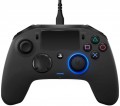 | 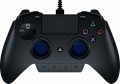 |
|---|---|---|
| Nacon Revolution Pro Controller 2 | Razer Raiju | |
| Outdated Product | from $13.99 | |
| TOP sellers | ||
Connecting to a gamepad via a USB Type-C connector. It is completed with additional small weights for change of weight. 3.5mm audio jack. | ||
| Product type | gamepad | gamepad |
Connection | ||
| Platform | PC (Windows) PlayStation 4 | PC (Windows) PlayStation 4 |
| Interface | wired | wired |
| Wired interface | USB-A | USB-A |
Control | ||
| Number of buttons | 15 pcs | 19 pcs |
| Feedback | vibration | vibration |
| D-pad | + | 4 position |
| Sticks | 2 asymmetrical | 2 both from below |
| Bumpers (shifts) | 2 pcs | 4 pcs |
| Triggers | 2 pcs | 2 pcs |
| Rear buttons | 4 pcs | 4 pcs |
| Touchpad |  | |
Features | ||
| Headphone output | |  |
| Detachable cable | | |
Power supply | ||
| Power source | USB port | USB port |
| Port on the device | USB-C | microUSB |
General | ||
| Material | plastic | plastic |
| Color | ||
| Added to E-Catalog | november 2017 | november 2016 |


Compare Nacon Revolution Pro Controller 2 and Razer Raiju
You may be interested in
My comparisons
Nacon Revolution Pro Controller 2 often compared

Razer Raiju often compared

Glossary
Number of buttons
The total number of buttons provided in the design of the manipulator.
The more buttons — the more additional features you can "tie" to the manipulator, the lower the likelihood that during the game you will have to turn to other controls (for example, a PC keyboard). However, many game consoles (see "Platform Compatibility") provide a certain minimum number of buttons for a compatible gamepad — a smaller number simply would not allow full use of all the functions of the console. For example, the original PlayStation 4 controller has 11 buttons.
Note that the D-Pad (see below) is not included in this calculation: it is considered a specific control, although it is based on buttons.
The more buttons — the more additional features you can "tie" to the manipulator, the lower the likelihood that during the game you will have to turn to other controls (for example, a PC keyboard). However, many game consoles (see "Platform Compatibility") provide a certain minimum number of buttons for a compatible gamepad — a smaller number simply would not allow full use of all the functions of the console. For example, the original PlayStation 4 controller has 11 buttons.
Note that the D-Pad (see below) is not included in this calculation: it is considered a specific control, although it is based on buttons.
D-pad
The presence of the D-Pad manipulator in the controller design; the type of such a manipulator can also be specified here.
D-Pad is used to move the character, cursor, etc. in strictly defined, standard directions. In some cases, this can be more convenient than using analogue levers that tilt to either side (see below). As for the varieties, nowadays there are such options:
— 4-position. The classic D-Pad, which appeared at the dawn of game consoles and does not lose popularity nowadays. Available as a set of 4 buttons in a distinctive cross-shaped layout, or as a single solid "multi-sided" button. Anyway, such a device provides 4 fixed directions: up, down, right, left. But to move diagonally, you need to select 2 corresponding directions at once; this is not always convenient, so in this regard, 4-way D-Pads are considered somewhat less practical than the 8-way ones described below. On the other hand, they are also quite functional, while being simpler in design, reliable and inexpensive; and strictly diagonal movements are not required as often as horizontal and vertical ones. So this type of D-Pads can be found even in accessories for the latest generations of game consoles.
— 8-position. A variation of the D-Pad, in which 4 standard directions (2 horizontal, 2 vertical) are supplemented by 4 intermediate — diagonal. In this case, we are usually talking about full-fledge...d fixed positions of the manipulator; in other words, to move diagonally, you need to click not on two standard directions, but on one intermediate one. The classic design of this type of D-Pad is a multi-sided button, which is the most suitable option in this case. However, this variety also includes some solutions for 4 separate buttons — provided that these buttons are placed very close, and pressing two at once with one finger is not difficult. Anyway, 8-position manipulators are somewhat more expensive, but more convenient than 4-position ones.
D-Pad is used to move the character, cursor, etc. in strictly defined, standard directions. In some cases, this can be more convenient than using analogue levers that tilt to either side (see below). As for the varieties, nowadays there are such options:
— 4-position. The classic D-Pad, which appeared at the dawn of game consoles and does not lose popularity nowadays. Available as a set of 4 buttons in a distinctive cross-shaped layout, or as a single solid "multi-sided" button. Anyway, such a device provides 4 fixed directions: up, down, right, left. But to move diagonally, you need to select 2 corresponding directions at once; this is not always convenient, so in this regard, 4-way D-Pads are considered somewhat less practical than the 8-way ones described below. On the other hand, they are also quite functional, while being simpler in design, reliable and inexpensive; and strictly diagonal movements are not required as often as horizontal and vertical ones. So this type of D-Pads can be found even in accessories for the latest generations of game consoles.
— 8-position. A variation of the D-Pad, in which 4 standard directions (2 horizontal, 2 vertical) are supplemented by 4 intermediate — diagonal. In this case, we are usually talking about full-fledge...d fixed positions of the manipulator; in other words, to move diagonally, you need to click not on two standard directions, but on one intermediate one. The classic design of this type of D-Pad is a multi-sided button, which is the most suitable option in this case. However, this variety also includes some solutions for 4 separate buttons — provided that these buttons are placed very close, and pressing two at once with one finger is not difficult. Anyway, 8-position manipulators are somewhat more expensive, but more convenient than 4-position ones.
Sticks
The number and location of analogue sticks provided in the design of the manipulator.
The analogue lever can be described as a "miniature joystick" — it is a protruding lever that can be deflected in any direction. Its purpose is generally similar to the D-Pad (see above), but the stick does not have fixed positions; this provides more "fine" control, which is very important in modern games. In addition, tilting it is often more convenient than pressing the D-Pad.
Separately, it is worth mentioning sticks on Hall sensors. The design of such levers is more reliable due to the absence of rubbing and contacting parts, and the position of the stick is determined by changes in the fluctuations of the magnetic field, which are monitored by appropriate sensors. Sticks on Hall sensors do not have “dead zones”, are devoid of the drift effect (misalignment), and wear out an order of magnitude slower. However, such solutions are not cheap.
This feature is most widely used in gamepads (see "Device type") — most of these controllers have at least one lever, models without sticks are already considered rare. In addition, such equipment, by definition, is installed in all arcade controllers; and analogue levers are also found in virtual reality weapons and motion controllers — it is very convenient to control the movement of the character through them.
...As for the location, it is indicated mainly for traditional design gamepads with a full set of controls, including 2 sticks. The most common options here are the left lever on top, the right one on the bottom ( like Xbox) or both levers on the bottom (like PlayStation). Much less common are devices where both analogue sticks are installed on top — this is, in particular, a regular gamepad for Wii U, as well as many models for mobile gadgets. And in some manipulators, a customizable (adjustable) arrangement of levers is provided: usually, the right stick in such models is fixed, and the left one can be installed from above or below, changing the format of the gamepad to suit your preferences.
The analogue lever can be described as a "miniature joystick" — it is a protruding lever that can be deflected in any direction. Its purpose is generally similar to the D-Pad (see above), but the stick does not have fixed positions; this provides more "fine" control, which is very important in modern games. In addition, tilting it is often more convenient than pressing the D-Pad.
Separately, it is worth mentioning sticks on Hall sensors. The design of such levers is more reliable due to the absence of rubbing and contacting parts, and the position of the stick is determined by changes in the fluctuations of the magnetic field, which are monitored by appropriate sensors. Sticks on Hall sensors do not have “dead zones”, are devoid of the drift effect (misalignment), and wear out an order of magnitude slower. However, such solutions are not cheap.
This feature is most widely used in gamepads (see "Device type") — most of these controllers have at least one lever, models without sticks are already considered rare. In addition, such equipment, by definition, is installed in all arcade controllers; and analogue levers are also found in virtual reality weapons and motion controllers — it is very convenient to control the movement of the character through them.
...As for the location, it is indicated mainly for traditional design gamepads with a full set of controls, including 2 sticks. The most common options here are the left lever on top, the right one on the bottom ( like Xbox) or both levers on the bottom (like PlayStation). Much less common are devices where both analogue sticks are installed on top — this is, in particular, a regular gamepad for Wii U, as well as many models for mobile gadgets. And in some manipulators, a customizable (adjustable) arrangement of levers is provided: usually, the right stick in such models is fixed, and the left one can be installed from above or below, changing the format of the gamepad to suit your preferences.
Bumpers (shifts)
Bumpers or Shifts are buttons located on the top of gaming controllers. They are intended for assigning various actions in games, and are also used for user interaction with menu interfaces and applications on gaming consoles or computers.
Such control elements are characteristic of gamepads (see "Type") and are rarely found in other types of gaming controllers. Shifts are usually pressed with the index fingers while holding the gamepad. Often, bumper buttons can perform different functions depending on the game (for example, switching weapons, running mode, etc.), and they are also used for navigating between sections of the user interface. In any case, bumpers provide additional control options for the player.
Such control elements are characteristic of gamepads (see "Type") and are rarely found in other types of gaming controllers. Shifts are usually pressed with the index fingers while holding the gamepad. Often, bumper buttons can perform different functions depending on the game (for example, switching weapons, running mode, etc.), and they are also used for navigating between sections of the user interface. In any case, bumpers provide additional control options for the player.
Headphone output
The presence of a headphone output in the design of the manipulator.
The purpose of this connector is obvious from the name: it allows you to connect wired headphones or a headset directly to the controller. This is especially convenient in light of the fact that the controller is in the hands of the user, while the gaming device itself (PC, console) can be located at a very significant distance. Also note that this function is very popular in wireless models (see “Connection”), which makes it even more convenient when working with headphones / headsets.
The purpose of this connector is obvious from the name: it allows you to connect wired headphones or a headset directly to the controller. This is especially convenient in light of the fact that the controller is in the hands of the user, while the gaming device itself (PC, console) can be located at a very significant distance. Also note that this function is very popular in wireless models (see “Connection”), which makes it even more convenient when working with headphones / headsets.
Port on the device
The connector on the device's body for connecting a removable cable; it is found in both wired models and wireless models with a battery, where this port is used for charging the device and, if necessary, for operating "wired" without delays.
— microUSB. One of the miniature versions of the USB connector, still popular in gadgets despite the emergence of the more advanced USB-C. It has relatively modest capabilities (in particular, it is inferior to USB-C in terms of maximum possible charging power), but this point rarely proves critical. Meanwhile, there is a vast number of microUSB cables and chargers available.
— USB-C. A relatively new type of USB connector that is rapidly gaining momentum. Like microUSB, it is miniature in size but features a more convenient reversible design and extended capabilities, particularly the ability to transfer higher power, which positively affects charging time.
— microUSB. One of the miniature versions of the USB connector, still popular in gadgets despite the emergence of the more advanced USB-C. It has relatively modest capabilities (in particular, it is inferior to USB-C in terms of maximum possible charging power), but this point rarely proves critical. Meanwhile, there is a vast number of microUSB cables and chargers available.
— USB-C. A relatively new type of USB connector that is rapidly gaining momentum. Like microUSB, it is miniature in size but features a more convenient reversible design and extended capabilities, particularly the ability to transfer higher power, which positively affects charging time.