
Comparison Logitech Extreme 3D Pro vs Logitech Force 3D Pro
Add to comparison | 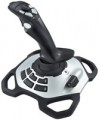 | 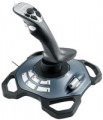 |
|---|---|---|
| Logitech Extreme 3D Pro | Logitech Force 3D Pro | |
| Compare prices 1 | from $67.99 | |
| User reviews | ||
| TOP sellers | ||
| Device type (configuration) | joystick | joystick |
| Throttle controller | + | + |
| Platform compatibility | PC (Windows) | PC (Windows) MacOS |
Control | ||
| Total number of buttons | 12 pcs | 12 pcs |
| Feedback | no | power |
| Triggers | 1 pcs | 1 pcs |
General | ||
| Power source | USB port | USB port |
| Added to E-Catalog | november 2008 | november 2008 |



Compare Logitech Extreme 3D Pro and Force 3D Pro
Price comparison
You may be interested in
My comparisons
Logitech Extreme 3D Pro often compared


Glossary
Platform compatibility
Game platforms compatible with the controller.
A game platform can be described as a list of devices that can use this model. Nowadays, controllers can be found for the following types of platforms:
— Computers: PC, mainly for Windows, as well as Mac from Apple;
— Desktop game consoles: PlayStation (PS3, PS4, PS5), Xbox, Nintendo (Wii, Switch);
— Portable devices: primarily smartphones and tablets on Android and iOS;
— Other specific devices (in particular, set-top boxes like Apple TV).
It should be noted that many models are made compatible with multiple platforms simultaneously. Here is more detailed information about each of the aforementioned options:
— PC. In this case, PCs refer to desktop computers and laptops running Windows, and sometimes other operating systems, primarily Linux. Devices running macOS from Apple are not included here; they are classified separately. However, wired controllers for PCs (see "Connection") usually use USB interfaces, while wireless ones use Bluetooth, and less commonly, radio.
— Andro...id. Portable gadgets running on Android OS. Note that such compatibility is not only found in specialized overlaid gamepads and virtual reality weapons (see "Device Type"), but also in more traditional controllers – primarily classic gamepads. The specifics of connectivity and compatibility with specific gaming devices can vary, depending on the controller type and other specific features. For traditional gamepads, they typically connect via Bluetooth and can be used with any Android gadget with games that support such controllers. Similarly, VR weapons and overlay gamepads require compatible games, but such accessories are almost exclusively intended for smartphones (not tablets) and have suitable mounts.
— Mac. This term encompasses Apple's computers running the macOS desktop operating system. Primarily desktop and laptop computers from the Mac and MacBook lines respectively. This equipment has software and hardware features that significantly differentiate it from other types of PCs and laptops, so compatibility for gaming accessories is specified separately.
— iOS. Apple's portable gadgets running on the proprietary iOS mobile operating system – iPhones, iPads, and iPod touch players. The features of gaming controllers for such electronics are fully analogous to the models described above for Android; in fact, many mobile gaming accessories are initially made compatible with both platforms. Overlay gamepads (see "Device Type") of mechanical design are by definition universal.
— AppleTV. A family of "smart" TV set-top boxes from Apple. Starting from the 4th generation (2015), these set-top boxes allow installing applications from the respective App Store section, and software developers can not only create their apps for this platform but also easily port existing iOS programs to it (see above). As a result, games are now available for AppleTV, so game controllers are made for these set-top boxes. These accessories are only connected wirelessly; many can be used not only for games but also as a replacement for the standard remote control.
— Switch. A gaming console from Nintendo with a hybrid work format. It consists of a tablet that can be used separately and a dock for connecting the tablet to a TV, allowing use as both a desktop and portable console. As a result, controllers for this platform are quite diverse. For example, the "native" Joy-Con controller consists of two motion controllers, which can be used separately by two players, held by one player in two hands, combined into one gamepad for desktop play, or attached to the sides of the tablet for "on the go" use. Joy-Con halves are available for sale separately. Other Switch accessories may be similar in design or less universal: in particular, traditional gamepads, overlay gamepads for the tablet part of the console, as well as arcade controllers (see "Device Type") are available.
— Wii. A family of desktop game consoles from Nintendo, the predecessor of the Switch. The original Wii, released back in 2006, was the first mass-market console with motion controller-based control (see "Device Type") and set the standards for such control for the entire market. The next model, Wii U, appeared in 2012. It introduced its own original controller – a gamepad with a built-in display, which (in certain games) can show the image from the console and be played without a TV; while fully maintaining compatibility with motion controllers from the previous console. Overall, the Wii family of consoles is considered outdated in light of the release of the aforementioned Switch in 2017; new controllers for them are almost not produced.
— Xbox. A line of desktop game consoles from Microsoft; one of the most popular platforms in this market, directly competing with PlayStation. As of 2020, it includes 4 generations: original Xbox (2001), Xbox 360 (2005), Xbox One (2013), and Xbox Series X/S (2020). The last two are the most relevant (as of 2020), and they use one protocol to connect with wireless controllers. Therefore, modern accessories for Xbox are typically compatible with both generations. The "native" wireless gamepad from the 2020 model supports Bluetooth and can work with mobile devices; however, this compatibility is not guaranteed for third-party accessories. In general, the list of controllers for Xbox mostly includes gamepads (wired and wireless) and steering wheels. The Kinect motion controller, capable of tracking full-body movements, was popular at one time, but its production (in the gaming version) was discontinued in 2017.
— PlayStation. A series of gaming consoles from Sony; another major player in the desktop console market, along with the Xbox described above. Under the PlayStation (PS) brand, portable gadgets were also made, but in 2019 Sony completely abandoned their production. Desktop versions include several generations, not fully mutually compatible, so for such a console, it's best to select accessories specifically announced as compatible with the relevant generation. On the other hand, many controllers are initially made for multiple PS versions, so finding a compatible model is not particularly problematic. Classic types of such controllers are wired and wireless gamepads as well as the PS Move motion controller (see "Device Type"); however, there are also other types of accessories produced – primarily steering wheels, although not limited to them. As for specific generations, here are the most relevant options:
A game platform can be described as a list of devices that can use this model. Nowadays, controllers can be found for the following types of platforms:
— Computers: PC, mainly for Windows, as well as Mac from Apple;
— Desktop game consoles: PlayStation (PS3, PS4, PS5), Xbox, Nintendo (Wii, Switch);
— Portable devices: primarily smartphones and tablets on Android and iOS;
— Other specific devices (in particular, set-top boxes like Apple TV).
It should be noted that many models are made compatible with multiple platforms simultaneously. Here is more detailed information about each of the aforementioned options:
— PC. In this case, PCs refer to desktop computers and laptops running Windows, and sometimes other operating systems, primarily Linux. Devices running macOS from Apple are not included here; they are classified separately. However, wired controllers for PCs (see "Connection") usually use USB interfaces, while wireless ones use Bluetooth, and less commonly, radio.
— Andro...id. Portable gadgets running on Android OS. Note that such compatibility is not only found in specialized overlaid gamepads and virtual reality weapons (see "Device Type"), but also in more traditional controllers – primarily classic gamepads. The specifics of connectivity and compatibility with specific gaming devices can vary, depending on the controller type and other specific features. For traditional gamepads, they typically connect via Bluetooth and can be used with any Android gadget with games that support such controllers. Similarly, VR weapons and overlay gamepads require compatible games, but such accessories are almost exclusively intended for smartphones (not tablets) and have suitable mounts.
— Mac. This term encompasses Apple's computers running the macOS desktop operating system. Primarily desktop and laptop computers from the Mac and MacBook lines respectively. This equipment has software and hardware features that significantly differentiate it from other types of PCs and laptops, so compatibility for gaming accessories is specified separately.
— iOS. Apple's portable gadgets running on the proprietary iOS mobile operating system – iPhones, iPads, and iPod touch players. The features of gaming controllers for such electronics are fully analogous to the models described above for Android; in fact, many mobile gaming accessories are initially made compatible with both platforms. Overlay gamepads (see "Device Type") of mechanical design are by definition universal.
— AppleTV. A family of "smart" TV set-top boxes from Apple. Starting from the 4th generation (2015), these set-top boxes allow installing applications from the respective App Store section, and software developers can not only create their apps for this platform but also easily port existing iOS programs to it (see above). As a result, games are now available for AppleTV, so game controllers are made for these set-top boxes. These accessories are only connected wirelessly; many can be used not only for games but also as a replacement for the standard remote control.
— Switch. A gaming console from Nintendo with a hybrid work format. It consists of a tablet that can be used separately and a dock for connecting the tablet to a TV, allowing use as both a desktop and portable console. As a result, controllers for this platform are quite diverse. For example, the "native" Joy-Con controller consists of two motion controllers, which can be used separately by two players, held by one player in two hands, combined into one gamepad for desktop play, or attached to the sides of the tablet for "on the go" use. Joy-Con halves are available for sale separately. Other Switch accessories may be similar in design or less universal: in particular, traditional gamepads, overlay gamepads for the tablet part of the console, as well as arcade controllers (see "Device Type") are available.
— Wii. A family of desktop game consoles from Nintendo, the predecessor of the Switch. The original Wii, released back in 2006, was the first mass-market console with motion controller-based control (see "Device Type") and set the standards for such control for the entire market. The next model, Wii U, appeared in 2012. It introduced its own original controller – a gamepad with a built-in display, which (in certain games) can show the image from the console and be played without a TV; while fully maintaining compatibility with motion controllers from the previous console. Overall, the Wii family of consoles is considered outdated in light of the release of the aforementioned Switch in 2017; new controllers for them are almost not produced.
— Xbox. A line of desktop game consoles from Microsoft; one of the most popular platforms in this market, directly competing with PlayStation. As of 2020, it includes 4 generations: original Xbox (2001), Xbox 360 (2005), Xbox One (2013), and Xbox Series X/S (2020). The last two are the most relevant (as of 2020), and they use one protocol to connect with wireless controllers. Therefore, modern accessories for Xbox are typically compatible with both generations. The "native" wireless gamepad from the 2020 model supports Bluetooth and can work with mobile devices; however, this compatibility is not guaranteed for third-party accessories. In general, the list of controllers for Xbox mostly includes gamepads (wired and wireless) and steering wheels. The Kinect motion controller, capable of tracking full-body movements, was popular at one time, but its production (in the gaming version) was discontinued in 2017.
— PlayStation. A series of gaming consoles from Sony; another major player in the desktop console market, along with the Xbox described above. Under the PlayStation (PS) brand, portable gadgets were also made, but in 2019 Sony completely abandoned their production. Desktop versions include several generations, not fully mutually compatible, so for such a console, it's best to select accessories specifically announced as compatible with the relevant generation. On the other hand, many controllers are initially made for multiple PS versions, so finding a compatible model is not particularly problematic. Classic types of such controllers are wired and wireless gamepads as well as the PS Move motion controller (see "Device Type"); however, there are also other types of accessories produced – primarily steering wheels, although not limited to them. As for specific generations, here are the most relevant options:
- PlayStation 3. The third generation of PlayStation, introduced by Sony in 2006. It was here that the aforementioned PS Move was first applied – albeit only in 2010. It was also very successful, being produced for 11 years. As of the end of 2020, many controllers compatible with this platform can be found on sale – among them, there are not only models for new generations with PS3 compatibility but also accessories intended only for this version.
- PlayStation 4. The generation released in 2013 with a lineup update in 2016. As of the end of 2020, it is the most popular PS version and the second best-selling desktop console of all time (after PS2); continues to be produced. Accordingly, a multitude of controllers for this platform is available in the market.
- PlayStation 5. The latest PS generation, introduced in 2020. The dedicated gamepad for this version was named DualSense, its design based on its predecessor DualShock with several modifications: triggers with force feedback, a built-in set of microphones and improved speakers, allowing communication with other players directly through the controller, as well as a touchpad (hence the name; more on this feature below). Other accessories specifically for this platform are still quite rare, but given the demand for the console itself, a rapid change in the situation is expected. Note that the manufacturer claims limited compatibility with previous-generation controllers, but in proprietary PS5 games, only controllers for this console version can be used.
Feedback
The type of feedback provided by the joystick's construction (if any).
Feedback is the joystick's reaction to certain events occurring in the game. Such a reaction enhances the "immersion effect," giving the player the impression of holding a real airplane stick, car steering wheel, etc. It can be:
— Vibration. Feedback in the form of vibration allows for the imitation of, for example, the shaking from driving off-road, the tremor of an airplane when firing onboard weapons, or encountering turbulence, and so on.
— Force. Controllers with force feedback are capable of creating certain resistance to the player's efforts— for example, to simulate difficulties with turning the steering wheel when the wheels are stuck in mud.
— Vibration/force. Controllers that support both of the feedback types described above. This option is the most advanced and at the same time the most expensive.
Feedback is the joystick's reaction to certain events occurring in the game. Such a reaction enhances the "immersion effect," giving the player the impression of holding a real airplane stick, car steering wheel, etc. It can be:
— Vibration. Feedback in the form of vibration allows for the imitation of, for example, the shaking from driving off-road, the tremor of an airplane when firing onboard weapons, or encountering turbulence, and so on.
— Force. Controllers with force feedback are capable of creating certain resistance to the player's efforts— for example, to simulate difficulties with turning the steering wheel when the wheels are stuck in mud.
— Vibration/force. Controllers that support both of the feedback types described above. This option is the most advanced and at the same time the most expensive.