
Comparison Fractal Design Define S black vs Fractal Design Define R5 black
Add to comparison | 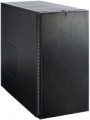 | 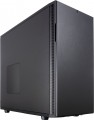 |
|---|---|---|
| Fractal Design Define S black | Fractal Design Define R5 black | |
from $355.00 | Compare prices 6 | |
| User reviews | ||
| TOP sellers | ||
| Form factor | Midi Tower | Midi Tower |
| Mount | vertical | vertical |
| Motherboard support | ATX | ATX |
| Board placement | vertical | vertical |
| PSU form factor | ATX (regular) | ATX (regular) |
Computer case | ||
| Dimensions (HxWxD) | 451x233x520 mm | 451x232x521 mm |
| Graphics card max lenght | 425 mm | 440 mm |
| Fan max height | 180 mm | 180 mm |
| Weight | 9.1 kg | 10.2 kg |
| Material | steel | steel |
| Side panel | removable | removable |
Storage | ||
| PSU |  | |
| PSU mount | bottom | bottom |
| 5.25" bays | 2 | |
| 3.5" bays | 3 | 8 |
| internal 2.5" compartments | 2 | 2 |
| Expansion slots | 7 | 7 |
Cooling | ||
| Installed fans | 2 шт | 2 шт |
| Fans (back) | 1x120 mm | 1x140mm |
| Fans (front) | 3x120 mm | 2x140mm |
| Fans (side) | 1x120 mm | 1x140mm |
| Fans (top) | 3x120 mm | 3x140mm |
| Fans (bottom) | 1x120 mm | 2x140mm |
| Fan mounts total | 9 | 9 |
| Dust filter | + | + |
| Liquid cooling system support |  | |
Liquid cooling system | ||
| Liquid cooling (rear) | 140 mm | |
| Liquid cooling (front) | 360 mm | 360 mm |
| Liquid cooling (top) | 420 mm | 420 mm |
| Liquid cooling (bottom) | 140mm | 240mm |
| Liquid cooling mounts | 3 | 4 |
Connectors and functions | ||
| Placement | on top of the case | on top of the case |
| USB-A 2.0 | 2 pcs | |
| USB-A 5Gbps | 2 pcs | 2 pcs |
| Audio (microphone/headphones) | | |
More features | ||
| Front panel | solid | solid |
| More features | soundproof hidden wiring CPU cooling mount window | front panel soundproof removable HDD cage hidden wiring CPU cooling mount window |
| Color | ||
| Added to E-Catalog | july 2015 | july 2015 |





Compare Fractal Design Define S and Define R5
Price comparison
You may be interested in
Fractal Design Define S often compared

Fractal Design Define R5 often compared


Glossary
Graphics card max lenght
The maximum length of a graphics card that can be installed in this case.
Modern mid-range and top-end video cards with high performance often differ in considerable length, which is why such a card can not fit into any case. So before collecting components, it is worth evaluating the length of the proposed graphics card and choosing a case in which it is guaranteed to fit. This forethought is useful anyway, but it's especially true if you're building a system that requires a powerful graphics adapter, such as a high-end gaming PC or 3D design workstation.
Modern mid-range and top-end video cards with high performance often differ in considerable length, which is why such a card can not fit into any case. So before collecting components, it is worth evaluating the length of the proposed graphics card and choosing a case in which it is guaranteed to fit. This forethought is useful anyway, but it's especially true if you're building a system that requires a powerful graphics adapter, such as a high-end gaming PC or 3D design workstation.
5.25" bays
The number of 5.25" form factor bays provided in the case design. Such bays are made only external, that is, they can be accessed from the outside without opening the case (unlike 3.5", see the corresponding glossary items). Today, 5.25" bays are mainly used for installing optical disk drives, internal hard drives in removable pocket adapters (Mobile Rack), and sometimes additional fans. Also, 3.5" devices can be installed in such bays using special adapters. ". Most cases are equipped with 1 5.25" bay or two bays. But there are models with 3 or more bays, as well as cases without external bays.
3.5" bays
The number of internal 3.5" form factor bays provided in the design of the case. Such bays, in accordance with the name, are intended for internal components, mainly hard drives and some SSD modules; to access them, the case must be disassembled.
Theoretically, the number of bays corresponds to the maximum number of drives that can be installed in the chassis. However, in fact, the best option is to install drives through a single slot to ensure efficient cooling. Accordingly, it is best to select a case in such a way that the number of internal 3.5" bays is twice the expected number of hard drives.
Theoretically, the number of bays corresponds to the maximum number of drives that can be installed in the chassis. However, in fact, the best option is to install drives through a single slot to ensure efficient cooling. Accordingly, it is best to select a case in such a way that the number of internal 3.5" bays is twice the expected number of hard drives.
Fans (back)
The number of fan slots on the back of the case, as well as the size of the fans that these slots are designed for. The presence of the fans themselves in the kit should be specified separately.
The larger the fan, the more advanced it is considered: a large diameter allows you to work efficiently at relatively low speeds, which reduces the noise level and energy consumption. Case fans are available in several standard diameters; specifically for the rear panel, the size up to 92 mm is considered relatively small, 120 mm — medium, 140 mm — large.
Most often, the holes for installing fans are designed for one specific size, however, there are also “multi-size” seats, for 2-3 options in diameter.
The larger the fan, the more advanced it is considered: a large diameter allows you to work efficiently at relatively low speeds, which reduces the noise level and energy consumption. Case fans are available in several standard diameters; specifically for the rear panel, the size up to 92 mm is considered relatively small, 120 mm — medium, 140 mm — large.
Most often, the holes for installing fans are designed for one specific size, however, there are also “multi-size” seats, for 2-3 options in diameter.
Fans (front)
The number of fan slots on the front of the case, and the size of the fans these slots are designed for. The presence of the fans themselves in the kit should be specified separately.
The larger the fan, the more advanced it is considered: a large diameter allows you to work efficiently at relatively low speeds, which reduces the noise level and energy consumption. Case fans are available in several standard diameters; specifically for the front panel, the size up to 92 mm is considered relatively small, 120 mm — medium, 140 mm — large, and in the most advanced solutions, fans of 180 mm or even more can be installed.
Also note that most often the holes for installing fans are designed for one specific size, however, there are also “multi-size” seats, for 2-3 options. Moreover, these options may differ both in diameter and in quantity: for example, it may be possible to install two 140 mm fans or three 120 mm fans.
The larger the fan, the more advanced it is considered: a large diameter allows you to work efficiently at relatively low speeds, which reduces the noise level and energy consumption. Case fans are available in several standard diameters; specifically for the front panel, the size up to 92 mm is considered relatively small, 120 mm — medium, 140 mm — large, and in the most advanced solutions, fans of 180 mm or even more can be installed.
Also note that most often the holes for installing fans are designed for one specific size, however, there are also “multi-size” seats, for 2-3 options. Moreover, these options may differ both in diameter and in quantity: for example, it may be possible to install two 140 mm fans or three 120 mm fans.
Fans (side)
The number of fan slots on the sides of the case, as well as the size of the fans that these slots are designed for. The presence of the fans themselves in the kit should be specified separately.
The larger the fan, the more advanced it is considered: a large diameter allows you to work efficiently at relatively low speeds, which reduces the noise level and energy consumption. Case fans are available in several standard diameters, and the seats for them can be designed for both one and several sizes — for example, 120 / 140 mm. At the same time, in some models, the available number of seats also depends on the chosen size: for example, there are gaming cases where you can install either one 180 mm fan or four 120 mm fans at once.
The larger the fan, the more advanced it is considered: a large diameter allows you to work efficiently at relatively low speeds, which reduces the noise level and energy consumption. Case fans are available in several standard diameters, and the seats for them can be designed for both one and several sizes — for example, 120 / 140 mm. At the same time, in some models, the available number of seats also depends on the chosen size: for example, there are gaming cases where you can install either one 180 mm fan or four 120 mm fans at once.
Fans (top)
The number of fan slots on the top side of the case, and the size of the fans these slots are designed for. The presence of the fans themselves in the kit should be specified separately.
The larger the fan, the more advanced it is considered: a large diameter allows you to work efficiently at relatively low speeds, which reduces the noise level and energy consumption. Case fans are available in several standard diameters, and the seats under them can be designed for both one and several sizes — for example, 120 / 140 mm. At the same time, in some models, the available number of seats also depends on the chosen size: for example, there are gaming cases where you can install either one 180 mm fan or four 120 mm fans at once.
The larger the fan, the more advanced it is considered: a large diameter allows you to work efficiently at relatively low speeds, which reduces the noise level and energy consumption. Case fans are available in several standard diameters, and the seats under them can be designed for both one and several sizes — for example, 120 / 140 mm. At the same time, in some models, the available number of seats also depends on the chosen size: for example, there are gaming cases where you can install either one 180 mm fan or four 120 mm fans at once.
Fans (bottom)
The number of fan slots on the underside of the case, as well as the size of the fans that these slots are designed for. The presence of the fans themselves in the kit should be specified separately.
The larger the fan, the more advanced it is considered: a large diameter allows you to work efficiently at relatively low speeds, which reduces the noise level and energy consumption. Case fans are available in several standard diameters, and the seats under them can be designed for both one and several sizes — for example, 120 / 140 mm. At the same time, in some models, the available number of seats also depends on the selected size: for example, it may be possible to install either one 180 mm fan or two 140 mm fans.
The larger the fan, the more advanced it is considered: a large diameter allows you to work efficiently at relatively low speeds, which reduces the noise level and energy consumption. Case fans are available in several standard diameters, and the seats under them can be designed for both one and several sizes — for example, 120 / 140 mm. At the same time, in some models, the available number of seats also depends on the selected size: for example, it may be possible to install either one 180 mm fan or two 140 mm fans.
Liquid cooling (rear)
Size of the mounting space for the liquid cooling system provided on the back of the case.
In cases supporting liquid cooling systems, water cooling radiators are installed in the same slots as traditional fans. In other words, either a fan (or fans) or a liquid cooling radiator can be fitted into the same space. The size of the mounting space for a liquid cooling system is indicated by a single digit — the length (on the larger side); the width can be determined based on this information. The point is that modern liquid cooling radiators typically use fans of one of the standard sizes — 120 mm or 140 mm; and if there are several of such fans, they are arranged in a row. As a result, the length of the radiator becomes a multiple, and the width is equal to one of these numbers: for example, 280 mm is 2x140 mm with a width of 140 mm, and 360 mm is 3x120 mm with a width of 120 mm.
Note that the same nuances are relevant here as for air cooling: a larger fan occupies more space and is more expensive, but it is considered more advanced as it can operate efficiently at lower speeds — which reduces noise levels and vibrations.
In cases supporting liquid cooling systems, water cooling radiators are installed in the same slots as traditional fans. In other words, either a fan (or fans) or a liquid cooling radiator can be fitted into the same space. The size of the mounting space for a liquid cooling system is indicated by a single digit — the length (on the larger side); the width can be determined based on this information. The point is that modern liquid cooling radiators typically use fans of one of the standard sizes — 120 mm or 140 mm; and if there are several of such fans, they are arranged in a row. As a result, the length of the radiator becomes a multiple, and the width is equal to one of these numbers: for example, 280 mm is 2x140 mm with a width of 140 mm, and 360 mm is 3x120 mm with a width of 120 mm.
Note that the same nuances are relevant here as for air cooling: a larger fan occupies more space and is more expensive, but it is considered more advanced as it can operate efficiently at lower speeds — which reduces noise levels and vibrations.