
Comparison Time Eco Minipack 2 vs Totem Bluebird 2
Add to comparison | 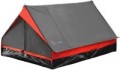 | 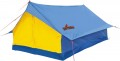 |
|---|---|---|
| Time Eco Minipack 2 | Totem Bluebird 2 | |
from $26.32 up to $31.20 | from $27.16 up to $31.97 | |
| User reviews | ||
| TOP sellers | ||
| Suitable for | trekking | trekking |
| Number of berths | 2 | 2 |
| Seasonality | spring/autumn summer | spring/autumn summer |
| Weight | 1.6 kg | 2.1 kg |
Design | ||
| Body shape | gable | gable |
| Number of entrances | 1 шт | 1 шт |
| Bedroom entrances | 1 шт | 1 шт |
| Ventilation windows |  |  |
Frame and materials | ||
| Frame type | internal | internal |
| Main poles | 2 | 2 |
| Frame material | fibreglass | steel |
| Tent material | polyester | polyester |
| Water resistance of tent | 1000 mm water column | 1500 mm water column |
| Bottom material | polyethylene | polyethylene |
| Water resistance of bottom | 4000 mm water column | |
Protective features | ||
| Seam sealing | | |
| UV protection | | |
| Refractory impregnation | | |
General | ||
| More features | mosquito net | mosquito net |
| External dimensions | 190x120x95 cm | 200x120x100 cm |
| Internal dimensions | 190x120x95 cm | |
| Dimensions in case | 42x12x12 cm | |
| Volume (folded) | 6.1 L | |
| Color | ||
| Added to E-Catalog | may 2016 | march 2014 |


Compare Time Eco Minipack 2 and Totem Bluebird 2
You may be interested in
Time Eco Minipack 2 often compared


Totem Bluebird 2 often compared


Glossary
Weight
The total weight of the tent is including the frame and other accessories.
This parameter depends primarily on the purpose (see above), and after that — on seasonality, capacity, and additional functions. For example, in trekking and expedition models, the weight usually does not exceed 5 – 7.5 kg, and the lightest of these products can weigh 2 – 3 kg or even less, while being full-fledged tents for 2 people or even more. However, for a trekking tent, such a small weight with a capacity of more than 2 people usually means that this model is designed exclusively for the summer. For most camping tents, the weight starts at 6 kg, although among them there are also quite light products — by 4 – 5 kg, 3 – 4 kg, or even less (in such cases, light weight can also mean a purely summer specialization). And the most capacious and/or multifunctional models can have a weight of 10 – 15 kg, 15 – 20 kg and even more; in this weight category, you can mainly find tents, camping tents for many people and fishing tents for carp fishing (see "Destination").
When choosing a tent according to this indicator, it is worth considering that it does not always make sense to chase the maximum weight reduction. Yes, the...light tent is the most convenient to carry; on the other hand, weight reduction inevitably affects one or several other characteristics at once. So, most often, lighter models are either more expensive or smaller in size and less roomy and functional than their heavier counterparts. And sometimes weight reduction also negatively affects the security (including moisture resistance) and the overall reliability of the product. Therefore, it makes sense to specifically look for the lightest tent possible in cases where weight reduction is of key importance; a typical example is long trips, in which all the equipment has to be carried “on oneself” for a long time. And even in such cases, it is worth remembering other important characteristics. For example, for use in late autumn, when frosts are likely, it is better to choose a heavier tent with winter seasonality than a light model that is not designed for winter conditions.
This parameter depends primarily on the purpose (see above), and after that — on seasonality, capacity, and additional functions. For example, in trekking and expedition models, the weight usually does not exceed 5 – 7.5 kg, and the lightest of these products can weigh 2 – 3 kg or even less, while being full-fledged tents for 2 people or even more. However, for a trekking tent, such a small weight with a capacity of more than 2 people usually means that this model is designed exclusively for the summer. For most camping tents, the weight starts at 6 kg, although among them there are also quite light products — by 4 – 5 kg, 3 – 4 kg, or even less (in such cases, light weight can also mean a purely summer specialization). And the most capacious and/or multifunctional models can have a weight of 10 – 15 kg, 15 – 20 kg and even more; in this weight category, you can mainly find tents, camping tents for many people and fishing tents for carp fishing (see "Destination").
When choosing a tent according to this indicator, it is worth considering that it does not always make sense to chase the maximum weight reduction. Yes, the...light tent is the most convenient to carry; on the other hand, weight reduction inevitably affects one or several other characteristics at once. So, most often, lighter models are either more expensive or smaller in size and less roomy and functional than their heavier counterparts. And sometimes weight reduction also negatively affects the security (including moisture resistance) and the overall reliability of the product. Therefore, it makes sense to specifically look for the lightest tent possible in cases where weight reduction is of key importance; a typical example is long trips, in which all the equipment has to be carried “on oneself” for a long time. And even in such cases, it is worth remembering other important characteristics. For example, for use in late autumn, when frosts are likely, it is better to choose a heavier tent with winter seasonality than a light model that is not designed for winter conditions.
Ventilation windows
The presence of ventilation windowsprovided in the design of the tent. These windows are essentially vents and, unlike normal windows (see above), are not designed to provide light or visibility. Their main purpose is to provide an influx of fresh air and remove moisture from the tent released by people during breathing and sweating. Good ventilation is especially important if a tent (usually a camping tent, see "Use") is organizing a kitchen.
Frame material
The material from which the frame of the tent (arc) is made. The main requirements for arcs are strength, resistance to deformation (elasticity) and low weight. Modern tents use several materials with different ratios of these parameters.
— Aluminium. A fairly common material: it has good strength characteristics and low weight, but it is relatively inexpensive. At the same time, aluminium is prone to deformation under long-term stress (although this is usually not critical even when parking for several days).
— Fibreglass. Composite material based on a combination of fibreglass and plastic. The main advantage of fibreglass is resistance to deformation: even under prolonged loads, the arcs do not lose their shape. In addition, this material is cheap and light in weight (although somewhat heavier than aluminium). The disadvantage of fibreglass is its sensitivity to low temperatures, which limits its use in winter conditions and at high mountains. However, most people use tents in the warm season, and therefore fibreglass has recently gained considerable popularity.
— Steel. Steel is the most durable of the described materials, in addition, it holds loads well, almost without deforming. At the same time, steel arcs have a significant weight, and therefore they are rarely used in tents.
— Durapol. A composite material that has appe...ared relatively recently and is positioned as a more advanced alternative to fibreglass. Durapol has a "puff" design: the outer layer is made of special polymer resins, metal foil is located under it, a synthetic mesh is located under it, and, finally, a layer of fibreglass. According to the creators, arcs made of this material are more durable and resistant to fracture than fibreglass, better tolerate low and high temperatures, as well as ultraviolet radiation, are less susceptible to residual deformations and have less weight.
— Aluminium. A fairly common material: it has good strength characteristics and low weight, but it is relatively inexpensive. At the same time, aluminium is prone to deformation under long-term stress (although this is usually not critical even when parking for several days).
— Fibreglass. Composite material based on a combination of fibreglass and plastic. The main advantage of fibreglass is resistance to deformation: even under prolonged loads, the arcs do not lose their shape. In addition, this material is cheap and light in weight (although somewhat heavier than aluminium). The disadvantage of fibreglass is its sensitivity to low temperatures, which limits its use in winter conditions and at high mountains. However, most people use tents in the warm season, and therefore fibreglass has recently gained considerable popularity.
— Steel. Steel is the most durable of the described materials, in addition, it holds loads well, almost without deforming. At the same time, steel arcs have a significant weight, and therefore they are rarely used in tents.
— Durapol. A composite material that has appe...ared relatively recently and is positioned as a more advanced alternative to fibreglass. Durapol has a "puff" design: the outer layer is made of special polymer resins, metal foil is located under it, a synthetic mesh is located under it, and, finally, a layer of fibreglass. According to the creators, arcs made of this material are more durable and resistant to fracture than fibreglass, better tolerate low and high temperatures, as well as ultraviolet radiation, are less susceptible to residual deformations and have less weight.
Water resistance of tent
An indicator that reflects the ability of the tent awning to withstand moisture without getting wet. It is expressed in millimetres of water column — the height of the water column that the awning can withstand (the area of impact is out of the question, because the load per unit area under water depends only on the height of the water column and is not related to the area of \u200b\u200bits base). The significant figures indicated in the characteristics (for example, 4000 mm of water column, i.e. 4 metres) are due to the fact that raindrops can have a significant speed and, when they hit the tent, create a load at the point of impact comparable to the pressure on depth of several metres.
In general, the higher the waterproof rating, the better the awning will cope with the effects of rain and snow. Indicators up to 3000 mm w.c. Art. are considered sufficient for places where it rains rarely, awnings for 3000 – 7000 mm of water. Art. allow you not to be afraid of intense downpours, and in expeditionary (see "Destination") tents designed for extreme conditions, this figure can reach 10,000 mm of water. Art. and even more. However, more water-resistant fabrics, usually, have a significant weight, so in each individual case it makes sense to choose the option that is optimal in terms of durability and weight.
In general, the higher the waterproof rating, the better the awning will cope with the effects of rain and snow. Indicators up to 3000 mm w.c. Art. are considered sufficient for places where it rains rarely, awnings for 3000 – 7000 mm of water. Art. allow you not to be afraid of intense downpours, and in expeditionary (see "Destination") tents designed for extreme conditions, this figure can reach 10,000 mm of water. Art. and even more. However, more water-resistant fabrics, usually, have a significant weight, so in each individual case it makes sense to choose the option that is optimal in terms of durability and weight.
Water resistance of bottom
An indicator that reflects the degree of resistance of the bottom of the tent to moisture. For more information about the features of measuring this indicator, see "Tent waterproofness". Here also note that, for obvious reasons, the bottom, unlike an awning, is practically not subject to rain drops — as a result, the requirements for bottom water resistance are significantly lower. So, fabrics with a water resistance of 3000 mm of water. Art. are considered absolutely waterproof (up to the possibility of putting a tent in a puddle), and higher values usually indicate an increased thickness of the fabric and corresponding strength and wear resistance. Just like with an awning, more waterproof fabrics tend to have a significant amount of weight, so it doesn't always make sense to look for bottoms with maximum water resistance.
Refractory impregnation
Special impregnation of the tent fabric, which reduces the speed of flame propagation. In the event of a fire, this will give you extra time to get out of the tent, carry out things or take measures to extinguish the fire. In addition, such impregnation generally reduces the likelihood of accidental ignition (for example, from a fire spark or an unsuccessfully thrown cigarette butt). Almost all modern tents are treated with refractory composition.
Volume (folded)
The volume of a tent when folded helps understand how convenient it is to transport it in a trunk, store it at home, or take it on a hiking trip, cycling tour, or backpacking adventure. The smaller the volume in liters, the more compact the tent is when packed.
For example, a trekking model with a volume of about 6 – 10 L easily fits into a 40 – 50 L hiking backpack without taking up too much valuable space. A 10 – 15 L tent can also fit in a backpack, but usually requires tighter packing and is generally better suited for backpacks of 50 – 65 L. If the volume is 15 – 20 L or more, such a tent is often more conveniently attached outside, especially when space inside needs to be reserved for a sleeping bag, clothes, and other items. Camping tents, although they may not have a large volume, primarily find their place in a car trunk where volume matters less.
For example, a trekking model with a volume of about 6 – 10 L easily fits into a 40 – 50 L hiking backpack without taking up too much valuable space. A 10 – 15 L tent can also fit in a backpack, but usually requires tighter packing and is generally better suited for backpacks of 50 – 65 L. If the volume is 15 – 20 L or more, such a tent is often more conveniently attached outside, especially when space inside needs to be reserved for a sleeping bag, clothes, and other items. Camping tents, although they may not have a large volume, primarily find their place in a car trunk where volume matters less.