
Comparison Seagate Backup Plus Portable STDR2000200 2 TB vs Seagate Expansion Port 3.0 Slim 2.5" STBX1000201 1 TB
Add to comparison | 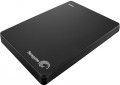 | 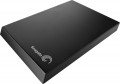 |
|---|---|---|
| Seagate Backup Plus Portable STDR2000200 2 TB | Seagate Expansion Port 3.0 Slim 2.5" STBX1000201 1 TB | |
from $95.96 up to $110.76 | from $95.00 | |
| TOP sellers | ||
Slim body. Convenient branded Seagate Dashboard software. Subscription to Adobe Creative Cloud and Mylio. | ||
| Placement | external | external |
| Type | HDD | HDD |
| Features | for PC | for PC |
| Volume | 2 TB | 1 TB |
| Form factor | 2.5 " | 2.5 " |
| Connection | USB-A 5Gbps | USB-A 5Gbps |
| Manufacturer's warranty | 2 years | 2 years |
Technical specs | ||
| RPM | 5400 rpm | 5400 rpm |
General | ||
| Power source (external) | USB port | USB port |
| Material | plastic | plastic |
| Size | 114x76x12 mm | 122x81x16 mm |
| Weight | 159 g | 160 g |
| Color | ||
| Added to E-Catalog | april 2014 | december 2012 |


Compare Seagate Backup Plus Portable STDR2000200 and Expansion Port 3.0 Slim 2.5" STBX1000201
You may be interested in
My comparisons
Seagate Backup Plus Portable often compared


Seagate Expansion Port 3.0 Slim 2.5" often compared

Glossary
Volume
The capacity of a hard disk drive shows how much data the HDD can store—from documents and photos to games, movies, backups, and large work archives. This parameter determines whether the drive is suitable for a simple home system, file storage, or, for example, for long-term accumulation of video recordings from surveillance cameras.
Models small by modern standards are more often chosen for documents, music, and basic files, whereas drives of 4 – 8 TB and larger are already interesting for large media libraries, backups, and NAS systems. Compared to SSDs, high-capacity HDDs are usually more cost-effective per gigabyte, so they are often chosen particularly when the maximum space is more important than record-breaking speed. For example, a drive of 1 or 2 TB might be enough for a regular PC, while 6 – 10 TB could be suitable for a movie collection, family archive, or constant video recording.
Models small by modern standards are more often chosen for documents, music, and basic files, whereas drives of 4 – 8 TB and larger are already interesting for large media libraries, backups, and NAS systems. Compared to SSDs, high-capacity HDDs are usually more cost-effective per gigabyte, so they are often chosen particularly when the maximum space is more important than record-breaking speed. For example, a drive of 1 or 2 TB might be enough for a regular PC, while 6 – 10 TB could be suitable for a movie collection, family archive, or constant video recording.