
Comparison Kenwood KFC-M6944A vs Kenwood KFC-M6934A
Add to comparison | 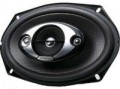 | 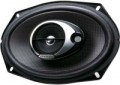 |
|---|---|---|
| Kenwood KFC-M6944A | Kenwood KFC-M6934A | |
from $59.28 up to $70.00 | from $44.52 up to $51.48 | |
| TOP sellers | ||
| Application area | car | car |
| Type | coaxial | coaxial |
| Size | 6x9" (15x23 cm) | 6x9" (15x23 cm) |
| Number of bands | 4 | 3 |
Specs | ||
| Rated power | 110 W | 80 W |
| Max. power | 160 W | 360 W |
| Frequency range | 45 – 22000 Hz | 28 – 25000 Hz |
| Impedance | 4 Ohm | 4 Ohm |
| Sensitivity | 90 dB | 90 dB |
Size | ||
| Tweeter size | 20 mm | 12 mm |
| Midrange speaker diameter | 70 mm | 70 mm |
| Mounting depth | 78 mm | 78 mm |
| Added to E-Catalog | september 2012 | september 2012 |


Compare Kenwood KFC-M6944A and KFC-M6934A
You may be interested in
My comparisons
Kenwood KFC-M6944A often compared


Kenwood KFC-M6934A often compared


Glossary
Number of bands
The number of separate frequency ranges into which the total frequency range reproduced by the speaker is divided. In this case, a separate speaker (or even several) is allocated for each range (band). the optimal speaker parameters for each band are different. Therefore, multi-band speakers are considered to provide better sound quality than full-range speakers. In modern multi-band car audio, 2(HF / LF) or 3(HF / MF / LF) bands are usually provided.
Rated power
Rated power of the acoustic system. Most often, the average (root mean square) sound power is indicated as rated.
The most obvious point related to this characteristic is the volume of sound: the more powerful the sound system, the louder the sound it can produce, all other things being equal. In addition, compatibility with an external amplifier depends on this indicator: its power should not exceed the power of the sound system, otherwise overloads and damage to the speakers are possible.
The most obvious point related to this characteristic is the volume of sound: the more powerful the sound system, the louder the sound it can produce, all other things being equal. In addition, compatibility with an external amplifier depends on this indicator: its power should not exceed the power of the sound system, otherwise overloads and damage to the speakers are possible.
Max. power
The maximum power of a short-term (up to several seconds) incoming signal that the speaker can withstand without physical damage. Just like the nominal power, it matters for the selection of acoustics for an amplifier (or vice versa): it is believed that the maximum power of the speakers should be at least 2 times higher than the maximum power of the signal source.
Frequency range
The total audio frequency range reproduced by all speaker speakers.
Obviously, this range should not be too narrow, so that the acoustics do not cut off the lower and/or upper frequency limits of the reproduced sound. At the same time, the human ear perceives sound within 16 Hz - 22 kHz, and it simply does not make sense to provide speakers with a wider frequency range. We also recall that in mid-frequency acoustics and tweeters, reproducible frequencies are limited due to specialization (for more details, see "Type"). And the overall sound quality will depend not only on this indicator, but also on a number of other features.
Obviously, this range should not be too narrow, so that the acoustics do not cut off the lower and/or upper frequency limits of the reproduced sound. At the same time, the human ear perceives sound within 16 Hz - 22 kHz, and it simply does not make sense to provide speakers with a wider frequency range. We also recall that in mid-frequency acoustics and tweeters, reproducible frequencies are limited due to specialization (for more details, see "Type"). And the overall sound quality will depend not only on this indicator, but also on a number of other features.
Tweeter size
Size of the high-frequency speaker(s) included in the speaker design.
Size affects the amount of space required to install the speaker. However, high frequencies do not require large diffusers, so this dimensions is usually small and does not significantly affect the overall dimensions of the speaker system. The only exception is individual high-frequency tweeters (see "Type"), where the overall dimensions of the housing are directly related to the dimensions of the diffuser.
Size affects the amount of space required to install the speaker. However, high frequencies do not require large diffusers, so this dimensions is usually small and does not significantly affect the overall dimensions of the speaker system. The only exception is individual high-frequency tweeters (see "Type"), where the overall dimensions of the housing are directly related to the dimensions of the diffuser.