
Comparison Kugoo Kirin G2 Master vs Kugoo G1
Add to comparison | 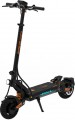 | 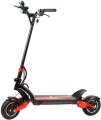 |
|---|---|---|
| Kugoo Kirin G2 Master | Kugoo G1 | |
| Outdated Product | from $653.40 up to $1,377.95 | |
| User reviews | ||
| TOP sellers | ||
| Max. load | 120 kg | 150 kg |
| Foldable design |  | |
Performance | ||
| Range | 70 km | 70 km |
| Power | 2000 W | 2000 W |
| Max. speed | 60 km/h | 60 km/h |
| Speed modes | 3 | 2 |
| Max. climbing angle | 20 ° | 30 ° |
| Drive | all-wheel | all-wheel |
| Wheels | rubber air-filled 10 " | rubber solid 10 " |
| Suspension | front and rear | front and rear |
| Front brake | disc | disc |
| Rear brake | disc | disc |
Battery | ||
| Battery capacity | 20.8 Ah | 18.2 Ah |
| Voltage | 52 В | 48 В |
| Full charge time | 11 h | 8 h |
Features | ||
| Handlebar height adjustment | |  |
| Headlight | | |
| Turn signals | | |
| Brake lights | | |
| Signal / bell | | |
| Stand | | |
| Dustproof, waterproof | IPX4 | IPX4 |
General | ||
| Frame material | aluminium | aluminium |
| Clearance | 16 cm | |
| Size | 126x59.5x131.5 cm | |
| Dimensions (folded) | 126x59.5x59.5 cm | |
| Weight | 33.1 kg | 35.5 kg |
| Color | ||
| Added to E-Catalog | june 2024 | april 2020 |


Compare Kugoo Kirin G2 Master and G1
You may be interested in
Kugoo Kirin G2 Master often compared


Kugoo G1 often compared


Glossary
Max. load
The maximum weight of the rider that the design of the scooter can withstand without breakdowns and accidents. This moment is partly determined by the age group, and mainly by the materials used in the frame. Note that manufacturers can indicate the maximum load for perfect conditions - when the scooter rides on a perfectly flat surface or even stands still. Therefore, it is worth choosing a model for this parameter with a certain margin. And even more so, you should not exceed the weight indicated in the characteristics - even if the scooter does not break down immediately, this can happen at any time after, which is fraught with accidents and injuries.
Speed modes
The number of speed modes in the electric scooter. By switching between them, the rider has the right to choose the most comfortable pace of the trip and change the upper speed limit bar.
Max. climbing angle
The maximum climbing angle that an electric scooter can overcome on engine power alone, without the help of legs. Models with engines of the same power may differ in this indicator (due to the difference in torque and wheel size).
Note that in the specifications the angle is usually indicated in degrees, while on road signs it is given as a percentage (1% corresponds to a rise of 1 m for every 100 m of horizontal movement). However, this moment is not particularly critical: if you often have to overcome a certain hill, you can clarify its slope by converting percentages into degrees (and vice versa) according to special tables. In addition, if the angle turns out to be too large, nothing prevents you from helping the scooter with your foot, in extreme cases, to overcome the climb on foot.
Note that in the specifications the angle is usually indicated in degrees, while on road signs it is given as a percentage (1% corresponds to a rise of 1 m for every 100 m of horizontal movement). However, this moment is not particularly critical: if you often have to overcome a certain hill, you can clarify its slope by converting percentages into degrees (and vice versa) according to special tables. In addition, if the angle turns out to be too large, nothing prevents you from helping the scooter with your foot, in extreme cases, to overcome the climb on foot.
Wheels
The type and size of wheels used in an electric scooter.
The size is selected by the manufacturer depending on the general purpose of the scooter - whether it is an asphalt road or rough terrain. If we compare similar models with different wheel diameters, then it is worth considering that the larger the wheels ( 10" and larger), the better they handle road unevenness, the higher the cross-country ability and softness of the ride. And small wheels (for example, 8") in turn, they are excellent for smooth asphalt and dynamic driving; they accelerate easily and allow you to make sharp turns.
As for the different types of wheels, there are polyurethane, rubber, inflatable. More details about each:
- Polyurethane. Wheels with solid polyurethane tires. This material provides good shock absorption, high-quality road grip and at the same time good rolling ability; it is resistant to temperature changes and damage, durable, and inexpensive.
— Solid rubber. In this case, we mean wheels with solid rubber tires (inflatable wheels are taken to a separate selection point). In terms of its main characteristics, rubber is similar to the polyurethane described above, and in some respects even surpasses it. Thus, such tires do not make nois...e, smooth out asphalt roughness well, have excellent grip and provide high braking efficiency. On the other hand, this material is less durable and does not tolerate temperature changes well.
— Rubber inflatable. The most advanced type of wheels found in modern scooters. This type of wheel has an inflatable tire (like a bicycle), which provides excellent shock absorption, tight traction and high maneuverability. The disadvantages of inflatable tires, in addition to the price, include sensitivity to punctures and increased difficulty in maintenance: you need to monitor the pressure and, if necessary, inflate the tire.
— Rubber gel. Tubeless wheels filled with gel are insensitive to minor punctures and cuts. Coming out, the gel in the tire hardens almost instantly upon contact with air, effectively sealing the damaged area. In addition, such wheels require virtually no maintenance - they do not need to be inflated. The disadvantages of gel tires include their high cost and somewhat greater rigidity than inflatable tires (although such wheels are still noticeably superior to rubber wheels in terms of softness).
The size is selected by the manufacturer depending on the general purpose of the scooter - whether it is an asphalt road or rough terrain. If we compare similar models with different wheel diameters, then it is worth considering that the larger the wheels ( 10" and larger), the better they handle road unevenness, the higher the cross-country ability and softness of the ride. And small wheels (for example, 8") in turn, they are excellent for smooth asphalt and dynamic driving; they accelerate easily and allow you to make sharp turns.
As for the different types of wheels, there are polyurethane, rubber, inflatable. More details about each:
- Polyurethane. Wheels with solid polyurethane tires. This material provides good shock absorption, high-quality road grip and at the same time good rolling ability; it is resistant to temperature changes and damage, durable, and inexpensive.
— Solid rubber. In this case, we mean wheels with solid rubber tires (inflatable wheels are taken to a separate selection point). In terms of its main characteristics, rubber is similar to the polyurethane described above, and in some respects even surpasses it. Thus, such tires do not make nois...e, smooth out asphalt roughness well, have excellent grip and provide high braking efficiency. On the other hand, this material is less durable and does not tolerate temperature changes well.
— Rubber inflatable. The most advanced type of wheels found in modern scooters. This type of wheel has an inflatable tire (like a bicycle), which provides excellent shock absorption, tight traction and high maneuverability. The disadvantages of inflatable tires, in addition to the price, include sensitivity to punctures and increased difficulty in maintenance: you need to monitor the pressure and, if necessary, inflate the tire.
— Rubber gel. Tubeless wheels filled with gel are insensitive to minor punctures and cuts. Coming out, the gel in the tire hardens almost instantly upon contact with air, effectively sealing the damaged area. In addition, such wheels require virtually no maintenance - they do not need to be inflated. The disadvantages of gel tires include their high cost and somewhat greater rigidity than inflatable tires (although such wheels are still noticeably superior to rubber wheels in terms of softness).
Battery capacity
Battery capacity installed in the electric scooter.
Theoretically, a higher battery capacity allows for a longer range, but in fact, not everything is so clear. Firstly, motors of even the same power can differ in efficiency; secondly, the actual amount of energy stored in the battery depends not only on the capacity in amp-hours but also on the voltage in volts. So this parameter is secondary, and when choosing, it is worth focusing not so much on the battery capacity, but on the directly claimed range. You can compare capacity only for models with similar characteristics and the same supply voltage.
Theoretically, a higher battery capacity allows for a longer range, but in fact, not everything is so clear. Firstly, motors of even the same power can differ in efficiency; secondly, the actual amount of energy stored in the battery depends not only on the capacity in amp-hours but also on the voltage in volts. So this parameter is secondary, and when choosing, it is worth focusing not so much on the battery capacity, but on the directly claimed range. You can compare capacity only for models with similar characteristics and the same supply voltage.
Voltage
In general, this parameter is of secondary importance; in fact, it is needed mainly when looking for a spare / replacement battery or a third-party charger. When choosing, it is worth paying attention to characteristics that are closer to practice - in particular, directly claimed speed and power reserve.
Full charge time
Time to fully charge the battery from zero to 100%.
The more powerful the device, the more capacious batteries it needs and, as a rule, the longer the charging time. In the heaviest models, it can reach 20 hours. However, such indicators are rare - most electric scooters are charged for a maximum of 8-9 hours, which allows you to put the device on charge “from evening to morning”.
The more powerful the device, the more capacious batteries it needs and, as a rule, the longer the charging time. In the heaviest models, it can reach 20 hours. However, such indicators are rare - most electric scooters are charged for a maximum of 8-9 hours, which allows you to put the device on charge “from evening to morning”.
Handlebar height adjustment
The ability to change the height of the handlebar, adjusting it to the height of the user. This feature will be especially useful if the scooter is bought for several users of different heights or for a teenager who is still in the growth stage.
Turn signals
Turn signals warn other drivers of your intention to make a manoeuvre. The presence of turn signals is especially useful when driving on public roads — warning others about a change in trajectory in such conditions is never superfluous.