
Comparison Atlas Tiger Box 2000W vs Yadea V7
Add to comparison |  | 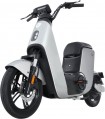 |
|---|---|---|
| Atlas Tiger Box 2000W | Yadea V7 | |
| Outdated Product | Outdated Product | |
| TOP sellers | ||
4.2-inch TN LCD display with day and night mode. | ||
| Product type | electric scooterbike | light moped |
| Max. load | 200 kg | 75 kg |
Driving performance | ||
| Range | 80 km | 70 km |
| Power | 2.72 hp | 0.54 hp |
| Power | 2 kW | 0.4 kW |
| Max speed | 60 km/h | 25 km/h |
| Speed modes | 3 | 2 |
| Reverse gear |  |  |
| Parking mode | | |
| Max. climb angle | 25 ° | |
| Wheels | rubber inflatable tubeless 17 " | rubber inflatable tubeless 16 " |
| Front brake | disk | disk |
| Rear brake | disk | drum |
| Regenerative brake | | |
Battery | ||
| Battery type | lead-acid | Li-Ion |
| Battery capacity | 20 Ah | 20 Ah |
| Battery capacity | 960 Wh | |
| Full charge time | 8 h | 8 h |
| Removable battery | | |
| USB output for charging | | |
Functions and features | ||
| Headlight and position lamps | | |
| Turn signals | | |
| Horn | | |
| Passenger seat | | |
| Carrier | | |
| Luggage box | | |
| Kickstand | | |
| Pedals | | |
General | ||
| Clearance | 170 mm | |
| Wheelbase | 1161 mm | |
| Dimensions | 175x58x88 cm | 164x68x104 cm |
| Weight | 110 kg | 55 kg |
| Added to E-Catalog | april 2025 | april 2023 |


Compare Atlas Tiger Box 2000W and Yadea V7
You may be interested in
My comparisons
Atlas Tiger Box 2000W often compared


Glossary
Product type
The general type of vehicle determines the overall arrangement as well as some application specifics.
— Electric scooterbike. Vehicles of this type are outwardly almost indistinguishable from classic motor scooters. In particular, they have a relatively small footwell and a rather large ledge above the rear wheel; on this ledge is the seat, and inside is the motor. The only difference from classic scooters is that an electric motor is used instead of an internal combustion engine.
— Minibike. Minibikes are rather peculiar electric vehicles that look like slightly improved and weighted kick scooters: two very wide wheels, a platform for feet, a small seat and a handlebar. In terms of technical parameters, such as maximum speed and range, minibikes are not inferior to electric scooterbikes. However, low ground clearance and modest depreciation make minibikes demanding on the road surface, and the absence of turn indicators in most models makes them unsuitable for highways. The perfect options for such transport are parks, pedestrian and bicycle zones, narrow streets of the historical centre and other similar locations.
— Electric motorcycle. Such vehicles differ from traditional motorcycles only in the use of electric motors instead of internal combustion engines. Like traditional motorcycles, they can be of different types and have differ...ent specializations — in particular, among electric motorcycles there are enduro and cross models.
— Electric car. Electric cars are similar in design to cars: they have 4 wheels, an enclosed interior, appropriate controls (steering wheel, pedals) and seats. The main difference from full-fledged cars (including electric ones) is their miniature size: units of this type are often designed for one or two passengers with a minimum of luggage (although there are also larger models). However, in many countries, according to the SDA, such vehicles fall under the category of cars. Electric cars are noticeably more expensive than other electric vehicles, but they also provide the appropriate comfort: you do not need to keep your balance, and the closed cabin protects the driver from bad weather.
— Electric tricycle. Quite a rare category of electric transport. Electric tricycles, by the name, have three wheels; but otherwise, they are usually similar to the minibikes described above — the design has a large platform and a relatively small seat. The three-wheel layout makes such units very stable, they do not require kickstands, and the design most often has a basket on the front. At the same time, for several reasons, electric tricycles are not very common.
— Electric scooterbike. Vehicles of this type are outwardly almost indistinguishable from classic motor scooters. In particular, they have a relatively small footwell and a rather large ledge above the rear wheel; on this ledge is the seat, and inside is the motor. The only difference from classic scooters is that an electric motor is used instead of an internal combustion engine.
— Minibike. Minibikes are rather peculiar electric vehicles that look like slightly improved and weighted kick scooters: two very wide wheels, a platform for feet, a small seat and a handlebar. In terms of technical parameters, such as maximum speed and range, minibikes are not inferior to electric scooterbikes. However, low ground clearance and modest depreciation make minibikes demanding on the road surface, and the absence of turn indicators in most models makes them unsuitable for highways. The perfect options for such transport are parks, pedestrian and bicycle zones, narrow streets of the historical centre and other similar locations.
— Electric motorcycle. Such vehicles differ from traditional motorcycles only in the use of electric motors instead of internal combustion engines. Like traditional motorcycles, they can be of different types and have differ...ent specializations — in particular, among electric motorcycles there are enduro and cross models.
— Electric car. Electric cars are similar in design to cars: they have 4 wheels, an enclosed interior, appropriate controls (steering wheel, pedals) and seats. The main difference from full-fledged cars (including electric ones) is their miniature size: units of this type are often designed for one or two passengers with a minimum of luggage (although there are also larger models). However, in many countries, according to the SDA, such vehicles fall under the category of cars. Electric cars are noticeably more expensive than other electric vehicles, but they also provide the appropriate comfort: you do not need to keep your balance, and the closed cabin protects the driver from bad weather.
— Electric tricycle. Quite a rare category of electric transport. Electric tricycles, by the name, have three wheels; but otherwise, they are usually similar to the minibikes described above — the design has a large platform and a relatively small seat. The three-wheel layout makes such units very stable, they do not require kickstands, and the design most often has a basket on the front. At the same time, for several reasons, electric tricycles are not very common.
Max. load
The maximum additional weight that a vehicle is designed to carry is, in fact, the weight of the payload that it is allowed to carry.
The maximum load includes both the passenger himself and the things he carries. In this case, the value is usually indicated based on a flat road and a quiet ride. So, ideally, it is best to have a maximum weight margin of at least 10-15 kg — this will give an additional guarantee in case of emergencies, such as a wheel falling into a pothole.
The maximum load includes both the passenger himself and the things he carries. In this case, the value is usually indicated based on a flat road and a quiet ride. So, ideally, it is best to have a maximum weight margin of at least 10-15 kg — this will give an additional guarantee in case of emergencies, such as a wheel falling into a pothole.
Range
The range of a vehicle is the distance it can travel on a single battery charge.
Note that the range usually indicates the value for perfect operating conditions: driving at optimal speed with a small load, flat road, no ups and downs, etc. The actual range may differ from the claimed one, sometimes quite noticeably. In addition, to improve range, manufacturers can deliberately use low-power motors that consume little energy.
Note that the range usually indicates the value for perfect operating conditions: driving at optimal speed with a small load, flat road, no ups and downs, etc. The actual range may differ from the claimed one, sometimes quite noticeably. In addition, to improve range, manufacturers can deliberately use low-power motors that consume little energy.
Power
The motor power of a vehicle, in horsepower.
In general, the power of electric motors is indicated in watts. However, in electric transport, this designation is also often indicated. This is done for the convenience of comparison with internal combustion engines: for internal combustion engines, especially in vehicles, horsepower is traditionally used, and it is more convenient for some users to evaluate the power of motors by this designation. At the same time, if the need arises, some units are easily converted to others: 1 hp. ≈ 735 W.
For the power value in general, see the relevant paragraph below.
In general, the power of electric motors is indicated in watts. However, in electric transport, this designation is also often indicated. This is done for the convenience of comparison with internal combustion engines: for internal combustion engines, especially in vehicles, horsepower is traditionally used, and it is more convenient for some users to evaluate the power of motors by this designation. At the same time, if the need arises, some units are easily converted to others: 1 hp. ≈ 735 W.
For the power value in general, see the relevant paragraph below.
Power
The motor power of a vehicle, in kilowatts. In addition to them, horsepower is also used (for more details, see above).
Let us clarify that in this case, we are talking about maximum power; the actual power can be adjusted while driving with the help of the accelerator. And in some models, it may even be possible to set a limit on the maximum power.
A more powerful motor allows you to carry more weight, reach higher speeds and/or have more torque. However, the energy consumption from the battery will also be high, and the battery life, with the same battery capacity, will be correspondingly less than when using a less powerful motor. Also note that in many countries, motor power is a criterion for classifying an electric vehicle as one or another variety. For example, according to this criterion, motorcycles and scooters can be formally separated, requiring different driving licences.
Let us clarify that in this case, we are talking about maximum power; the actual power can be adjusted while driving with the help of the accelerator. And in some models, it may even be possible to set a limit on the maximum power.
A more powerful motor allows you to carry more weight, reach higher speeds and/or have more torque. However, the energy consumption from the battery will also be high, and the battery life, with the same battery capacity, will be correspondingly less than when using a less powerful motor. Also note that in many countries, motor power is a criterion for classifying an electric vehicle as one or another variety. For example, according to this criterion, motorcycles and scooters can be formally separated, requiring different driving licences.
Max speed
The highest speed that a vehicle can reach.
When choosing according to this parameter, it is worth considering that in dense city traffic, it is rarely possible to accelerate faster than 40 km/h; so if the vehicle is bought mainly for a comfortable ride through traffic jams, then there is no need to look for a high-speed model. In addition, for the same motor power, low speed means more torque, which makes it easier to climb hills.
When choosing according to this parameter, it is worth considering that in dense city traffic, it is rarely possible to accelerate faster than 40 km/h; so if the vehicle is bought mainly for a comfortable ride through traffic jams, then there is no need to look for a high-speed model. In addition, for the same motor power, low speed means more torque, which makes it easier to climb hills.
Speed modes
Speed modes allow you to limit the maximum speed of an electric scooter or moped for different riding conditions. With 2 modes, there is usually a calm and a faster option, with 3 modes an additional convenient medium level is added for the city, and 4 modes provide more precise customization for the yard, sidewalk area, regular road, or economical riding.
The more modes, the easier it is to balance speed, battery consumption, and safety. For example, the low mode is convenient for parking and moving next to pedestrians, the medium mode is for everyday trips, and the maximum mode is for open road sections.
The more modes, the easier it is to balance speed, battery consumption, and safety. For example, the low mode is convenient for parking and moving next to pedestrians, the medium mode is for everyday trips, and the maximum mode is for open road sections.
Reverse gear
The reverse gear allows you to move backward without turning around and manually rolling the vehicle. This feature is especially useful when parking, leaving a tight space, maneuvering in a courtyard, garage, or near a curb.
Parking mode
The electronic motion lock mode allows temporarily disabling the throttle response to prevent accidental movement of the vehicle. The parking mode is useful during stops, boarding, short breaks at a store, or when the scooter is near people. Unlike a complete power shutdown, parking mode usually allows for a quick return to the ride without restarting the entire system.