
Comparison UNI-T UT309E vs Benetech GM300
Add to comparison | 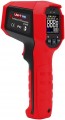 | 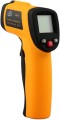 |
|---|---|---|
| UNI-T UT309E | Benetech GM300 | |
| Outdated Product | Outdated Product | |
| TOP sellers | ||
| Design | gun | gun |
| Target designator | point-to-point | single point |
Specs | ||
| Surface t measurements | -35 – 850 °C | -50 – 420 °C |
| Distance to spot ratio | 20 | 12 |
| Response time | 250 ms | 500 ms |
| Measurement accuracy | 1.8 °C | 1.5 °C |
| Measurement accuracy | 1.8 % | 1.5 % |
| Operating temperature | 0 – 50 °C | 0 – 40 °C |
| Functions | emissivity adjustment standart backlit | |
General | ||
| Power source | PP3 | PP3 |
| Case (bag) |  |  |
| Max. operating time | 16 h | |
| Security level | IP65 | |
| Dimensions | 189x118x55 mm | 153x101x43 mm |
| Weight | 292 g | 147 g |
| Added to E-Catalog | august 2023 | march 2018 |


Compare UNI-T UT309E and Benetech GM300
You may be interested in
Benetech GM300 often compared


Glossary
Target designator
The type of laser designator provided in the design of the pyrometer.
The laser pointer allows you to see exactly where the device is directed and the temperature of which particular area it measures. The options could be:
— Single point. Target designator in the form of a single beam pointing to the centre of the measurement area. The simplest and cheapest option, however, not very accurate — in the sense that the user cannot accurately assess which area on the measured surface falls into the field of view of the pyrometer.
— Two-point. Target designator in the form of two beams pointing to points along the edges of the measurement area. The location of the points can be horizontal (left and right) or vertical (top and bottom). Anyway, such a target designator already allows you to determine the size of the area that falls into the field of view of the device. However, it costs a little more than a single-point one, and therefore is less common.
— Multi-point circular. Target designator in the form of several rays forming a circle of dots on the measured surface. This is the most complex and expensive, but also the most accurate option: the circle clearly shows the location and size of the measurement area.
— Missing. The complete absence of any target designat...or in the design; it is necessary to direct such a device "by eye". This option is found exclusively in individual models of the most compact devices, which, in principle, are not designed for measurements at long distances.
The laser pointer allows you to see exactly where the device is directed and the temperature of which particular area it measures. The options could be:
— Single point. Target designator in the form of a single beam pointing to the centre of the measurement area. The simplest and cheapest option, however, not very accurate — in the sense that the user cannot accurately assess which area on the measured surface falls into the field of view of the pyrometer.
— Two-point. Target designator in the form of two beams pointing to points along the edges of the measurement area. The location of the points can be horizontal (left and right) or vertical (top and bottom). Anyway, such a target designator already allows you to determine the size of the area that falls into the field of view of the device. However, it costs a little more than a single-point one, and therefore is less common.
— Multi-point circular. Target designator in the form of several rays forming a circle of dots on the measured surface. This is the most complex and expensive, but also the most accurate option: the circle clearly shows the location and size of the measurement area.
— Missing. The complete absence of any target designat...or in the design; it is necessary to direct such a device "by eye". This option is found exclusively in individual models of the most compact devices, which, in principle, are not designed for measurements at long distances.
Surface t measurements
The range of surface temperatures that the instrument can effectively measure.
In general, the meaning of this parameter is quite obvious. We only note that an extensive operating range is not always an advantage. First, it affects the cost of the device; secondly, when the range is extended, the measurement accuracy may deteriorate. So when choosing, you should not chase the maximum temperature range, but take into account real needs: for example, it hardly makes sense to choose a pyrometer with an upper limit of 500 °C for measuring the quality of thermal insulation and determining heat leaks in residential premises. It is conditionally possible to divide pyrometers into those that are for measuring low temperatures, and, accordingly, for high ones.
In general, the meaning of this parameter is quite obvious. We only note that an extensive operating range is not always an advantage. First, it affects the cost of the device; secondly, when the range is extended, the measurement accuracy may deteriorate. So when choosing, you should not chase the maximum temperature range, but take into account real needs: for example, it hardly makes sense to choose a pyrometer with an upper limit of 500 °C for measuring the quality of thermal insulation and determining heat leaks in residential premises. It is conditionally possible to divide pyrometers into those that are for measuring low temperatures, and, accordingly, for high ones.
Distance to spot ratio
Instrument sighting index.
The sighting indicator is the ratio between the distance to the surface, the temperature of which is measured, and the diameter of the spot that enters the field of view of the device. For example, if at a distance of 2 m the device will cover a zone of 10 cm (0.1 m), then the sighting index will be 2 / 0.1 = 20.
When choosing for this parameter, it is worth considering the expected measurement conditions — the dimensions of the objects whose temperature is supposed to be measured, and the distances to them. At the same time, it is worth remembering that for accurate measurement, the measured surface must completely occupy the field of view of the pyrometer — otherwise the device will also “see” foreign objects, the radiation of which will distort the measurement results. Therefore, for long distances, models with high sighting rates are recommended — 40, 50, etc. If measurements are planned to be carried out at a distance of one or two metres, and the measured objects are quite large, you should pay attention to models with relatively small values of this parameter — 10 , 20 etc.
The sighting indicator is the ratio between the distance to the surface, the temperature of which is measured, and the diameter of the spot that enters the field of view of the device. For example, if at a distance of 2 m the device will cover a zone of 10 cm (0.1 m), then the sighting index will be 2 / 0.1 = 20.
When choosing for this parameter, it is worth considering the expected measurement conditions — the dimensions of the objects whose temperature is supposed to be measured, and the distances to them. At the same time, it is worth remembering that for accurate measurement, the measured surface must completely occupy the field of view of the pyrometer — otherwise the device will also “see” foreign objects, the radiation of which will distort the measurement results. Therefore, for long distances, models with high sighting rates are recommended — 40, 50, etc. If measurements are planned to be carried out at a distance of one or two metres, and the measured objects are quite large, you should pay attention to models with relatively small values of this parameter — 10 , 20 etc.
Response time
Approximate response time of the device, namely the time that elapses from pressing the measurement button until the results are shown on the display (or from a change in temperature to a change in the readings on the display, if we are talking about continuous measurement mode). In most cases, this parameter does not play a special role: even in the "slowest" devices, it does not exceed 1000 ms (1 s), which does not lead to any inconvenience. It is worth paying attention to the response time only if the device is planned to be used to measure the temperature of fast moving objects: the faster the reaction, the less time you have to keep the measured object in the field of view of the pyrometer, the lower the likelihood that this object can “jump out” from the field of view until the end of measurements.
Measurement accuracy
Temperature measurement accuracy provided by the pyrometer, in degrees. It is indicated by the maximum deviation in one direction or another, which the device can give out during operation. For example, if the specification says 1.5°C and the reading reads 80°C, the actual temperature could be between 78.5°C and 81.5°C. Thus, the smaller the number in this paragraph, the lower the error and the higher the accuracy of the device. At the same time, high accuracy has a corresponding effect on cost.
It should be noted that this designation often turns out to be very conditional, and the detailed characteristics may contain various clarifications regarding errors. So, the accuracy of measurements is often given simultaneously in degrees and in percentages with a wording like "± 2 °C or ± 2%, whichever value is greater." For details on percentage error, see Measurement Accuracy below. And this record means that the actual measurement error in degrees may turn out to be even higher than that directly stated in the characteristics — for example, 2% of 500 °C gives a deviation of ± 10 °C. In addition, there may be other refinements — for example, at sub-zero temperatures, the deviation can be ± 2 °C plus 0.05 °C for each degree below zero (that is, increase with decreasing temperature). So if high measurement accuracy is critical for you, you should carefully read the manufacturer's documentation.
It should be noted that this designation often turns out to be very conditional, and the detailed characteristics may contain various clarifications regarding errors. So, the accuracy of measurements is often given simultaneously in degrees and in percentages with a wording like "± 2 °C or ± 2%, whichever value is greater." For details on percentage error, see Measurement Accuracy below. And this record means that the actual measurement error in degrees may turn out to be even higher than that directly stated in the characteristics — for example, 2% of 500 °C gives a deviation of ± 10 °C. In addition, there may be other refinements — for example, at sub-zero temperatures, the deviation can be ± 2 °C plus 0.05 °C for each degree below zero (that is, increase with decreasing temperature). So if high measurement accuracy is critical for you, you should carefully read the manufacturer's documentation.
Measurement accuracy
The accuracy of temperature measurements provided by the pyrometer, in percent. It is indicated by the maximum deviation in one direction or another, which the device can give out during operation. The percentage is taken from the actual temperature value; In fact, this means that the greater the deviation from zero, the higher the error can be. For example, at 100 °C an error of 2% gives a deviation of ±2 °C, and at 500 °C this value already reaches ±10 °C. However, this does not mean that when approaching zero, the error disappears — for this case, the measurement accuracy in degrees is given in parallel in the characteristics (see above). In this case, wordings like “± 2 °C or ± 2%, which of the values will be greater” are used; at low temperatures, when the percentage error will be unrealistically small (for example, for 20 °C, the same 2% will give only ± 0.4 °C), it is worth evaluating the accuracy of measurements by the error in degrees.
Operating temperature
The range of ambient air temperatures over which the instrument can perform its functions normally.
All modern pyrometers are guaranteed to work at room temperature. At the same time, they usually allow deviations from it within 15 – 20 °C — for example, in many models, the operating temperature range is claimed within 0 ... 40 °C. So you should pay attention to this indicator if the device is planned to be used at temperatures below zero, or vice versa, in hot conditions — not every model is able to work normally with one or another “extreme”.
Note that going beyond the range of permissible temperatures does not necessarily lead to a breakdown of the device. However, one should not deviate from these recommendations, at least in the light of the fact that under abnormal conditions the device begins to give too high an error, and there is no need to talk about any measurement accuracy.
All modern pyrometers are guaranteed to work at room temperature. At the same time, they usually allow deviations from it within 15 – 20 °C — for example, in many models, the operating temperature range is claimed within 0 ... 40 °C. So you should pay attention to this indicator if the device is planned to be used at temperatures below zero, or vice versa, in hot conditions — not every model is able to work normally with one or another “extreme”.
Note that going beyond the range of permissible temperatures does not necessarily lead to a breakdown of the device. However, one should not deviate from these recommendations, at least in the light of the fact that under abnormal conditions the device begins to give too high an error, and there is no need to talk about any measurement accuracy.
Functions
— Adjustment of emissivity. The ability to adjust the device to the emissivity of different materials. The emissivity determines how much energy a given surface radiates at a certain temperature; it is expressed by numbers from 0 to 1 (coefficient 1 has an perfect “absolutely black body”). Without going into too much physical detail, we can say that if the instrument settings do not correspond to the actual emissivity of the surface being measured, the measurement results will also differ from the actual temperature. However, most of the surfaces that one has to deal with in fact — wood, brickwork, plastic, coated with paint and metal oxides — have an emissivity of 0.8 – 0.9; pyrometers are set to these indicators by default, and additional correction during measurements is generally not required. But the radiation index of polished metal and some other materials can be noticeably lower than these values, and the pyrometer must be adjusted separately for such surfaces. Well, anyway, if the maximum accuracy of measurements is critical for you, you should choose a device with adjustable emissivity and adjust it for each individual surface. There are special tables that allow you to determine this coefficient for different types of materials.
— Backlight. The presence in the device of its own backlight. In this case, both conventional and ultraviolet illumination can be implied. The fir...st actually complements the pyrometer with a flashlight function and makes it easier to work in low light conditions. UV illumination, on the other hand, is primarily designed to detect refrigerant leaks in air conditioners and refrigeration units: many refrigerants contain an additive that glows in UV rays. The specific type of backlight for each model should be specified separately.
— USB port. Standard USB connector for connecting the device to a computer, laptop, etc. Usually, to use the possibilities of such a connection, you need to install special software from the manufacturer's website. Connectivity may vary. So, the recording function is often encountered when the computer constantly monitors the readings of the device, building a chart or table of temperature fluctuations. Other devices may provide the ability to copy measurements from their own memory to a PC. The USB port can also be used to charge the battery (see "Power") and configure the pyrometer — for example, adjusting the emissivity (see above), calibrating, updating the firmware, etc. The specific set of capabilities in each case should be clarified separately.
— RS-232. Also known as a COM port. Service connector for connecting the pyrometer to computers and some types of specialized equipment. Data can be transmitted via RS-232 in two directions: an external device can record pyrometer readings and, if necessary, control instrument settings from it.
— Bluetooth. Bluetooth wireless technology is used for direct connection between different devices. Theoretically, the ways of using such a compound can be different; Specifically, in this case, Bluetooth is mainly used to connect the pyrometer to a smartphone, tablet or gadget and transfer measurement results to this gadget. To process the results, usually, you need to install a special application; it provides a variety of additional capabilities and is often more convenient than manual processing of results, especially when dealing with large amounts of data.
— Backlight. The presence in the device of its own backlight. In this case, both conventional and ultraviolet illumination can be implied. The fir...st actually complements the pyrometer with a flashlight function and makes it easier to work in low light conditions. UV illumination, on the other hand, is primarily designed to detect refrigerant leaks in air conditioners and refrigeration units: many refrigerants contain an additive that glows in UV rays. The specific type of backlight for each model should be specified separately.
— USB port. Standard USB connector for connecting the device to a computer, laptop, etc. Usually, to use the possibilities of such a connection, you need to install special software from the manufacturer's website. Connectivity may vary. So, the recording function is often encountered when the computer constantly monitors the readings of the device, building a chart or table of temperature fluctuations. Other devices may provide the ability to copy measurements from their own memory to a PC. The USB port can also be used to charge the battery (see "Power") and configure the pyrometer — for example, adjusting the emissivity (see above), calibrating, updating the firmware, etc. The specific set of capabilities in each case should be clarified separately.
— RS-232. Also known as a COM port. Service connector for connecting the pyrometer to computers and some types of specialized equipment. Data can be transmitted via RS-232 in two directions: an external device can record pyrometer readings and, if necessary, control instrument settings from it.
— Bluetooth. Bluetooth wireless technology is used for direct connection between different devices. Theoretically, the ways of using such a compound can be different; Specifically, in this case, Bluetooth is mainly used to connect the pyrometer to a smartphone, tablet or gadget and transfer measurement results to this gadget. To process the results, usually, you need to install a special application; it provides a variety of additional capabilities and is often more convenient than manual processing of results, especially when dealing with large amounts of data.
Case (bag)
The presence of a case or bag in the delivery set of the device.
A case is called a hard case; it is relatively bulky, but provides good protection not only from pollution, but also from shock. Bags, on the other hand, are made of soft materials, they protect mainly from dust and dirt, but such a case can be folded compactly when not in use. Anyway, complete bags and cases are more convenient than impromptu packaging.
A case is called a hard case; it is relatively bulky, but provides good protection not only from pollution, but also from shock. Bags, on the other hand, are made of soft materials, they protect mainly from dust and dirt, but such a case can be folded compactly when not in use. Anyway, complete bags and cases are more convenient than impromptu packaging.