
Comparison Forte MC-3500E vs Forte MC-3000
Add to comparison | 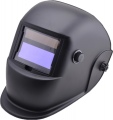 |  |
|---|---|---|
| Forte MC-3500E | Forte MC-3000 | |
| Outdated Product | from $18.00 | |
| TOP sellers | ||
| Type | chameleon helmet | chameleon helmet |
Specs | ||
| Light filtering levels | 4 DIN | 4 DIN |
| Min. degree of darkening | 9 DIN | 9 DIN |
| Max. degree of darkening | 13 DIN | 13 DIN |
| Protection from UV/IR | 16 DIN | |
| Turn-on time | 50 ms | 50 ms |
| Filter class | 1/3/1/3 | 1/2/1/2 |
| Filter viewing area (WxH) | 92x35 mm | 92x42 mm |
| Filter cartridge dimensions (WxH) | 110x90 mm | |
| Filter cartridge thickness | 9 mm | |
| Optical sensors | 2 | |
| Operating temperature | -5 – 55 °C | -5 – 55 °C |
| Helmet weight | 460 g | 460 g |
Filter functions | ||
| Darkening adjustment | external mechanical | internal mechanical |
| Sensitivity adjustment | internal mechanical | internal mechanical |
| Delay time adjustment | internal mechanical | |
| Colour rendering | standard (shades of green) | standard (shades of green) |
| Design features | internal and external controls | controls inside flip-up filter |
| Color | ||
| Added to E-Catalog | december 2021 | november 2015 |


Compare Forte MC-3500E and MC-3000
You may be interested in
My comparisons
Forte MC-3500E often compared

Forte MC-3000 often compared
Glossary
Protection from UV/IR
The degree of protection against infrared and ultraviolet radiation provided by the complete mask light filter.
Such protection is relevant primarily when working with electric welding: it is the electric arc that produces a large amount of IR and UV radiation. Exposure to these types of radiation on the skin can cause burns, and ultraviolet light is also harmful to the eyes. The degree of protection in this case is indicated in DIN units, and the larger the number in such a designation, the higher the degree of protection. In this case, 12 DIN is considered the minimum acceptable indicator, however, masks / goggles can be found on the market with higher protection rates — up to 16 DIN inclusive.
From a purely practical point of view, the higher this level of protection, the better; however, this characteristic significantly affects the price, and sometimes also the weight of the mask / goggles. So when choosing, it is worth considering the features of the planned work. For example, it is hardly worth specifically looking for a model for 15 – 16 DIN, if you have to cook rarely and little by little, but for professional use and large volumes of work, this level of protection will be very useful.
Such protection is relevant primarily when working with electric welding: it is the electric arc that produces a large amount of IR and UV radiation. Exposure to these types of radiation on the skin can cause burns, and ultraviolet light is also harmful to the eyes. The degree of protection in this case is indicated in DIN units, and the larger the number in such a designation, the higher the degree of protection. In this case, 12 DIN is considered the minimum acceptable indicator, however, masks / goggles can be found on the market with higher protection rates — up to 16 DIN inclusive.
From a purely practical point of view, the higher this level of protection, the better; however, this characteristic significantly affects the price, and sometimes also the weight of the mask / goggles. So when choosing, it is worth considering the features of the planned work. For example, it is hardly worth specifically looking for a model for 15 – 16 DIN, if you have to cook rarely and little by little, but for professional use and large volumes of work, this level of protection will be very useful.
Filter class
Class is a complex indicator that determines the overall quality of the light filter in a chameleon mask (see "Type"). The class is indicated by 4 numbers, each of which describes a specific optical parameter. So, the first number indicates the overall clarity and lack of distortion; the second is the degree of light scattering; third — uniformity of blackout (presence/absence of visible blackout spots); the fourth is the angular dependence (how much the filter brightens when the angle of view deviates from the perpendicular). In each case, the larger the number, the worse this parameter is. The perfect indicator is considered to be 1/1/1/1, but in fact it is very difficult to achieve an perfect angular dependence, and there is no need to. Therefore, an indicator of 1/1/1/2 is considered quite sufficient even for a high-end professional filter.
Filter viewing area (WxH)
The size of the transparent part of the light filter — the "working window", the area through which the welder sees the place of work. A larger working window provides ease of use and a wide field of view, but it significantly affects the cost of the mask and somewhat reduces the strength of the light filter.
Filter cartridge dimensions (WxH)
The overall dimensions of the light filter for which the mask is designed, taking into account the working window, protrusions for mounting, batteries, sensors and other structural elements. This indicator is especially important for models that are not equipped with light filters: without knowing the size, it is very difficult to choose the right cartridge. In other cases, data on the size of the cartridge is needed mainly when looking for a replacement for a failed colour filter.
Optical sensors
Optical sensors determine the filter response speed. They respond to sudden changes in lighting and arc flicker — characteristic signs of the start of welding work. The more sensors in the mask design, the less likely the filter will open during welding. To better capture the difference in radiation, sensors are often placed at different corners of the mask.
Darkening adjustment
The ability to manually select the degree of darkening of the filter in the chameleon mask. This feature is found mainly in professional models; it allows the welder to manually adjust the light transmission for specific conditions. The need to adjust the dimming is due to the fact that for some types of work (for example, TIG welding of ferrous metals), the brightness of the arc is relatively low, and in order to see the weld pool normally, dimming of only 8-9 DIN is enough instead of the usual 12 DIN or more .
Delay time adjustment
The ability to manually set the delay time between the disappearance of the arc and turning off the filter in the chameleon mask. Such a delay is highly desirable in the light of the fact that even after the arc is turned off, the heated metal continues to glow for some time; therefore, it is advisable not to turn off the filter immediately. Adjusting the delay time allows the welder to independently choose the time to return to the non-working (maximally transparent) state.
Design features
— Backlight. Illumination system built right into the mask. This feature is very convenient when working in low light conditions: the backlight does not take up the hands (unlike hand-held flashlights) and does not create problems with wearing a mask (unlike headlamps), while the beam of light is always directed to where the welder's head is turned. On the other hand, such a system requires its own power supply. Therefore, it is used only in "chameleons", while the operation of the backlight additionally consumes battery power.