
Comparison Alkofor 205 vs Alkofor 105
Add to comparison | 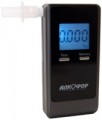 | 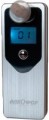 |
|---|---|---|
| Alkofor 205 | Alkofor 105 | |
| Outdated Product | Outdated Product | |
| TOP sellers | ||
| Blowing | with mouthpiece | with mouthpiece |
| Sensor | electrochemical | electrochemical |
| Measuring range | 0 – 2 ‰ | 0 – 3 ‰ |
| Max. error | 0.05 ‰ | 0.1 ‰ |
| Warm-up time | 15 с | 10 с |
| Blow time | 6 с | 6 с |
| Test time | 15 с | 10 с |
| Tests counter |  | |
| Last measurements memory | |  |
| Upper limit | | |
| Anti-deception | | |
| Automatic shutdown | | |
| Display backlight | | |
| Power source | 2xAAA | 1xAAA |
| Operating temperature | 10 °C ~ +40 °C | 10 °C ~ +40 °C |
| Size | 105x52x23,5 mm | 110x42x22 mm |
| Weight | 93 g | 68 g |
| Added to E-Catalog | july 2018 | july 2018 |


Compare Alkofor 205 and 105
You may be interested in
Alkofor 205 often compared


Alkofor 105 often compared

Glossary
Measuring range
The measurement range provided by the breathalyzer. It is indicated from the minimum level of alcohol in the blood that the device is able to detect, to the maximum.
It is worth choosing according to this parameter, taking into account the purposes for which it is planned to use the device, what levels of alcohol they will have to measure. For your convenience, you can use the following table:
— Up to 0.3 ‰ — asymptomatic degree of intoxication. There are no obvious signs of alcohol consumption, it is impossible to detect them without special means. In countries where there is no “zero per mille” rule for drivers, the blood alcohol level allowed for driving is usually within these limits (most often it is 0.2 ‰).
— 0.3 – 0.6 ‰ — a slight degree of intoxication. Some violation of concentration and coordination, disinhibition, talkativeness, the appearance of relaxation and euphoria.
— 0.6 – 1 ‰ — the average degree of intoxication. Dullness of sensations, weakening of self-control, loss of logic in reasoning, memory lapses after sobering up are possible.
— 1 – 2 ‰ — the degree of intoxication is above average. Speech becomes almost incomprehensible, reflexes and coordination are severely impaired, mood swings and manifestations of uncontrolled aggression are possible.
— 2 – 3 ‰ — a significant degree of intoxication: confusion and loss o...f consciousness, severe motor impairment.
— 3 – 4 ‰ — a strong degree of intoxication: a violation of the heartbeat and breathing, uncontrolled vomiting and urination, the inability to stand and move straight.
— above 4 ‰ — a critical degree of intoxication, a fatal outcome is likely.
Note that for some breathalyzers, the lower limit of the measurement range is indicated as "0". You can estimate the lowest concentration of alcohol that such a device is guaranteed to be able to detect using the maximum error (see below): the lower limit of the range will approximately correspond to the claimed error.
It is worth choosing according to this parameter, taking into account the purposes for which it is planned to use the device, what levels of alcohol they will have to measure. For your convenience, you can use the following table:
— Up to 0.3 ‰ — asymptomatic degree of intoxication. There are no obvious signs of alcohol consumption, it is impossible to detect them without special means. In countries where there is no “zero per mille” rule for drivers, the blood alcohol level allowed for driving is usually within these limits (most often it is 0.2 ‰).
— 0.3 – 0.6 ‰ — a slight degree of intoxication. Some violation of concentration and coordination, disinhibition, talkativeness, the appearance of relaxation and euphoria.
— 0.6 – 1 ‰ — the average degree of intoxication. Dullness of sensations, weakening of self-control, loss of logic in reasoning, memory lapses after sobering up are possible.
— 1 – 2 ‰ — the degree of intoxication is above average. Speech becomes almost incomprehensible, reflexes and coordination are severely impaired, mood swings and manifestations of uncontrolled aggression are possible.
— 2 – 3 ‰ — a significant degree of intoxication: confusion and loss o...f consciousness, severe motor impairment.
— 3 – 4 ‰ — a strong degree of intoxication: a violation of the heartbeat and breathing, uncontrolled vomiting and urination, the inability to stand and move straight.
— above 4 ‰ — a critical degree of intoxication, a fatal outcome is likely.
Note that for some breathalyzers, the lower limit of the measurement range is indicated as "0". You can estimate the lowest concentration of alcohol that such a device is guaranteed to be able to detect using the maximum error (see below): the lower limit of the range will approximately correspond to the claimed error.
Max. error
The maximum measurement error provided by the device during operation, in other words, the largest deviation from the actual result that may occur during measurements. For example, if the error is claimed at the level of 0.1 ‰, and the measurement result is 0.5 ‰, then the actual amount of alcohol in the blood will be from 0.4 ‰ to 0.6 ‰.
In the most advanced models, this parameter is 0.05 ‰ or less ; values of 0.06 – 0.1 ‰ correspond to the average level, more than 0.1 ‰ — low accuracy. The lower the error, the more accurate the device, the more reliable its readings. On the other hand, high accuracy has a corresponding effect on the price. Therefore, when choosing according to this criterion, it is worth considering what exactly a breathalyzer is needed for and how important measurement accuracy is for it. In particular, for devices used by the traffic police, there are accuracy requirements that are expressly specified in regulatory documents.
In the most advanced models, this parameter is 0.05 ‰ or less ; values of 0.06 – 0.1 ‰ correspond to the average level, more than 0.1 ‰ — low accuracy. The lower the error, the more accurate the device, the more reliable its readings. On the other hand, high accuracy has a corresponding effect on the price. Therefore, when choosing according to this criterion, it is worth considering what exactly a breathalyzer is needed for and how important measurement accuracy is for it. In particular, for devices used by the traffic police, there are accuracy requirements that are expressly specified in regulatory documents.
Warm-up time
The warm-up time of the breathalyzer to the working state, in other words, the time that must pass after switching on or after the end of the previous measurement before the device can be used.
The fastest modern breathalyzers warm up in 5 – 6 seconds, time up to 20 seconds is considered quite good; in slower models, this time can be up to a minute. At the same time, it makes sense to specifically look for a device with a short warm-up time only in cases where it is needed for streaming checks and high speed is crucial. And if the device is purchased for individual use with measurements a maximum of 2 – 3 times a day — you can not pay much attention to this parameter: waiting even a few tens of seconds is most often not a problem.
The fastest modern breathalyzers warm up in 5 – 6 seconds, time up to 20 seconds is considered quite good; in slower models, this time can be up to a minute. At the same time, it makes sense to specifically look for a device with a short warm-up time only in cases where it is needed for streaming checks and high speed is crucial. And if the device is purchased for individual use with measurements a maximum of 2 – 3 times a day — you can not pay much attention to this parameter: waiting even a few tens of seconds is most often not a problem.
Test time
The time it takes the instrument to test — in other words, the time that elapses between the end of the purge and the display of the final result. This is one of the parameters that determine the performance of the device (along with the warm-up time and purge time, see above). At the same time, we note that it makes sense to specifically look for a device with a short testing time ( 10 s or less) mainly for mass flow checks, when “every second counts” — for example, for pre-trip control of drivers at a large auto enterprise. If we are talking about episodic measurements — for example, individual self-control after "celebrations" once or twice a month — you can get by with a device with a low speed.
Last measurements memory
Ability to save the results of the last few measurements in the memory of the device. The number of available saves can be different, as well as their storage time: in some devices, the saved results are erased when turned off, in others they are stored until they are erased or overwritten. Anyway, the memory of the last measurements is useful mainly for streaming checks.
Power source
Type of power supplied by the device. The power supply methods used in modern breathalyzers can be divided into two types — replaceable cells of a standard size and original batteries.
The first option is convenient because dead batteries can be quickly replaced with fresh ones — the main thing is to have a supply on hand. At the same time, replaceable elements can be made both disposable and rechargeable, in the form of batteries. On the other hand, batteries usually have to be purchased separately — and either regularly buy more disposable cells, or spend a significant amount on batteries and a charger. Here are the main sizes of replaceable elements found in modern breathalyzers:
— AAA. Cylindrical-shaped batteries, known as "mini finger" or "little finger" batteries. A fairly popular option, especially among entry-level and mid-level breathalyzers: they are small in size, and although the capacity of such batteries is small, it is quite enough for the mentioned devices.
— AA. Classic, known to many "finger" batteries. For a number of reasons (in particular, due to the larger size), they are used in breathalyzers less frequently than the “little finger” AAA.
— PP3. Batteries of a characteristic rectangular shape with a pair of contacts on one of the ends. They are distinguished by a rather high voltage — 9 V. They are used mainly in professional devices with an abundance of additional functions that require a large amount of energy.<...br>
As for the original batteries, such batteries often outperform replacement batteries in terms of performance and do not require additional costs: the battery is purchased immediately with the device and in the future it is enough to periodically recharge it. On the other hand, charging requires time and a power source; it is usually impossible to quickly replace a dead battery. And the mentioned performance advantages are rarely decisive. As a result, this variant is relatively rare in breathalyzers.
The first option is convenient because dead batteries can be quickly replaced with fresh ones — the main thing is to have a supply on hand. At the same time, replaceable elements can be made both disposable and rechargeable, in the form of batteries. On the other hand, batteries usually have to be purchased separately — and either regularly buy more disposable cells, or spend a significant amount on batteries and a charger. Here are the main sizes of replaceable elements found in modern breathalyzers:
— AAA. Cylindrical-shaped batteries, known as "mini finger" or "little finger" batteries. A fairly popular option, especially among entry-level and mid-level breathalyzers: they are small in size, and although the capacity of such batteries is small, it is quite enough for the mentioned devices.
— AA. Classic, known to many "finger" batteries. For a number of reasons (in particular, due to the larger size), they are used in breathalyzers less frequently than the “little finger” AAA.
— PP3. Batteries of a characteristic rectangular shape with a pair of contacts on one of the ends. They are distinguished by a rather high voltage — 9 V. They are used mainly in professional devices with an abundance of additional functions that require a large amount of energy.<...br>
As for the original batteries, such batteries often outperform replacement batteries in terms of performance and do not require additional costs: the battery is purchased immediately with the device and in the future it is enough to periodically recharge it. On the other hand, charging requires time and a power source; it is usually impossible to quickly replace a dead battery. And the mentioned performance advantages are rarely decisive. As a result, this variant is relatively rare in breathalyzers.