
Comparison Tsunami Pro 350 vs Thunder Planet 320
Add to comparison |  | 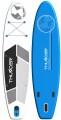 |
|---|---|---|
| Tsunami Pro 350 | Thunder Planet 320 | |
| Outdated Product | Outdated Product | |
| TOP sellers | ||
Kayak seat. | Kayak seat. | |
Features | ||
| Riding style | travel/all-round | travel/all-round |
Specs | ||
| Thickness | 6 " | 6 " |
| Dimensions (WxDxT) | 86x350x15 cm | 75x320x15 cm |
| Max. rider weight | 150 kg | 150 kg |
| Permissible pressure | 15 psi | |
General | ||
| In box | paddle pump leash centrofin repair kit bag | paddle pump leash centrofin repair kit bag |
| Kit weight | 14.5 kg | 13 kg |
| Added to E-Catalog | june 2025 | may 2024 |


Compare Tsunami Pro 350 and Thunder Planet 320
You may be interested in
My comparisons
Tsunami Pro 350 often compared

Glossary
Dimensions (WxDxT)
The dimensions of the board are indicated in centimeters. For more details about the dimensions themselves and their meaning, see the paragraph above. This paragraph more clearly describes the dimensions of the models for the European population to whom the metric units are closer.
Permissible pressure
Range of permitted pressures in a board. Traditionally stated in psi (pounds per square inch); 1 atmosphere is about 14.7 psi.
This parameter is relevant for inflatable SUP boards: it indicates how to inflate the board. Note that you should not bring the pressure to the maximum allowable — this leads to excessive rigidity and rapid wear of the board, and also increases the risk of deformation and breakage. However, low pressure is also undesirable — the board becomes soft andunstable under foot. The best option is considered to be a value that is approximately in the middle of the pressure range — for example, 20 psi for a board at 15 – 25 psi. And the documentation for the SUP board can also provide very specific recommendations on the optimal degree of pumping.
In general, professional athletes, as well as riders with a large body weight (90 kg or more), have to pay attention to this parameter. In the latter case, the pressure must be high enough so that the board does not sag under the weight of the swimmer; as for sports, there are different recommendations for pressure for different types of competitions; they can be found in special sources.
This parameter is relevant for inflatable SUP boards: it indicates how to inflate the board. Note that you should not bring the pressure to the maximum allowable — this leads to excessive rigidity and rapid wear of the board, and also increases the risk of deformation and breakage. However, low pressure is also undesirable — the board becomes soft andunstable under foot. The best option is considered to be a value that is approximately in the middle of the pressure range — for example, 20 psi for a board at 15 – 25 psi. And the documentation for the SUP board can also provide very specific recommendations on the optimal degree of pumping.
In general, professional athletes, as well as riders with a large body weight (90 kg or more), have to pay attention to this parameter. In the latter case, the pressure must be high enough so that the board does not sag under the weight of the swimmer; as for sports, there are different recommendations for pressure for different types of competitions; they can be found in special sources.