
Comparison Zubr MF2-63 vs Zubr D2-63
Add to comparison |  | 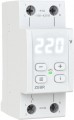 |
|---|---|---|
| Zubr MF2-63 | Zubr D2-63 | |
| Outdated Product | Outdated Product | |
| User reviews | ||
| TOP sellers | ||
| Device | voltage Monitoring Relays | voltage Monitoring Relays |
| Voltage | variable | variable |
| Number of phases | 1 | 1 |
| Mount | dIN rail | dIN rail |
| Width (unit) | 2 U | 2 U |
Specs | ||
| Power | 13.9 kVA | 13.9 kVA |
| Rated current | 63 А | 63 А |
| Maximum current | 80 А | 80 А |
| Voltage measuring range | 100 – 420 В | 100 – 420 В |
| Cut-off time (lower limit) | 0.03 с | 0.04 с |
| Off time (upper limit) | 0.03 с | 0.04 с |
| Response time adjustment |  |  |
| Reclosing delay | 3 – 999 с | 3 – 600 с |
| Lower cut-off limit | 120 – 210 В | 120 – 210 В |
| Upper cut-off limit | 220 – 280 В | 220 – 280 В |
| Current trip limit | 0.1 – 63 А | |
| Functions | display operation indicator thermal protection fault memory | display operation indicator thermal protection fault memory |
General | ||
| Adjustment | digital | digital |
| Protection level | IP20 | IP20 |
| Dimensions | 36x85x66 mm | 66x85x36 mm |
| Weight | 190 g | 170 g |
| Added to E-Catalog | november 2025 | february 2019 |


Compare Zubr MF2-63 and D2-63
You may be interested in
Zubr MF2-63 often compared

Zubr D2-63 often compared


Glossary
Cut-off time (lower limit)
Time to turn off the device on the lower limit of voltage or current. This is a kind of "reaction time" of the relay: the period of time between reaching the lower limit and turning off the protected network segment.
The lower this value, the more advanced the protection will be, the lower the probability of failure of sensitive devices due to untimely operation of the relay. On the other hand, a high response rate for the lower limit is not as critical as for the upper one, and the shutdown time can be quite long — 1 s or more.
Also note that for some devices, this paragraph gives the minimum turn-off time (fastest response time), while in certain modes this time may be longer. For example, a voltage relay with a lower limit of 160 V may provide tripping after less than 0.05 s when the voltage drops below 120 V and tripping after 1 s when the voltage is in the range of 120 – 160 V, but above 120 V. This avoids unnecessary shutdowns with relatively weak and short-term voltage deviations. In the characteristics of such a device, 0.05 s will be indicated.
The lower this value, the more advanced the protection will be, the lower the probability of failure of sensitive devices due to untimely operation of the relay. On the other hand, a high response rate for the lower limit is not as critical as for the upper one, and the shutdown time can be quite long — 1 s or more.
Also note that for some devices, this paragraph gives the minimum turn-off time (fastest response time), while in certain modes this time may be longer. For example, a voltage relay with a lower limit of 160 V may provide tripping after less than 0.05 s when the voltage drops below 120 V and tripping after 1 s when the voltage is in the range of 120 – 160 V, but above 120 V. This avoids unnecessary shutdowns with relatively weak and short-term voltage deviations. In the characteristics of such a device, 0.05 s will be indicated.
Off time (upper limit)
The device shutdown time on the upper limit of voltage or current. This is a kind of "reaction time" of the relay: the period of time between reaching the upper limit and turning off the protected network segment.
The lower this value, the more advanced the protection will be, the lower the probability of failure of sensitive devices due to untimely operation of the relay. Note that a short reaction time in this case is especially important, because too high a voltage or current is a serious danger to any device.
The lower this value, the more advanced the protection will be, the lower the probability of failure of sensitive devices due to untimely operation of the relay. Note that a short reaction time in this case is especially important, because too high a voltage or current is a serious danger to any device.
Response time adjustment
Delay time adjustment means that after detecting a fault (voltage dip/surge, current overload, power overdraw), the device doesn't immediately break the circuit, but does so after an adjustable delay. This adjustment filters out short-lived surges and drops, eliminating false triggers from motor starting currents and stabilizing the operation of lines with a generator or unstable network. Typically, the range is from fractions of a second to tens of seconds or minutes; for electronics, minimal values are chosen, while for compressors and pumps, larger values are preferred. Compared to "instant" relays, models with delay time adjustment provide more control and fewer downtimes, but require proper setup along with thresholds and delay for reconnection. Example: a refrigerator or heat pump can withstand a brief spike, but with a prolonged deviation, the relay safely disconnects the load and logs the event.
Reclosing delay
The reclosing delay is the time after a safety shutdown after which the device turns on the mains power again. Usually, in modern control relays this time can be adjusted, so the characteristics indicate the range from the minimum to the maximum value.
Adjustment of the delay allows you to adjust the format of the relay to the characteristics of the network. So, if voltage failures do not mean critical problems, you can set the minimum re-closing time, and if jumps occur only with serious problems that need to be fixed, it is better to turn on the maximum delay. Note that triggered relays usually allow manual reclosing, and in most models it is possible to completely disable the automatic reclosing function.
Adjustment of the delay allows you to adjust the format of the relay to the characteristics of the network. So, if voltage failures do not mean critical problems, you can set the minimum re-closing time, and if jumps occur only with serious problems that need to be fixed, it is better to turn on the maximum delay. Note that triggered relays usually allow manual reclosing, and in most models it is possible to completely disable the automatic reclosing function.
Current trip limit
The upper current shutdown limit provided in the device is the threshold above which the relay switches off the protected network segment. Many models allow you to adjust this limit; for them, the range of such adjustment is indicated in the characteristics. Note that for the upper limit of this range, some manufacturers take not the maximum, but the rated current of the device; see above for details on these options.