
Comparison WoSport HD-17 vs WoSport HD-16
Add to comparison |  | 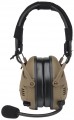 |
|---|---|---|
| WoSport HD-17 | WoSport HD-16 | |
| Expecting restock | Outdated Product | |
| TOP sellers | ||
| Design and type | on-ear active | on-ear active |
| Single Number Rating (SNR) | 27 dB | 33 dB |
| Noise Reduction Ratio (NRR) | 22 dB | 31 dB |
| Noise level limit | 82 dB | 82 dB |
Features | ||
| Audio input |  | |
| Bluetooth | | |
| Headset (microphone) | | |
| Helmet compatibility | under helmet | under helmet |
| Low profile cups | | |
| Foldable | | |
General | ||
| Control | buttons | buttons |
| Power source | 2xAAA | battery |
| Operating time | 400 h | 530 h |
| Auto switch-off | | |
| In box | case batteries audio cable | case batteries audio cable |
| Added to E-Catalog | october 2023 | october 2023 |


Compare WoSport HD-17 and HD-16
You may be interested in
Glossary
Single Number Rating (SNR)
An indicator of how much decibel certain headphones reduce the level of external noise. Acoustic efficiency SNR (Single Number Rating) is the sound absorption characteristics according to the requirements of the European quality standard. A similar standard in the American style is called NRR (about it, see below).
The specified SNR value allows you to determine how much peak noise the headphones absorb. So, if this parameter is 27 dB, then the noise level that enters the user's ear is 27 dB lower than the sound level in the environment. The higher the SNR value, the more effective the hearing protection.
The specified SNR value allows you to determine how much peak noise the headphones absorb. So, if this parameter is 27 dB, then the noise level that enters the user's ear is 27 dB lower than the sound level in the environment. The higher the SNR value, the more effective the hearing protection.
Noise Reduction Ratio (NRR)
An indicator of how much volume in decibels tactical headphones cut during operation. Acoustic efficiency NRR (Noise Reduction Rating) is the sound absorption characteristics according to the requirements of the American quality standard. A similar standard in the European style is called SRR (about it, see above).
NRR is an assessment of how effectively a hearing protection device can reduce ambient noise levels. If headphones are marked with the “NRR 30 dB” mark, then they can reduce the level of external sounds by 30 dB. The higher the NRR value, the more effective the tactical headphones are at protecting the hearing aid.
NRR is an assessment of how effectively a hearing protection device can reduce ambient noise levels. If headphones are marked with the “NRR 30 dB” mark, then they can reduce the level of external sounds by 30 dB. The higher the NRR value, the more effective the tactical headphones are at protecting the hearing aid.
Power source
The type of batteries used by tactical headphones to ensure battery life. Technically, these can be either replaceable elements of a standard size or built-in batteries.
- AA batteries. Powered by replaceable AA size cells, also known as AA batteries. Such elements can be either disposable or rechargeable. The advantage of this option is the ability to quickly replace dead batteries, but the user will need to either regularly purchase disposable batteries or spend money on batteries with a charger.
— AAA batteries. Such elements are almost completely similar to the AA described above and outwardly differ from them only in their reduced size. In common parlance, AAA batteries are commonly called “pinky” or “mini-finger”.
— Built-in battery. One of the advantages of this type of power supply over batteries is that the built-in battery is a priori included in the standard package of tactical headphones, and when the charge is exhausted, it is enough to charge it again. Built-in rechargeable batteries often have a higher capacity than batteries. On the other hand, if such a battery runs out, it cannot be quickly replaced: it needs charging, and this requires time and external power.
- AA batteries. Powered by replaceable AA size cells, also known as AA batteries. Such elements can be either disposable or rechargeable. The advantage of this option is the ability to quickly replace dead batteries, but the user will need to either regularly purchase disposable batteries or spend money on batteries with a charger.
— AAA batteries. Such elements are almost completely similar to the AA described above and outwardly differ from them only in their reduced size. In common parlance, AAA batteries are commonly called “pinky” or “mini-finger”.
— Built-in battery. One of the advantages of this type of power supply over batteries is that the built-in battery is a priori included in the standard package of tactical headphones, and when the charge is exhausted, it is enough to charge it again. Built-in rechargeable batteries often have a higher capacity than batteries. On the other hand, if such a battery runs out, it cannot be quickly replaced: it needs charging, and this requires time and external power.
Operating time
Operating time of the headphones on one set of replaceable batteries or a full charge of the built-in battery (see “Power source”).
Using this parameter, you can roughly estimate the duration of use of tactical headphones without the need to replace batteries or recharge the power source. It is also intended to compare the real capabilities of different models.
Using this parameter, you can roughly estimate the duration of use of tactical headphones without the need to replace batteries or recharge the power source. It is also intended to compare the real capabilities of different models.