
Comparison DJI Matrice 4E vs DJI Mavic 3E
Add to comparison |  | 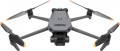 |
|---|---|---|
| DJI Matrice 4E | DJI Mavic 3E | |
from $5,699.00 | from $39.99 | |
| TOP sellers | ||
Maximum flight altitude up to 6 km (4 km with payload). Laser rangefinder (1 – 1800 m, 1 Hz range). The 4T and 4E models differ in the set of cameras (in addition to the medium and telephoto): 4T has a wide-angle 1/1.3" camera with a fixed aperture of f/1.7 and a thermal imager, 4E has a wide-angle 4/3" camera with a variable aperture of f/2.8-f/11 and no thermal imager | All-round optical obstacle sensors, IR sensors at the bottom of the body. Supports O3+ 1080p 60 fps video broadcasting over a distance of up to 15 km. Maximum flight duration is 45 minutes. ActiveTrack 5.0 support. Mechanical shutter on the main camera. DJI RC Pro Enterprise (802.11ax, 2x2 MIMO, BT 5.1, 64 GB, mini-HDMI, GPS+Galileo+GLONASS) remote control included. | |
| Features | industrial / commercial | industrial / commercial |
Flight specs | ||
| Range of flight | 35 km | 32 km |
| Maximum flight time | 49 min | 45 min |
| Horizontal speed | 76 km/h | 75 km/h |
| Ascent / descent speed | 36 km/h | 28.8 km/h |
| Wind impedance | 12 m/s | 12 m/s |
| Payload | 1.42 kg | |
Camera | ||
| Camera type | built-in | built-in |
| Matrix size | 4/3" | 4/3" |
| Aperture | f/2.8 — f/11 | f/2.8 – f/11 |
| Number of megapixels | 20 MP | 20 MP |
| Photo resolution | 5280x3956 px | 5280x3956 px |
| Full HD filming (1080p) | 1920x1080 px 30 fps | 1920x1080 px 30 fps |
| Ultra HD (4K) | 3840x2160 px 30 fps | 3840x2160 px 30 fps |
| Viewing angles | 84 | 84 |
| Time lapse |  |  |
| Mechanical stabilizer suspension | | |
| Camera with control | | |
| Live video streaming | | |
| Memory card slot | | |
Flight modes and sensors | ||
| Flight modes | return "home" flight plan without GPS (Waypoints) flyby GPS points | return "home" Follow me (tracking) Dronie (distance) Rocket (distance up) Orbit mode (flying in a circle) Helix (spiral flight) flyby GPS points |
| Sensors | GPS module heights optic gyroscope | GPS module heights optic gyroscope |
| Obstacle sensors | bottom top on the sides front back | bottom top on the sides front back |
Control and transmitter | ||
| Control | remote control only | remote control only |
| Range | 25000 m | 15000 m |
| Control frequency | 2.4, 5.1 and 5.8 GHz | 2.4 and 5.8 GHz |
| Video transmission frequency | 2.4 and 5.8 GHz (Wi-Fi) | 2.4 and 5.8 GHz (Wi-Fi) |
| Smartphone mount | | |
| Information display | | |
| Display for broadcast FPV | | |
| Remote control power source | battery | battery |
Motor and chassis | ||
| Motor type | brushless | brushless |
| Motor model | 2008 | |
| Number of screws | 4 pcs | 4 pcs |
| Screw diameter | 274 mm | |
| Foldable design | | |
Battery | ||
| Battery capacity | 6.74 Ah | 5 Ah |
| Voltage | 14.76 В | 15.4 В |
| Battery model | 4S | 4S |
| Batteries in the set | 1 pcs | 1 pcs |
| USB charging | | |
General | ||
| Body backlight | | |
| Material | carbon fibre | plastic |
| Dimensions | 387.5x307x149.5 mm | 347.5x283x107.7 mm |
| Dimensions (folded) | 260.6x113.7x138.4 mm | 221x96.3x90.3 mm |
| Weight | 1219 g | 915 g |
| Color | ||
| Added to E-Catalog | february 2025 | september 2022 |


Compare DJI Matrice 4E and Mavic 3E
You may be interested in
My comparisons
DJI Matrice 4E often compared

DJI Mavic 3E often compared


Glossary
Range of flight
The distance that a quadcopter can travel in the air on one full battery charge. Simply put, this is the drone's range in kilometers. Note that smaller, lighter drones tend to have a more limited flight range compared to larger, more powerful models. In the latter, it can reach 30 km or more. Also, the maximum flight distance is often influenced by weather factors and the load carried by the copter.
Maximum flight time
Maximum flight time of a quadcopter on one full battery charge. This indicator is quite approximate, since it is most often indicated for ideal conditions - in real use, the flight time may be less than stated. However, by this indicator it is quite possible to evaluate the general capabilities of the copter and compare it with other models - a longer declared flight time in practice usually means higher autonomy.
Note that for modern copters, a flight time of 20 minutes or more is considered a good indicator, and in the most “long-lasting” models it can exceed 40 minutes.
Note that for modern copters, a flight time of 20 minutes or more is considered a good indicator, and in the most “long-lasting” models it can exceed 40 minutes.
Horizontal speed
The highest speed that a quadcopter can achieve in horizontal flight. It is worth considering that in most cases this parameter is indicated for optimal operating conditions: a fully charged battery, low air temperature, minimum weight, etc. However, it is quite possible to rely on it both when choosing and when comparing different models of copters with each other.
Note that quadcopters were originally designed as stable and maneuverable aerial platforms, and not as high-speed vehicles. Therefore, you should specifically look for a fast quadcopter only in cases where the ability to quickly move from place to place is critical (for example, when the device is supposed to be used for video recording of fast-moving objects over large areas).
Note that quadcopters were originally designed as stable and maneuverable aerial platforms, and not as high-speed vehicles. Therefore, you should specifically look for a fast quadcopter only in cases where the ability to quickly move from place to place is critical (for example, when the device is supposed to be used for video recording of fast-moving objects over large areas).
Ascent / descent speed
The speed at which the quadcopter rises up in the air or descends to the ground. Recreational, photo and video models tend to have more moderate climb/descent speeds, while professional or racing drones can rise and fall much faster. This indicator can be used to evaluate how quickly the copter can rise to a height for filming or, if necessary, avoid obstacles, and a high descent rate will be useful if the drone needs to be returned to the ground quickly and safely.
Payload
The weight that the quadcopter is capable of carrying while performing its functions. By payload we usually mean the equipment that the aircraft carries directly without compromising flight stabilization: thermal imagers, cameras, rangefinders, release systems, etc. The higher the payload, the more diversification of missions a drone can accomplish per flight.
Aperture
Aperture - a characteristic that determines how much the camera lens attenuates the light flux passing through it. It depends on two main characteristics - the diameter of the active aperture of the lens and the focal length - and in the classical form is written as the ratio of the first to the second, while the diameter of the effective aperture is taken as a unit: for example, 1 / 2.8. Often, when recording the characteristics of a lens, the unit is generally omitted, such a record looks, for example, like this: f / 1.8. At the same time, the larger the number in the denominator, the smaller the aperture value: f / 4.0 lenses will produce a darker image than models with f / 1.4 aperture.
Time lapse
In Time-Lapse mode, shooting is carried out at a very low frame rate (one frame every few seconds, or even minutes), due to which the effect of fast movement is achieved in the finished video (for example, a day from sunrise to sunset can fit in several minutes). This can be very convenient for fixing long-term events in which it is necessary to capture not so much the details as the general trend. For example, with the help of Time Lapse, you can shoot how the square before the concert was filled with people, or how the lighting of the landscape changed at sunrise / sunset, “stinging” these processes from a couple of hours to several minutes.
Note that the specific features of the implementation of Time Lapse in copters can be different, this point should be clarified separately.
Note that the specific features of the implementation of Time Lapse in copters can be different, this point should be clarified separately.
Flight modes
— Return home function. With this function, the quadcopter can automatically return to the starting point. The specific details of this feature may vary. So, some models return "home" at the user's command, others are able to do it on their own — for example, when the signal from the remote control is lost or when the battery charge is critically low; in many devices, both options are provided at once. Also note that this function is found even in models that do not have a GPS module (see "Sensors") — the copter can navigate in space in another way (by inertial sensors, by a signal from the remote control, etc.).
— Follow me mode. A mode that allows the quadcopter to constantly follow the user at a short distance — like a "personal drone". The way to implement this mode and the equipment required for it can be different: some models track the direction to the transmitter and the signal strength from it, others constantly receive data from the GPS module of a smartphone or other gadget and follow these coordinates, etc. Anyway, such a mode can be useful not only for entertainment, but also for quite practical purposes — for example, for using a quadcopter as an “air chamber”, constantly located next to the operator and at the same time not occupying hands.
— Dronie (distance). Initially, the term “dronie” refers to a selfie (photo or video) taken from a...drone. This mode is mainly intended for such tasks. And its essence lies in the fact that the copter smoothly moves away from a certain object along a given trajectory, keeping this object in the centre of the frame. The classic version of flying in Dronie mode is moving away first horizontally, then horizontally and up; however, in some models, the copter’s trajectory can be further configured. Frame management can also be carried out in different ways — from simple pointing at a certain point and ending with the selection of an object on the screen with further "smart" tracking of this object. Anyway, for all its simplicity, such a shooting technique allows you to create quite interesting videos: for example, in this way you can first capture a group of people in close-up in one video, then the beauty of the landscape around them.
— Rocket (distance up). A flight mode in which the copter smoothly rises to a predetermined altitude along a strictly vertical trajectory. Similar to the Dronie described above, it is mainly used when shooting video: first, a certain scene is shot in close-up, and as it rises, the camera covers an increasingly wider area around this scene. Usually, in Rocket mode, you can pre-set the height at which the device will stop.
— "Orbit mode" (flying in a circle). A mode that allows you to launch the copter in a circular orbit around the specified point. It is also used mainly for shooting video: in such cases, the camera remains constantly pointed at a given object, but the angle and background, due to the movement of the drone, are constantly changing. In the "orbit" settings, usually, you can set its radius, height and direction of movement, as well as the angle of the camera.
— Helix (circle in a spiral). Another mode used as an artistic technique for filming videos. In this mode, the copter, keeping a given object in the centre of the frame, moves around it in a spiral, gradually moving away and increasing its height. This allows you to get the maximum variety of angles and angles of coverage.
Note that Dronie, Rocket, Helix, and Orbit modes originally appeared as part of the proprietary QuickShot toolkit in DJI's Mavic series drones. However, later similar functions were introduced by other manufacturers, so now these names are used as common nouns.
— Flight plan(Waypoints). The ability to set a specific flight route for the quadcopter, by control points. This feature is very similar to the GPS waypoint flyby (see above), but it works differently, without the use of GPS navigation. One of the most popular options is building a route in the smartphone application through which the copter is controlled; when the programme is launched, the smartphone issues a sequence of commands corresponding to the route to the device. In general, the Waypoints mode is not as accurate as a GPS waypoint flyby and offers fewer options. Therefore, this function is mainly for entertainment purposes; if the copter has a camera, it can be useful for taking a selfie or a simple video.
— Flight by GPS points. A mode that allows you to launch a quadcopter along a specific route — by setting individual route points to the car in advance (according to GPS coordinates) and the order in which they are passed. In addition, additional settings may be provided — for example, speed and altitude on individual sections of the route. This function is similar to the Waypoints mode (see below) in many ways, but it is found mainly in mid-range and high-end devices. At the same time, the use of GPS provides higher accuracy, which allows the drone to be used for professional purposes. For example, if you set a route for shooting from the air in this way, the operator will be able to fully concentrate on working with the camera, without being distracted by controlling the copter.
— Acrobatic mode. A special mode for performing aerobatics. Note that the specific meaning of this mode may be different, depending on the level and purpose of the copter. So, in the simplest entertainment models, automatic programs are usually provided that allow you to perform certain aerobatic manoeuvres literally “at the touch of a button”. And in advanced devices in flight mode, the stabilization system is turned off, and the drone is very sensitive to operator commands; this requires high precision in control, but gives maximum control over the flight.
— Follow me mode. A mode that allows the quadcopter to constantly follow the user at a short distance — like a "personal drone". The way to implement this mode and the equipment required for it can be different: some models track the direction to the transmitter and the signal strength from it, others constantly receive data from the GPS module of a smartphone or other gadget and follow these coordinates, etc. Anyway, such a mode can be useful not only for entertainment, but also for quite practical purposes — for example, for using a quadcopter as an “air chamber”, constantly located next to the operator and at the same time not occupying hands.
— Dronie (distance). Initially, the term “dronie” refers to a selfie (photo or video) taken from a...drone. This mode is mainly intended for such tasks. And its essence lies in the fact that the copter smoothly moves away from a certain object along a given trajectory, keeping this object in the centre of the frame. The classic version of flying in Dronie mode is moving away first horizontally, then horizontally and up; however, in some models, the copter’s trajectory can be further configured. Frame management can also be carried out in different ways — from simple pointing at a certain point and ending with the selection of an object on the screen with further "smart" tracking of this object. Anyway, for all its simplicity, such a shooting technique allows you to create quite interesting videos: for example, in this way you can first capture a group of people in close-up in one video, then the beauty of the landscape around them.
— Rocket (distance up). A flight mode in which the copter smoothly rises to a predetermined altitude along a strictly vertical trajectory. Similar to the Dronie described above, it is mainly used when shooting video: first, a certain scene is shot in close-up, and as it rises, the camera covers an increasingly wider area around this scene. Usually, in Rocket mode, you can pre-set the height at which the device will stop.
— "Orbit mode" (flying in a circle). A mode that allows you to launch the copter in a circular orbit around the specified point. It is also used mainly for shooting video: in such cases, the camera remains constantly pointed at a given object, but the angle and background, due to the movement of the drone, are constantly changing. In the "orbit" settings, usually, you can set its radius, height and direction of movement, as well as the angle of the camera.
— Helix (circle in a spiral). Another mode used as an artistic technique for filming videos. In this mode, the copter, keeping a given object in the centre of the frame, moves around it in a spiral, gradually moving away and increasing its height. This allows you to get the maximum variety of angles and angles of coverage.
Note that Dronie, Rocket, Helix, and Orbit modes originally appeared as part of the proprietary QuickShot toolkit in DJI's Mavic series drones. However, later similar functions were introduced by other manufacturers, so now these names are used as common nouns.
— Flight plan(Waypoints). The ability to set a specific flight route for the quadcopter, by control points. This feature is very similar to the GPS waypoint flyby (see above), but it works differently, without the use of GPS navigation. One of the most popular options is building a route in the smartphone application through which the copter is controlled; when the programme is launched, the smartphone issues a sequence of commands corresponding to the route to the device. In general, the Waypoints mode is not as accurate as a GPS waypoint flyby and offers fewer options. Therefore, this function is mainly for entertainment purposes; if the copter has a camera, it can be useful for taking a selfie or a simple video.
— Flight by GPS points. A mode that allows you to launch a quadcopter along a specific route — by setting individual route points to the car in advance (according to GPS coordinates) and the order in which they are passed. In addition, additional settings may be provided — for example, speed and altitude on individual sections of the route. This function is similar to the Waypoints mode (see below) in many ways, but it is found mainly in mid-range and high-end devices. At the same time, the use of GPS provides higher accuracy, which allows the drone to be used for professional purposes. For example, if you set a route for shooting from the air in this way, the operator will be able to fully concentrate on working with the camera, without being distracted by controlling the copter.
— Acrobatic mode. A special mode for performing aerobatics. Note that the specific meaning of this mode may be different, depending on the level and purpose of the copter. So, in the simplest entertainment models, automatic programs are usually provided that allow you to perform certain aerobatic manoeuvres literally “at the touch of a button”. And in advanced devices in flight mode, the stabilization system is turned off, and the drone is very sensitive to operator commands; this requires high precision in control, but gives maximum control over the flight.
Range
The range of the drone is the maximum distance from the control device at which a stable connection is maintained and the device remains controlled. For models that allow operation both from the remote control and from a smartphone (see "Control"), this item indicates the maximum value — usually achieved when using the remote control.
When choosing according to this indicator, note that the range is indicated for perfect conditions — within line of sight, without obstacles in the signal path and interference on the air. In reality, the control range may be somewhat lower; and when using a smartphone, it will also depend on the characteristics of a particular gadget. As for specific figures, they can vary from several tens of metres in low-cost models to 5 km or more in high-end equipment. At the same time, it should be said that the greater the range of communication, the higher its reliability in general, the better the control works with an abundance of interference and obstacles. Therefore, a powerful transmitter can be useful not only for long distances, but also for difficult conditions.
When choosing according to this indicator, note that the range is indicated for perfect conditions — within line of sight, without obstacles in the signal path and interference on the air. In reality, the control range may be somewhat lower; and when using a smartphone, it will also depend on the characteristics of a particular gadget. As for specific figures, they can vary from several tens of metres in low-cost models to 5 km or more in high-end equipment. At the same time, it should be said that the greater the range of communication, the higher its reliability in general, the better the control works with an abundance of interference and obstacles. Therefore, a powerful transmitter can be useful not only for long distances, but also for difficult conditions.