
Comparison BetaFPV Meteor75 Pro vs BetaFPV Cetus Lite FPV Kit
Add to comparison |  | 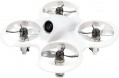 |
|---|---|---|
| BetaFPV Meteor75 Pro | BetaFPV Cetus Lite FPV Kit | |
| Compare prices 9 | Outdated Product | |
| User reviews | ||
| TOP sellers | ||
Camera resolution 1200 TVL (NTSC, 4:3). | Camera resolution 800TVL. | |
| Features | mini drone | mini drone |
Flight specs | ||
| Maximum flight time | 7 min | 5 min |
Camera | ||
| Camera type | removable | removable |
| Matrix size | 1/3" | 1/4" |
| Viewing angles | 160 | 150° |
| Camera with control |  |  |
| Live video streaming | | |
Flight modes and sensors | ||
| Sensors | gyroscope | heights |
Control and transmitter | ||
| Control | remote control (not included) | remote control only |
| Range | 80 m | |
| Communication protocol | ELRS | |
| Control frequency | 2.4 GHz | 2.4 GHz |
| Video transmission frequency | 5.8 GHz (analog) | 2.4 GHz (Wi-Fi) |
| FPV helmet for broadcast | | |
| Remote control power source | battery | |
Motor and chassis | ||
| Motor type | brushless | collector |
| Motor model | 1102 22000KV | 716-19000KV |
| Number of screws | 4 pcs | 4 pcs |
| Screw diameter | 45 mm | 31 mm |
Battery | ||
| Battery capacity | 0.55 Ah | 0.3 Ah |
| Battery model | 1S | 1S |
| Batteries in the set | 2 pcs | 2 pcs |
General | ||
| Protected case | | |
| Body backlight | | |
| Material | plastic | |
| Dimensions | 90x85x45 mm | |
| Weight | 30 g | 36 g |
| Color | ||
| Added to E-Catalog | november 2024 | february 2023 |



Compare BetaFPV Meteor75 Pro and Cetus Lite FPV Kit
Price comparison
You may be interested in
My comparisons
BetaFPV Cetus Lite FPV Kit often compared


Glossary
Maximum flight time
Maximum flight time of a quadcopter on one full battery charge. This indicator is quite approximate, since it is most often indicated for ideal conditions - in real use, the flight time may be less than stated. However, by this indicator it is quite possible to evaluate the general capabilities of the copter and compare it with other models - a longer declared flight time in practice usually means higher autonomy.
Note that for modern copters, a flight time of 20 minutes or more is considered a good indicator, and in the most “long-lasting” models it can exceed 40 minutes.
Note that for modern copters, a flight time of 20 minutes or more is considered a good indicator, and in the most “long-lasting” models it can exceed 40 minutes.
Matrix size
The physical size of the photosensitive element of a camera. Measured diagonally, often indicated in fractions of an inch — for example, 1/3.2" or 1/2.3" (respectively, the second matrix will be larger than the first). Note that in such designations it is not the “ordinary” inch (2.54 cm) that is used, but the so-called "Vidiconovsky", which is less than a third and is about 17 mm. This is partly a tribute to the tradition that comes from television tubes — "vidicons" (the forerunners of modern matrices), partly — a marketing ploy that gives buyers the impression that the matrices are larger than they really are.
Anyway, for the same resolution (number of megapixels), a larger matrix means a larger size for each individual pixel; accordingly, on large matrices, more light enters each pixel, which means that such matrices have higher photosensitivity and lower noise levels, especially when shooting in low light conditions. On the other hand, increasing the diagonal of the sensor inevitably leads to an increase in its cost.
Anyway, for the same resolution (number of megapixels), a larger matrix means a larger size for each individual pixel; accordingly, on large matrices, more light enters each pixel, which means that such matrices have higher photosensitivity and lower noise levels, especially when shooting in low light conditions. On the other hand, increasing the diagonal of the sensor inevitably leads to an increase in its cost.
Viewing angles
The viewing angle provided by the standard quadcopter camera; for optics with adjustable zoom, usually, the maximum value is taken into account.
The viewing angle is the angle between the lines connecting the centre of the lens to the two opposite extreme points of the visible image. Usually measured along the diagonal of the frame, but there may be exceptions. As for the specific values of this parameter, in modern copters they can range from 55 – 60 ° to 180 ° and even more. At the same time, a wider angle (ceteris paribus) allows you to simultaneously fit more space into the frame; and a narrower one covers a smaller space, however, the objects that are in the frame look larger, it is easier to see individual small details on them. So when choosing by this parameter, you should consider what is more important for you: wide coverage or an additional zoom effect.
The viewing angle is the angle between the lines connecting the centre of the lens to the two opposite extreme points of the visible image. Usually measured along the diagonal of the frame, but there may be exceptions. As for the specific values of this parameter, in modern copters they can range from 55 – 60 ° to 180 ° and even more. At the same time, a wider angle (ceteris paribus) allows you to simultaneously fit more space into the frame; and a narrower one covers a smaller space, however, the objects that are in the frame look larger, it is easier to see individual small details on them. So when choosing by this parameter, you should consider what is more important for you: wide coverage or an additional zoom effect.
Camera with control
The ability to remotely control the quadcopter camera. The set of features provided by such control depends both on the type of camera (see above) and on the specific model. So, when using a third-party camera on a gimbal, control functions are most often limited to turning and tilting the lens; but for regular cameras, start and stop shooting, fixing a photo on command, changing the viewing angle, etc. can be provided.
Sensors
Additional sensors provided in the design of the quadcopter.
— Heights. A sensor that determines the flight altitude of the machine. Such sensors can use the barometric or ultrasonic principle of operation. In the first case, the height is measured by the difference in atmospheric pressure between the current point and the starting point (that is, the sensor determines the height relative to the initial level); in the second, the sensor acts similarly to sonar, sending a signal to the ground and measuring the time it takes to return. Barometric sensors are not very accurate, but they work well at high altitudes — tens and hundreds of metres; ultrasonic — on the contrary, they allow you to accurately manoeuvre at low level flight, but lose effectiveness as you climb. However, in some advanced models, both options may be provided at once. Data from the height sensor can either be used by the quadcopter “independently” (for example, when hovering or automatically returning), or transmitted to the operator to the remote control or smartphone.
— Optical. A sensor that allows the quadcopter to "see" the environment in certain directions. One of the simplest variants of such a sensor is a downward-facing camera that allows the device to “copy” the surface under which it flies. Due to this, the machine, for example, can navigate indoors, where the signal from GPS satellites does not reach. In...addition to such a chamber, "eyes" can also be provided from different sides of the machine. Note that optical sensors have certain limitations in their use — for example, they lose their effectiveness on dark, shiny or uniform (without noticeable details) surfaces, as well as at high speeds.
— GPS module. A sensor that receives signals from navigation satellites (GPS, in some models also GLONASS) and determines the current geographical coordinates of the machine. Specific ways of using position data can be different: returning home, flying by waypoints (see below), recording a flight route, etc.
— Gyroscope. A sensor that determines the direction, angle and speed of the machine's rotation along a specific axis. Modern technologies make it possible to create full-fledged three-axis gyroscopes of very compact dimensions, and it is with such modules that quadcopters are usually equipped. On the basis of gyroscopes, automatic stabilization systems usually work, returning the car to a horizontal position after a gust of wind, collision with an obstacle, etc. At the same time, such equipment affects the cost of the device, and in some cases (for example, during piloting), automatic stabilization is more of a hindrance than a useful feature. Therefore, some low-cost, as well as advanced aerobatic quadcopters, are not equipped with gyroscopes.
— Heights. A sensor that determines the flight altitude of the machine. Such sensors can use the barometric or ultrasonic principle of operation. In the first case, the height is measured by the difference in atmospheric pressure between the current point and the starting point (that is, the sensor determines the height relative to the initial level); in the second, the sensor acts similarly to sonar, sending a signal to the ground and measuring the time it takes to return. Barometric sensors are not very accurate, but they work well at high altitudes — tens and hundreds of metres; ultrasonic — on the contrary, they allow you to accurately manoeuvre at low level flight, but lose effectiveness as you climb. However, in some advanced models, both options may be provided at once. Data from the height sensor can either be used by the quadcopter “independently” (for example, when hovering or automatically returning), or transmitted to the operator to the remote control or smartphone.
— Optical. A sensor that allows the quadcopter to "see" the environment in certain directions. One of the simplest variants of such a sensor is a downward-facing camera that allows the device to “copy” the surface under which it flies. Due to this, the machine, for example, can navigate indoors, where the signal from GPS satellites does not reach. In...addition to such a chamber, "eyes" can also be provided from different sides of the machine. Note that optical sensors have certain limitations in their use — for example, they lose their effectiveness on dark, shiny or uniform (without noticeable details) surfaces, as well as at high speeds.
— GPS module. A sensor that receives signals from navigation satellites (GPS, in some models also GLONASS) and determines the current geographical coordinates of the machine. Specific ways of using position data can be different: returning home, flying by waypoints (see below), recording a flight route, etc.
— Gyroscope. A sensor that determines the direction, angle and speed of the machine's rotation along a specific axis. Modern technologies make it possible to create full-fledged three-axis gyroscopes of very compact dimensions, and it is with such modules that quadcopters are usually equipped. On the basis of gyroscopes, automatic stabilization systems usually work, returning the car to a horizontal position after a gust of wind, collision with an obstacle, etc. At the same time, such equipment affects the cost of the device, and in some cases (for example, during piloting), automatic stabilization is more of a hindrance than a useful feature. Therefore, some low-cost, as well as advanced aerobatic quadcopters, are not equipped with gyroscopes.
Control
The control method provided in the copter.
Modern drones are usually controlled by a remote control, a smartphone, or both. Here is a detailed description of each of these options:
— Remote control only. Management carried out exclusively from the complete remote control. The most common option, found in all varieties of drones — from the simplest entertainment models to high-end professional devices; and heavy commercial / industrial models (see "Type") are completely controlled exclusively in this way. Such popularity is explained by two points. Firstly, the functionality of the remote control can be almost anything — from a small device with a couple of levers and buttons to a multifunctional control unit with a screen for live broadcasts and displaying various specialized information. Thus, the equipment of the remote control can be optimally matched to the features of a particular copter. Secondly, you can install a powerful transmitter with a large range in the remote control (whereas the range of smartphones is very limited, and it also depends on the specific gadget model). Well, besides, the control panel is initially supplied with the drone (except that the batteries in some models need to be purchased separately).
— Smartphone only. Management carried out exclusively from a smartphone (or other similar gadget — for example, a tab...let) through a special application; communication is usually carried out via Wi-Fi. This option is good because almost any functionality can be provided in the control application; and the copter itself turns out to be convenient in transportation — in the sense that you do not need to carry a separate remote control with it. However, the range in such a control is very small — even under perfect conditions, it usually does not exceed 100 m, and in some models it does not even reach 50 m; and the actual communication range also strongly depends on the characteristics of the control gadget. In addition, the controls on the touch screen are not tactile, making blind control almost impossible. As a result, this option is very rare — in certain models of mini-drones and selfie-drones (see "In the direction"), for which the absence of a remote control and ease of carrying are important, and the described disadvantages are not critical.
— Remote control and smartphone. The ability to control the drone both from the remote control and from a smartphone. The features of both options are described in detail above; and their combination is found mainly in relatively simple devices, for which the shortcomings of control via a smartphone are not critical (although there are exceptions). At the same time, the main option for such copters is often control from an external gadget, and the remote control may not be included at all; This point does not hurt to clarify before buying. However, anyway, this control format gives the user the opportunity to choose the best option for a specific situation. For example, for recreational flights during a "sally" in nature, you can get by with a smartphone, and for aerobatic training, a remote control is better. So most modern quadcopters that can be controlled from a smartphone / tablet fall into this category.
Modern drones are usually controlled by a remote control, a smartphone, or both. Here is a detailed description of each of these options:
— Remote control only. Management carried out exclusively from the complete remote control. The most common option, found in all varieties of drones — from the simplest entertainment models to high-end professional devices; and heavy commercial / industrial models (see "Type") are completely controlled exclusively in this way. Such popularity is explained by two points. Firstly, the functionality of the remote control can be almost anything — from a small device with a couple of levers and buttons to a multifunctional control unit with a screen for live broadcasts and displaying various specialized information. Thus, the equipment of the remote control can be optimally matched to the features of a particular copter. Secondly, you can install a powerful transmitter with a large range in the remote control (whereas the range of smartphones is very limited, and it also depends on the specific gadget model). Well, besides, the control panel is initially supplied with the drone (except that the batteries in some models need to be purchased separately).
— Smartphone only. Management carried out exclusively from a smartphone (or other similar gadget — for example, a tab...let) through a special application; communication is usually carried out via Wi-Fi. This option is good because almost any functionality can be provided in the control application; and the copter itself turns out to be convenient in transportation — in the sense that you do not need to carry a separate remote control with it. However, the range in such a control is very small — even under perfect conditions, it usually does not exceed 100 m, and in some models it does not even reach 50 m; and the actual communication range also strongly depends on the characteristics of the control gadget. In addition, the controls on the touch screen are not tactile, making blind control almost impossible. As a result, this option is very rare — in certain models of mini-drones and selfie-drones (see "In the direction"), for which the absence of a remote control and ease of carrying are important, and the described disadvantages are not critical.
— Remote control and smartphone. The ability to control the drone both from the remote control and from a smartphone. The features of both options are described in detail above; and their combination is found mainly in relatively simple devices, for which the shortcomings of control via a smartphone are not critical (although there are exceptions). At the same time, the main option for such copters is often control from an external gadget, and the remote control may not be included at all; This point does not hurt to clarify before buying. However, anyway, this control format gives the user the opportunity to choose the best option for a specific situation. For example, for recreational flights during a "sally" in nature, you can get by with a smartphone, and for aerobatic training, a remote control is better. So most modern quadcopters that can be controlled from a smartphone / tablet fall into this category.
Range
The range of the drone is the maximum distance from the control device at which a stable connection is maintained and the device remains controlled. For models that allow operation both from the remote control and from a smartphone (see "Control"), this item indicates the maximum value — usually achieved when using the remote control.
When choosing according to this indicator, note that the range is indicated for perfect conditions — within line of sight, without obstacles in the signal path and interference on the air. In reality, the control range may be somewhat lower; and when using a smartphone, it will also depend on the characteristics of a particular gadget. As for specific figures, they can vary from several tens of metres in low-cost models to 5 km or more in high-end equipment. At the same time, it should be said that the greater the range of communication, the higher its reliability in general, the better the control works with an abundance of interference and obstacles. Therefore, a powerful transmitter can be useful not only for long distances, but also for difficult conditions.
When choosing according to this indicator, note that the range is indicated for perfect conditions — within line of sight, without obstacles in the signal path and interference on the air. In reality, the control range may be somewhat lower; and when using a smartphone, it will also depend on the characteristics of a particular gadget. As for specific figures, they can vary from several tens of metres in low-cost models to 5 km or more in high-end equipment. At the same time, it should be said that the greater the range of communication, the higher its reliability in general, the better the control works with an abundance of interference and obstacles. Therefore, a powerful transmitter can be useful not only for long distances, but also for difficult conditions.
Video transmission frequency
The frequency of the radio channel used to transmit the video stream from the camera on board the drone to the receiving device: smartphone or tablet, control panel or pilot’s video glasses. The most common frequencies are 2.4 GHz and 5.8 GHz; video data transmission at a frequency of 1.2 GHz is less common. This parameter directly affects the quality and stability of the video signal, depending on environmental conditions, as well as accompanying interference from other devices. Thus, for receiving video from FPV drones, the most preferable frequency is 5.8 GHz, which is due to a wide selection of channels and high data transfer rates.
FPV helmet for broadcast
The presence of a helmet for broadcasting FPV in the package of the copter.
Such a helmet is usually a kind of mask with a built-in screen to which the image from the drone's camera is transmitted. At the same time, the mask covers the screen from all sides, which is directly in front of the operator's eyes; this provides two benefits at once. Firstly, it achieves the maximum "presence on board" effect, which not only provides additional entertainment, but also contributes to precise control. In this sense, this accessory is similar to virtual reality glasses (adjusted for the fact that the picture does not respond to head turns — it changes only when the drone's camera moves). Secondly, the screen is protected from external light, and the image on it is clearly visible regardless of the surrounding conditions — be it a sunny day, twilight or complete darkness. On the other hand, when using a helmet, the operator does not see what is happening directly next to him (more precisely, he can see these only through the camera of the copter); and for those who wear glasses, such an accessory may be inconvenient or even completely unsuitable for use. At the same time, such equipment is more expensive for everyone than the more traditional option — the FPV broadcast display (see above), installed on the remote control. So there aren't many helmet-equipped quadcopters, mostly racing models (see "Type"), for which precision control is key.
Such a helmet is usually a kind of mask with a built-in screen to which the image from the drone's camera is transmitted. At the same time, the mask covers the screen from all sides, which is directly in front of the operator's eyes; this provides two benefits at once. Firstly, it achieves the maximum "presence on board" effect, which not only provides additional entertainment, but also contributes to precise control. In this sense, this accessory is similar to virtual reality glasses (adjusted for the fact that the picture does not respond to head turns — it changes only when the drone's camera moves). Secondly, the screen is protected from external light, and the image on it is clearly visible regardless of the surrounding conditions — be it a sunny day, twilight or complete darkness. On the other hand, when using a helmet, the operator does not see what is happening directly next to him (more precisely, he can see these only through the camera of the copter); and for those who wear glasses, such an accessory may be inconvenient or even completely unsuitable for use. At the same time, such equipment is more expensive for everyone than the more traditional option — the FPV broadcast display (see above), installed on the remote control. So there aren't many helmet-equipped quadcopters, mostly racing models (see "Type"), for which precision control is key.