
Comparison DJI Mini 4K vs DJI Air 2S
Add to comparison | 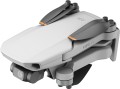 | 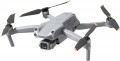 |
|---|---|---|
| DJI Mini 4K | DJI Air 2S | |
| Compare prices 10 | Compare prices 2 | |
| User reviews | ||
| TOP sellers | ||
Flight and video transmission range up to 10 km (according to the FCC standard). Ability to upload recorded video via Wi-Fi and quick editing in the application. Panorama shooting modes. Shooting in 4K 30 fps. The remote control supports smartphones up to 180x86x10 mm in size The main difference from the DJI Mini 2 SE is the maximum video recording resolution of 4K (instead of 2.7K) and 2.7K at 60 fps. | Large sensor — 1". Four-way obstacle detection system. RAW photo. Shooting in 10-bit colour. New ActiveTrack 4.0 tracking system. Improved blades (30% quieter and 8% faster flight time). | |
Flight specs | ||
| Range of flight | 15.7 km | 18.5 km |
| Maximum flight time | 31 min | 31 min |
| Horizontal speed | 58 km/h | 68 km/h |
| Ascent / descent speed | 18 km/h | 21.6 km/h |
| Wind impedance | 11 m/s | 11 m/s |
Camera | ||
| Camera type | built-in | built-in |
| Matrix size | 1/2.3" | 1" |
| Aperture | f/2.8 | f/2.8 |
| Number of megapixels | 12 MP | 20 MP |
| Photo resolution | 4000x3000 px | 5472x3648 px |
| Full HD filming (1080p) | 1920x1080 px 60 fps | 1920x1080 pxs 120 fps |
| Quad HD filming | 2720x1530 px 60 fps | 2688x1512 px 60 fps |
| Ultra HD (4K) | 3840x2160 px 30 fps | 3840x2160 px 60 fps |
| Filming above 4K | 5472x3078 px 30 fps | |
| Viewing angles | 83° | 88° |
| Time lapse |  |  |
| Mechanical stabilizer suspension | | |
| Camera with control | | |
| Live video streaming | | |
| Memory card slot | | |
Flight modes and sensors | ||
| Flight modes | return "home" Dronie (distance) Rocket (distance up) Orbit mode (flying in a circle) Helix (spiral flight) | return "home" Follow me (tracking) Dronie (distance) Rocket (distance up) Orbit mode (flying in a circle) Helix (spiral flight) flyby GPS points |
| Sensors | GPS module heights optic gyroscope | GPS module heights optic gyroscope |
| Obstacle sensors | bottom | bottom top front back |
Control and transmitter | ||
| Control | remote control only | remote control only |
| Range | 6000 m | 18500 m |
| Control frequency | 2.4 and 5.8 GHz | 2.4 and 5.8 GHz |
| Video transmission frequency | 2.4 and 5.8 GHz (Wi-Fi) | 2.4 and 5.8 GHz (Wi-Fi) |
| Smartphone mount | | |
| Remote control power source | battery | battery |
Motor and chassis | ||
| Motor type | brushless | brushless |
| Number of screws | 4 pcs | 4 pcs |
| Foldable design | | |
Battery | ||
| Battery capacity | 2.25 Ah | 3.5 Ah |
| Voltage | 7.7 В | 11.55 В |
| Battery model | 2S | 3S |
| Batteries in the set | 1 pcs | 1 pcs |
General | ||
| Body backlight | | |
| Material | plastic | plastic |
| Dimensions | 289x245x56 mm | 253x183x77 mm |
| Dimensions (folded) | 138x81x58 mm | 180x97x77 mm |
| Weight | 246 g | 595 g |
| Color | ||
| Added to E-Catalog | september 2024 | april 2021 |




Compare DJI Mini 4K and Air 2S
Price comparison
You may be interested in
My comparisons
DJI Mini 4K often compared


DJI Air 2S often compared


Glossary
Range of flight
The distance that a quadcopter can travel in the air on one full battery charge. Simply put, this is the drone's range in kilometers. Note that smaller, lighter drones tend to have a more limited flight range compared to larger, more powerful models. In the latter, it can reach 30 km or more. Also, the maximum flight distance is often influenced by weather factors and the load carried by the copter.
Horizontal speed
The highest speed that a quadcopter can achieve in horizontal flight. It is worth considering that in most cases this parameter is indicated for optimal operating conditions: a fully charged battery, low air temperature, minimum weight, etc. However, it is quite possible to rely on it both when choosing and when comparing different models of copters with each other.
Note that quadcopters were originally designed as stable and maneuverable aerial platforms, and not as high-speed vehicles. Therefore, you should specifically look for a fast quadcopter only in cases where the ability to quickly move from place to place is critical (for example, when the device is supposed to be used for video recording of fast-moving objects over large areas).
Note that quadcopters were originally designed as stable and maneuverable aerial platforms, and not as high-speed vehicles. Therefore, you should specifically look for a fast quadcopter only in cases where the ability to quickly move from place to place is critical (for example, when the device is supposed to be used for video recording of fast-moving objects over large areas).
Ascent / descent speed
The speed at which the quadcopter rises up in the air or descends to the ground. Recreational, photo and video models tend to have more moderate climb/descent speeds, while professional or racing drones can rise and fall much faster. This indicator can be used to evaluate how quickly the copter can rise to a height for filming or, if necessary, avoid obstacles, and a high descent rate will be useful if the drone needs to be returned to the ground quickly and safely.
Matrix size
The physical size of the photosensitive element of a camera. Measured diagonally, often indicated in fractions of an inch — for example, 1/3.2" or 1/2.3" (respectively, the second matrix will be larger than the first). Note that in such designations it is not the “ordinary” inch (2.54 cm) that is used, but the so-called "Vidiconovsky", which is less than a third and is about 17 mm. This is partly a tribute to the tradition that comes from television tubes — "vidicons" (the forerunners of modern matrices), partly — a marketing ploy that gives buyers the impression that the matrices are larger than they really are.
Anyway, for the same resolution (number of megapixels), a larger matrix means a larger size for each individual pixel; accordingly, on large matrices, more light enters each pixel, which means that such matrices have higher photosensitivity and lower noise levels, especially when shooting in low light conditions. On the other hand, increasing the diagonal of the sensor inevitably leads to an increase in its cost.
Anyway, for the same resolution (number of megapixels), a larger matrix means a larger size for each individual pixel; accordingly, on large matrices, more light enters each pixel, which means that such matrices have higher photosensitivity and lower noise levels, especially when shooting in low light conditions. On the other hand, increasing the diagonal of the sensor inevitably leads to an increase in its cost.
Number of megapixels
Resolution of the matrix in the standard camera of the quadrocopter.
Theoretically, the higher the resolution, the sharper, more detailed image the camera can produce. However, in practice, the quality of the "picture" is highly dependent on a number of other technical features - the size of the matrix, image processing algorithms, optical properties, etc. Moreover, when increasing the resolution without increasing the size of the matrix, the image quality may drop, because. significantly increases the likelihood of noise and extraneous artifacts. And for shooting video, a large number of megapixels is not required at all: for example, to shoot Full HD (1920x1080) video, which is considered a very solid format for quadrocopters, a sensor of only 2.07 megapixels is enough.
Note that high resolution is often a sign of an advanced camera with high image quality. However, this quality is not determined by the number of megapixels, but by the characteristics of the camera and the special technologies used in it. Therefore, when choosing a quadcopter with a camera, you should look not so much at the resolution as at the class and price category of the model as a whole.
Theoretically, the higher the resolution, the sharper, more detailed image the camera can produce. However, in practice, the quality of the "picture" is highly dependent on a number of other technical features - the size of the matrix, image processing algorithms, optical properties, etc. Moreover, when increasing the resolution without increasing the size of the matrix, the image quality may drop, because. significantly increases the likelihood of noise and extraneous artifacts. And for shooting video, a large number of megapixels is not required at all: for example, to shoot Full HD (1920x1080) video, which is considered a very solid format for quadrocopters, a sensor of only 2.07 megapixels is enough.
Note that high resolution is often a sign of an advanced camera with high image quality. However, this quality is not determined by the number of megapixels, but by the characteristics of the camera and the special technologies used in it. Therefore, when choosing a quadcopter with a camera, you should look not so much at the resolution as at the class and price category of the model as a whole.
Photo resolution
The maximum resolution of photos that the standard quadcopter camera can take. This parameter is directly related to the resolution of the matrix (see above): usually, the maximum resolution of a photo corresponds to the full resolution of the matrix. For example, for pictures of 4000x3000 pixels, a sensor of 4000 * 3000=12 megapixels is provided.
Theoretically, a higher resolution of photography allows you to achieve highly detailed photographs, with good visibility of fine details. However, as in the case of the overall resolution of the matrix, high resolution does not guarantee the same overall quality, and you should focus not only on this parameter, but also on the price category of the quadcopter and its camera.
Also note that the high resolution of the camera affects the volume of the materials being shot, for their storage and transmission, more voluminous drives and “thick” communication channels are required.
Theoretically, a higher resolution of photography allows you to achieve highly detailed photographs, with good visibility of fine details. However, as in the case of the overall resolution of the matrix, high resolution does not guarantee the same overall quality, and you should focus not only on this parameter, but also on the price category of the quadcopter and its camera.
Also note that the high resolution of the camera affects the volume of the materials being shot, for their storage and transmission, more voluminous drives and “thick” communication channels are required.
Full HD filming (1080p)
The maximum resolution and frame rate supported by the aircraft camera when shooting in Full HD (1080p).
The traditional resolution of such a video is 1920x1080; this is what is most often used in drones, although occasionally there are more specific options — for example, 1280x1080. In general, this is far from the most advanced, but more than a decent high-definition video standard, such an image gives sufficient detail for most cases and looks good even on a large TV screen — 32 "and more. At the same time, achieve a high frame rate in Full HD It is relatively simple and takes up less space than higher resolution content, so Full HD shooting can be done even on aircraft that support more advanced video formats like 4K.
As for the actual frame rate, the higher it is, the smoother the video turns out, the less motion is blurred in the frame. On the other hand, the shooting speed directly affects the requirements for the power of the hardware and the volume of the finished files. In general, values up to 24 fps can be called minimal, from 24 to 30 fps — medium, from 30 to 60 fps — high, and speeds over 60 fps are used mainly for slow motion Full HD.
The traditional resolution of such a video is 1920x1080; this is what is most often used in drones, although occasionally there are more specific options — for example, 1280x1080. In general, this is far from the most advanced, but more than a decent high-definition video standard, such an image gives sufficient detail for most cases and looks good even on a large TV screen — 32 "and more. At the same time, achieve a high frame rate in Full HD It is relatively simple and takes up less space than higher resolution content, so Full HD shooting can be done even on aircraft that support more advanced video formats like 4K.
As for the actual frame rate, the higher it is, the smoother the video turns out, the less motion is blurred in the frame. On the other hand, the shooting speed directly affects the requirements for the power of the hardware and the volume of the finished files. In general, values up to 24 fps can be called minimal, from 24 to 30 fps — medium, from 30 to 60 fps — high, and speeds over 60 fps are used mainly for slow motion Full HD.
Quad HD filming
The maximum resolution and frame rate supported by the aircraft camera (built-in or bundled) when shooting in Quad HD.
This standard is intermediate between Full HD (see above) and UltraHD 4K (see below); in cameras of modern drones, the Quad HD frame size can be from 2560 to 2720 pixels horizontally and from 1440 to 1530 pixels vertically. In some situations, such a video turns out to be the best option: it gives better detail than Full HD, while it does not require such powerful “hardware” and capacious drives as 4K.
As for the actual frame rate, the higher it is, the smoother the video turns out, the less motion is blurred in the frame. On the other hand, the shooting speed directly affects the requirements for the power of the hardware and the volume of the finished files. In general, values up to 24 fps can be called minimal, from 24 to 30 fps — medium, from 30 to 60 fps — high. Speeds of more than 60 fps are mainly used for shooting slow-motion video, however, for a number of reasons, such a possibility is rarely provided for in the QuadHD standard: relatively simple devices would require too powerful and expensive hardware for this, and in advanced copters, where the cost of electronics not particularly important, manufacturers prefer to use slow motion at higher resolutions.
This standard is intermediate between Full HD (see above) and UltraHD 4K (see below); in cameras of modern drones, the Quad HD frame size can be from 2560 to 2720 pixels horizontally and from 1440 to 1530 pixels vertically. In some situations, such a video turns out to be the best option: it gives better detail than Full HD, while it does not require such powerful “hardware” and capacious drives as 4K.
As for the actual frame rate, the higher it is, the smoother the video turns out, the less motion is blurred in the frame. On the other hand, the shooting speed directly affects the requirements for the power of the hardware and the volume of the finished files. In general, values up to 24 fps can be called minimal, from 24 to 30 fps — medium, from 30 to 60 fps — high. Speeds of more than 60 fps are mainly used for shooting slow-motion video, however, for a number of reasons, such a possibility is rarely provided for in the QuadHD standard: relatively simple devices would require too powerful and expensive hardware for this, and in advanced copters, where the cost of electronics not particularly important, manufacturers prefer to use slow motion at higher resolutions.
Ultra HD (4K)
Maximum resolution and frame rate supported by the aircraft camera (built-in or bundled) when shooting in Ultra HD (4K)
UHD is a much more advanced video standard than Quad HD and even more so Full HD. Such a frame is approximately 2 times larger than a FullHD frame on each side and, accordingly, 4 times larger in terms of the total number of pixels. In this case, specific resolutions may be different; in copters, 3840x2160 and 4096x2160 are the most popular. Thus, shooting in this standard gives excellent detail; on the other hand, it puts forward rather high demands on the hardware of the camera and the amount of memory. Therefore, 4K support is an unmistakable sign of a high-end built-in camera. At the same time, we note that in modern drones you can also find more solid resolutions — see “Shooting above 4K”.
As for the actual frame rate, the higher it is, the smoother the video turns out, the less motion is blurred in the frame. On the other hand, the shooting speed directly affects the requirements for the power of the hardware and the volume of the finished files. In general, values up to 24 fps can be called minimal, from 24 to 30 fps — average, from 30 to 60 fps — above average, and a speed of 60 fps already allows us to talk about high-speed shooting UltraHD. However for full-fledged high-speed shooting, which allows you to create slow-motion videos, an even higher frame rate...is desirable, which is not yet found in copter cameras; however, modern technologies are developing rapidly, and the situation may change in the near future.
UHD is a much more advanced video standard than Quad HD and even more so Full HD. Such a frame is approximately 2 times larger than a FullHD frame on each side and, accordingly, 4 times larger in terms of the total number of pixels. In this case, specific resolutions may be different; in copters, 3840x2160 and 4096x2160 are the most popular. Thus, shooting in this standard gives excellent detail; on the other hand, it puts forward rather high demands on the hardware of the camera and the amount of memory. Therefore, 4K support is an unmistakable sign of a high-end built-in camera. At the same time, we note that in modern drones you can also find more solid resolutions — see “Shooting above 4K”.
As for the actual frame rate, the higher it is, the smoother the video turns out, the less motion is blurred in the frame. On the other hand, the shooting speed directly affects the requirements for the power of the hardware and the volume of the finished files. In general, values up to 24 fps can be called minimal, from 24 to 30 fps — average, from 30 to 60 fps — above average, and a speed of 60 fps already allows us to talk about high-speed shooting UltraHD. However for full-fledged high-speed shooting, which allows you to create slow-motion videos, an even higher frame rate...is desirable, which is not yet found in copter cameras; however, modern technologies are developing rapidly, and the situation may change in the near future.