
Comparison Garmin HRM 600 vs Polar H10
Add to comparison |  | 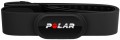 |
|---|---|---|
| Garmin HRM 600 | Polar H10 | |
| Compare prices 9 | Compare prices 9 | |
| TOP sellers | ||
Monitoring HRV indicator. Number of simultaneous connections: ANT — unlimited, Bluetooth — up to 3 devices. Autonomy up to 2 months (using 1 hour per day). Ability to measure heart rate while swimming. 3-color LED indicator. Measurement of running dynamics, pace, and distance when connected to a smartwatch. | Works with all Polar watches that have Bluetooth. Replaceable battery. Operating time from one battery — 400 hours | |
| Device type | heart rate sensor | heart rate sensor |
| Mount | on the chest | on the chest |
Specs | ||
| Display | in absent | in absent |
| Possible measurements | pulse rate | pulse rate |
More features | ||
| Compatibility | Android/iOS | |
| Data transfer | Bluetooth ANT+ | Bluetooth ANT+ |
General | ||
| Source of power | battery | battery |
| Water protection | + | + |
| Waterproof | 50 m | 30 m |
| Built-in memory |  |  |
| PC connection | | |
| Dimensions | 68x31.6x10 mm | 65x34x10 mm |
| Band size | XS-S: 51 – 66, M-XXL: 65 – 93, XXXL: 76 – 116 cm | |
| Weight | 61 g | 60 g |
| Color | ||
| Added to E-Catalog | may 2025 | october 2017 |





Compare Garmin HRM 600 and Polar H10
Price comparison
You may be interested in
My comparisons
Garmin HRM 600 often compared


Polar H10 often compared


Glossary
Compatibility
Mobile operating systems that the device is compatible with.
Many modern heart rate monitors, pedometers and heart sensors(see "Type") can be connected to a smartphone or tablet to process the collected data in a special application. Such applications provide a wide variety of possibilities that would be difficult or impossible to provide in the device itself. However, for the gadget to work properly with a smartphone or tablet, it must be compatible with the corresponding mobile OS.
Today, the market is dominated by two "OSes":
— Android. Developed by Google, this system is embraced by a range of manufacturers, from industry giants like Samsung and Asus to lesser-known Chinese brands. The diversity of devices running on this OS is vast, as is the array of system versions, proprietary interfaces, and firmware. Therefore, when selecting a device to pair with an Android smartphone or tablet, it's advisable to ensure compatibility between the specific devices in question.
— iOS. Exclusive to Apple's portable devices — iPhone smartphones, iPad tablets, and iPod touch media players — the proprietary operating system is consistent in its lineup. Regular and widespread OS updates ensure seamless compatibility between fitness gadgets and iOS devices. Compatibility concerns arise mainly with outdated or hacked ("jailbreak") system version...s or older Apple devices (3 years or more).
Many modern heart rate monitors, pedometers and heart sensors(see "Type") can be connected to a smartphone or tablet to process the collected data in a special application. Such applications provide a wide variety of possibilities that would be difficult or impossible to provide in the device itself. However, for the gadget to work properly with a smartphone or tablet, it must be compatible with the corresponding mobile OS.
Today, the market is dominated by two "OSes":
— Android. Developed by Google, this system is embraced by a range of manufacturers, from industry giants like Samsung and Asus to lesser-known Chinese brands. The diversity of devices running on this OS is vast, as is the array of system versions, proprietary interfaces, and firmware. Therefore, when selecting a device to pair with an Android smartphone or tablet, it's advisable to ensure compatibility between the specific devices in question.
— iOS. Exclusive to Apple's portable devices — iPhone smartphones, iPad tablets, and iPod touch media players — the proprietary operating system is consistent in its lineup. Regular and widespread OS updates ensure seamless compatibility between fitness gadgets and iOS devices. Compatibility concerns arise mainly with outdated or hacked ("jailbreak") system version...s or older Apple devices (3 years or more).
Waterproof
The degree of water protection provided for in the design of the device.
The specified underwater depth for device functionality is often given, but it's important to note that these values are somewhat arbitrary and don't accurately reflect real-world water resistance. The assessments only consider static pressure, neglecting dynamic pressure created by movement, including immersion.
Effectively, genuine water resistance can only be claimed at a minimum of 30m. Even then, such capabilities only withstand minor exposure like rain. Brief water exposure, like swimming, might be permitted at 50m (not universally). For depths of 2 — 3m, 100m is necessary, and serious diving requires a minimum of 200m (or 300m for depths exceeding 20m).
The specified underwater depth for device functionality is often given, but it's important to note that these values are somewhat arbitrary and don't accurately reflect real-world water resistance. The assessments only consider static pressure, neglecting dynamic pressure created by movement, including immersion.
Effectively, genuine water resistance can only be claimed at a minimum of 30m. Even then, such capabilities only withstand minor exposure like rain. Brief water exposure, like swimming, might be permitted at 50m (not universally). For depths of 2 — 3m, 100m is necessary, and serious diving requires a minimum of 200m (or 300m for depths exceeding 20m).
Built-in memory
The device has its own built-in memory.
Almost every sophisticated electronic device has a certain amount of memory, but here we specifically refer to permanent memory. This type of memory is ideal for long-term data storage, ensuring information is retained even during power outages. Its presence enables the device to operate autonomously, storing training logs, individual settings, and other essential data without the need for communication with other devices.
Almost every sophisticated electronic device has a certain amount of memory, but here we specifically refer to permanent memory. This type of memory is ideal for long-term data storage, ensuring information is retained even during power outages. Its presence enables the device to operate autonomously, storing training logs, individual settings, and other essential data without the need for communication with other devices.
PC connection
The device has the capability to connect to a PC, typically through a wired USB interface. This connection serves an auxiliary role, occurring outside of workout sessions, such as between workouts. It is utilized for various purposes, including saving collected data on a computer, adjusting settings, updating firmware, etc. The specific functionalities depend on the model of the heart rate monitor or pedometer.