
Comparison UNI-T UT203+ vs Yato YT-73093
Add to comparison |  | 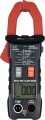 |
|---|---|---|
| UNI-T UT203+ | Yato YT-73093 | |
| Outdated Product | Outdated Product | |
| TOP sellers | ||
| Product type | clamp meter | clamp meter |
| Type | digital | digital |
Measurement types | ||
| Measurements | voltage current resistance capacity temperature frequency | voltage current resistance capacity temperature frequency |
Specs | ||
| Current type | AC / DC | AC / DC |
| Voltage type | AC / DC | AC / DC |
| DC voltage minimum | 400 mV | 800 mV |
| DC voltage max. | 600 В | 600 В |
| Measurement accuracy (V⁻) | 0.5 % | |
| AC voltage minimum | 4000 mV | 800 mV |
| AC voltage max. | 600 В | 600 В |
| DC max. | 400 А | 600 А |
| AC max. | 400 А | 600 А |
| Impedance minimum | 400 Ω | |
| Impedance max. | 40 MΩ | 60 MΩ |
| Clamp opening size | 28 mm | 25 mm |
| Max. conductor size | 25 mm | |
| Display size | 37 " | |
| Display count | 3999 | 5999 |
| Display value | 3 3/4 | 3 5/6 |
Features | ||
| Functions | diode test continuity test mode NCV (non-contact voltage) True RMS autoranging auto power off | diode test continuity test mode NCV (non-contact voltage) True RMS autoranging auto power off |
| In box | battery test probes case (bag) | battery test probes case (bag) |
General | ||
| Display backlight |  | |
| Power source | battery | battery |
| Battery type | 2xAAA | 2xAAA |
| Dimensions | 215x63x36 mm | |
| Weight | 240 g | |
| Added to E-Catalog | may 2024 | may 2022 |


Compare UNI-T UT203+ and Yato YT-73093
You may be interested in
My comparisons
UNI-T UT203+ often compared


Yato YT-73093 often compared

Glossary
DC voltage minimum
The upper limit of the lower sub-range in which the device can measure DC voltage (see "Type of voltage").
The operating ranges of modern multimeters and other measuring instruments are usually divided into subranges. This is done for accuracy and convenience when measuring: for example, to assess the quality of AA batteries, you can set the subrange “up to 3 V” — this will give an accuracy of up to tenths, or even hundredths of a volt, unattainable when measuring with a higher threshold. The minimum constant voltage describes exactly the lower subrange, designed to measure the smallest voltage values: for example, if 2000 mV is indicated in this paragraph, this means that the lower subrange covers values \u200b\u200bup to 2000 mV (i.e. up to 2 V).
It is worth choosing according to this indicator taking into account the specifics of the planned application: for example, a device with low rates can be useful for delicate work, such as repairing computers or mobile phones, but for servicing the on-board electrical network of a car, especially high voltage sensitivity is not required.
The operating ranges of modern multimeters and other measuring instruments are usually divided into subranges. This is done for accuracy and convenience when measuring: for example, to assess the quality of AA batteries, you can set the subrange “up to 3 V” — this will give an accuracy of up to tenths, or even hundredths of a volt, unattainable when measuring with a higher threshold. The minimum constant voltage describes exactly the lower subrange, designed to measure the smallest voltage values: for example, if 2000 mV is indicated in this paragraph, this means that the lower subrange covers values \u200b\u200bup to 2000 mV (i.e. up to 2 V).
It is worth choosing according to this indicator taking into account the specifics of the planned application: for example, a device with low rates can be useful for delicate work, such as repairing computers or mobile phones, but for servicing the on-board electrical network of a car, especially high voltage sensitivity is not required.
Measurement accuracy (V⁻)
Measurement accuracy provided by the instrument.
Measurement accuracy for multimeters is usually indicated by the smallest error (in percent) that the device is able to provide when measuring direct current. The smaller the number in this paragraph, the higher the accuracy, respectively. At the same time, we emphasize that it is the smallest error (the highest accuracy) that is usually achieved only in a certain measurement range; in other ranges, the accuracy may be lower. For example, if in the range "1 — 10 V" the device gives a maximum deviation of 0.5%, and in the range "10 — 50 V" — 1%, then 0.5% will be indicated in the characteristics. Nevertheless, according to this indicator, it is quite possible to evaluate and compare modern multimeters. So, a device with a lower claimed error, usually, and in general will be more accurate than a model with a similar performance with a larger error.
Data on measurement accuracy in other ranges and modes can be given in the detailed characteristics of the device. However, in fact, this information is required not so often — only for certain specific tasks, where it is fundamentally necessary to know the possible error.
Measurement accuracy for multimeters is usually indicated by the smallest error (in percent) that the device is able to provide when measuring direct current. The smaller the number in this paragraph, the higher the accuracy, respectively. At the same time, we emphasize that it is the smallest error (the highest accuracy) that is usually achieved only in a certain measurement range; in other ranges, the accuracy may be lower. For example, if in the range "1 — 10 V" the device gives a maximum deviation of 0.5%, and in the range "10 — 50 V" — 1%, then 0.5% will be indicated in the characteristics. Nevertheless, according to this indicator, it is quite possible to evaluate and compare modern multimeters. So, a device with a lower claimed error, usually, and in general will be more accurate than a model with a similar performance with a larger error.
Data on measurement accuracy in other ranges and modes can be given in the detailed characteristics of the device. However, in fact, this information is required not so often — only for certain specific tasks, where it is fundamentally necessary to know the possible error.
AC voltage minimum
The upper limit of the lower sub-range in which the device can measure AC voltage (see "Type of voltage").
The operating ranges of modern multimeters and other measuring instruments are usually divided into subranges. This is done for accuracy and convenience in measurements: for example, to test a transformer that should output 6 V, it makes sense to set a subrange with an upper threshold of 10 V. This will ensure accuracy up to tenths of a volt, unattainable when measuring with a higher threshold. The minimum constant voltage describes exactly the lower subrange, designed to measure the smallest voltage values: for example, if 2000 mV is indicated in this paragraph, this means that the lower subrange covers values \u200b\u200bup to 2000 mV (i.e. up to 2 V).
If the device is purchased for measurements in stationary networks — household at 230 V or industrial at 400 V — you can ignore this parameter: usually, the minimum subranges are not used. But to work with power supplies, step-down transformers and various “thin” electronics served by low voltage alternating current, it makes sense to choose a model with a lower minimum voltage. This is connected not only with the measurement range: a low threshold, usually, indicates a good measurement accuracy at low voltages in general.
The operating ranges of modern multimeters and other measuring instruments are usually divided into subranges. This is done for accuracy and convenience in measurements: for example, to test a transformer that should output 6 V, it makes sense to set a subrange with an upper threshold of 10 V. This will ensure accuracy up to tenths of a volt, unattainable when measuring with a higher threshold. The minimum constant voltage describes exactly the lower subrange, designed to measure the smallest voltage values: for example, if 2000 mV is indicated in this paragraph, this means that the lower subrange covers values \u200b\u200bup to 2000 mV (i.e. up to 2 V).
If the device is purchased for measurements in stationary networks — household at 230 V or industrial at 400 V — you can ignore this parameter: usually, the minimum subranges are not used. But to work with power supplies, step-down transformers and various “thin” electronics served by low voltage alternating current, it makes sense to choose a model with a lower minimum voltage. This is connected not only with the measurement range: a low threshold, usually, indicates a good measurement accuracy at low voltages in general.
DC max.
The highest direct current (see “Type of current”) that the device is able to measure without overloads and related troubles (such as “flying” fuses or even failure).
When choosing for this parameter, it is worth remembering that even at relatively low voltages, the currents can be quite high if the power source provides the appropriate power — for example, a 12 V car battery is quite capable of delivering currents of hundreds of amperes. Actually, compatibility with high direct currents is important primarily for automotive devices; however, the matter is not limited to this.
For safe use, it is desirable to have a certain margin for maximum current. Also, do not forget that before measurements you need to set the appropriate settings.
When choosing for this parameter, it is worth remembering that even at relatively low voltages, the currents can be quite high if the power source provides the appropriate power — for example, a 12 V car battery is quite capable of delivering currents of hundreds of amperes. Actually, compatibility with high direct currents is important primarily for automotive devices; however, the matter is not limited to this.
For safe use, it is desirable to have a certain margin for maximum current. Also, do not forget that before measurements you need to set the appropriate settings.
AC max.
The largest alternating current (see "Type of current") that can be measured with this device. In no case should this parameter be exceeded — otherwise various troubles are possible, from the operation of the device's emergency protection (with further replacement of fuses) to fire.
When choosing for this parameter, it is worth remembering that even at relatively low voltages, the currents can be quite high if the power supply provides adequate power. For safe use, it is desirable to have a certain margin for maximum current. Also, do not forget that before measurements you need to set the appropriate settings.
When choosing for this parameter, it is worth remembering that even at relatively low voltages, the currents can be quite high if the power supply provides adequate power. For safe use, it is desirable to have a certain margin for maximum current. Also, do not forget that before measurements you need to set the appropriate settings.
Impedance minimum
The upper limit of the lower sub-range in which the device can measure resistance.
The operating ranges of modern multimeters and other measuring instruments are usually divided into subranges. This is done for accuracy and convenience in measurements: the lower the subrange, the smaller the values it covers, the higher the accuracy of measurements at low resistance values. The minimum resistance describes exactly the lower range, designed for the weakest current values: for example, if the characteristics in this paragraph indicate 500 Ohms, this means that the lower subrange allows you to measure resistance from 0 to 500 Ohms.
When choosing for this indicator, you need to consider how important it is for you to accurately measure small resistances. At the same time, we note that the 500 Ohms given in the example are a fairly good indicator, indicating a fairly solid resistance measurement accuracy; in relatively inexpensive multimeters, this indicator can be 2.5 or even 10 kΩ, which ensures accuracy at best up to several tens of ohms.
The operating ranges of modern multimeters and other measuring instruments are usually divided into subranges. This is done for accuracy and convenience in measurements: the lower the subrange, the smaller the values it covers, the higher the accuracy of measurements at low resistance values. The minimum resistance describes exactly the lower range, designed for the weakest current values: for example, if the characteristics in this paragraph indicate 500 Ohms, this means that the lower subrange allows you to measure resistance from 0 to 500 Ohms.
When choosing for this indicator, you need to consider how important it is for you to accurately measure small resistances. At the same time, we note that the 500 Ohms given in the example are a fairly good indicator, indicating a fairly solid resistance measurement accuracy; in relatively inexpensive multimeters, this indicator can be 2.5 or even 10 kΩ, which ensures accuracy at best up to several tens of ohms.
Impedance max.
The highest resistance that the instrument can effectively measure.
When choosing according to this indicator, you must first take into account the largest resistances that are supposed to be measured. And if we are talking about an analogue device (see "Type"), you must also remember that as you approach the maximum resistance, the measurement accuracy drops sharply. This is due to the peculiarities of measuring and grading the scale in such devices: for example, with a maximum resistance of 1 MΩ, the division value in the range of 0 – 2 kΩ can be 0.2 kΩ, in the range of 2 – 6 kΩ — 0.5 kΩ, in the range of 6 – 10 kOhm — already 1 kOhm, and closer to the maximum this figure can reach tens and even hundreds of kilo-ohms. Therefore, it is worth choosing an analogue device in such a way that its maximum resistance is at least 10 times higher than the largest resistances that are planned to be measured — only under this condition is a more or less acceptable measurement accuracy ensured.
When choosing according to this indicator, you must first take into account the largest resistances that are supposed to be measured. And if we are talking about an analogue device (see "Type"), you must also remember that as you approach the maximum resistance, the measurement accuracy drops sharply. This is due to the peculiarities of measuring and grading the scale in such devices: for example, with a maximum resistance of 1 MΩ, the division value in the range of 0 – 2 kΩ can be 0.2 kΩ, in the range of 2 – 6 kΩ — 0.5 kΩ, in the range of 6 – 10 kOhm — already 1 kOhm, and closer to the maximum this figure can reach tens and even hundreds of kilo-ohms. Therefore, it is worth choosing an analogue device in such a way that its maximum resistance is at least 10 times higher than the largest resistances that are planned to be measured — only under this condition is a more or less acceptable measurement accuracy ensured.
Clamp opening size
The distance that the tips of the jaws of the measuring instrument can open relative to each other. Relevant for current clamp metres.
Max. conductor size
The diameter of the conductor in millimetres, on which the electrical parameters can be measured with a clamp metre.