
Comparison OfficePro Elite vs GT Racer B-541F
Add to comparison |  | 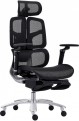 |
|---|---|---|
| OfficePro Elite | GT Racer B-541F | |
| Outdated Product | from $313.16 up to $369.50 | |
| User reviews | ||
| TOP sellers | ||
Maximum user height: up to 195 cm. | ||
| Features | for boss | for boss |
| Max. user weight | 130 kg | 150 kg |
Size and weight | ||
| Back height | 78.5 cm | 75 cm |
| Shoulder back width | 56 cm | 52 cm |
| Seat size (WxD) | 51x53 cm | 50x50 cm |
| Seat height | 48.5 – 56 cm | 51 - 60 cm |
| Weight | 21.9 kg | |
Design | ||
| Base | cross with rollers | cross with rollers |
| Mechanism | synchro mechanism | synchro mechanism |
| Headrest |  | |
| Armrests | | |
| Waist support | | |
| Footrest | | |
| Clothes hanger | |  |
Adjustments | ||
| Headrest height | | |
| Headrest tilt | | |
| Headrest depth | | |
| Back height | | |
| Backrest tilt | 135° | |
| Rocking stiffness level | | |
| Seat height | | |
| Seat depths | | |
| Tilt of the entire chair | | |
Armrests | ||
| Height from the seat | 16 - 23 cm | |
| Adjustment | 4D height (up / down) turn (right / left) length (forward / backward) width (right / left) | 5D height (up / down) turn (right / left) length (forward / backward) width (right / left) tilt (up / down) |
Material | ||
| Seat material | mesh | mesh |
| Back material | mesh | mesh |
| Base material | plastic | metal |
| Color | ||
| Added to E-Catalog | october 2025 | october 2024 |


Compare OfficePro Elite and GT Racer B-541F
You may be interested in
OfficePro Elite often compared


GT Racer B-541F often compared


Glossary
Max. user weight
The highest weight that the chair is guaranteed to withstand with regular use — in other words, the maximum weight of a seated person, allowing you to constantly use the product in normal mode without fear of unexpected breakdown. Note that many models are able to endure short-term excess weight without problems, however, anyway, it is not worth overloading the structure (and even more so doing it all the time): off-design loads will significantly increase its wear, and breakdown can occur at the most unexpected moment.
Back height
Chair back height; for models with a variable back height (see "Adjustments"), as a rule, the maximum value is indicated.
The back height is measured from the seat to the top edge. In essence, this is the height of support available to the back. In some situations, you can not pay much attention to this indicator - for example, if the chair is intended for visitors and the role of the back in it is purely symbolic. However, if you have to sit in a chair often and for a long time, this point should also be taken into account. Ideally, it's best to try a few chairs "live" and find out which backrest height is most comfortable for you. If this is not possible, it is worth deciding which area on the body the back should reach (to the shoulder blades, to the base of the neck, etc.) and measure at what height from the seat this area is in a sitting position. And if you need specific support for the back of the head, you should choose among models equipped with head restraints (see above).
The back height is measured from the seat to the top edge. In essence, this is the height of support available to the back. In some situations, you can not pay much attention to this indicator - for example, if the chair is intended for visitors and the role of the back in it is purely symbolic. However, if you have to sit in a chair often and for a long time, this point should also be taken into account. Ideally, it's best to try a few chairs "live" and find out which backrest height is most comfortable for you. If this is not possible, it is worth deciding which area on the body the back should reach (to the shoulder blades, to the base of the neck, etc.) and measure at what height from the seat this area is in a sitting position. And if you need specific support for the back of the head, you should choose among models equipped with head restraints (see above).
Shoulder back width
The width of the back at the shoulders of the intended wearer.
In order to recline as much as possible on the back, this width should be no less than the actual width of the user's shoulders. At the same time, for more or less comfortable use, a smaller back size is also sufficient — approximately corresponding to the width of the back in the area of \u200b\u200bthe shoulders (between the outer edges of the shoulder blades). Well, anyway, this parameter is, on the one hand, secondary, and on the other, very subjective. This means that in most cases you can not pay much attention to it, however, if you have already decided to choose the furniture that is the most suitable in size, it is better not to measure your own back, but to test several chairs and determine the most convenient value by experience.
In order to recline as much as possible on the back, this width should be no less than the actual width of the user's shoulders. At the same time, for more or less comfortable use, a smaller back size is also sufficient — approximately corresponding to the width of the back in the area of \u200b\u200bthe shoulders (between the outer edges of the shoulder blades). Well, anyway, this parameter is, on the one hand, secondary, and on the other, very subjective. This means that in most cases you can not pay much attention to it, however, if you have already decided to choose the furniture that is the most suitable in size, it is better not to measure your own back, but to test several chairs and determine the most convenient value by experience.
Seat size (WxD)
Dimensions of the seat installed in the chair in width and depth (from the back to the front edge). For models with variable depth (see "Adjustments"), the maximum value is taken into account when the seat is pushed forward to the stop.
Most modern chairs are designed for the average adult, so paying attention to size is primarily for people of a large, or, conversely, miniature physique. In width, the average is considered to be 45 – 55 cm, the narrowest models are up to 40 cm wide, in the widest it can exceed 60 cm. Similarly, a depth of less than 40 cm is considered small, up to 60 cm — medium, more than 60 cm — large.
Most modern chairs are designed for the average adult, so paying attention to size is primarily for people of a large, or, conversely, miniature physique. In width, the average is considered to be 45 – 55 cm, the narrowest models are up to 40 cm wide, in the widest it can exceed 60 cm. Similarly, a depth of less than 40 cm is considered small, up to 60 cm — medium, more than 60 cm — large.
Seat height
Seat height from the floor. The optimal height for an average person is considered to be 40 – 50 cm, however, this is largely subjective, and the comfort of the chair for a specific user greatly depends on their preferences and physical characteristics. In light of this, many models offer the ability to adjust the height within a certain range (see "Adjustments"). For the best choice, it's best to "try out" in person to determine at what height you feel comfortable sitting and find a model with the corresponding features.
Clothes hanger
A built-in hanger is usually found in advanced models of computer chairs. Place it on the outside of the back. You can hang outerwear (for example, a jacket or vest) on a hanger without worrying that it will wrinkle.
Headrest depth
Depth adjustment involves changing the position of the head restraint in a horizontal plane. In models with this function, the headrest can be pushed forward or vice versa - pressed into the back of the chair to ensure a comfortable fit.
Back height
The ability to move the back up and down. It is useful for adjusting the product to the height and physique of the user, which is especially important if there is lumbar support or when using the chair by people of different heights.
Backrest tilt
The ability to change the backrest tilt back and forth. Allows users to adjust the chair depending on how they prefer to sit: straight or slightly leaning back.