
Comparison GT Racer X-802 vs GT Racer X-802L
Add to comparison |  | 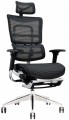 |
|---|---|---|
| GT Racer X-802 | GT Racer X-802L | |
from $397.37 up to $636.79 | from $444.47 | |
| User reviews | ||
| TOP sellers | ||
| Features | for staff | for staff |
| Max. user weight | 150 kg | 150 kg |
Size and weight | ||
| Back height | 73 cm | 73 cm |
| Shoulder back width | 50 cm | 50 cm |
| Seat size (WxD) | 50x50 cm | 50x50 cm |
| Seat height | 51 - 60 cm | 51 - 60 cm |
| Weight | 25 kg | 25 kg |
Design | ||
| Base | cross with rollers | cross with rollers |
| Mechanism | synchro mechanism | synchro mechanism |
| Headrest |  | |
| Armrests | | |
| Waist support | | |
| Footrest |  | |
Adjustments | ||
| Headrest height | | |
| Headrest tilt | | |
| Backrest tilt | 120° | |
| Rocking stiffness level | | |
| Seat height | | |
| Seat depths | | |
| Tilt of the entire chair | | |
Armrests | ||
| Height from the seat | 23 cm | 23 cm |
| Adjustment | 3D height (up / down) turn (right / left) length (forward / backward) | 3D height (up / down) turn (right / left) length (forward / backward) |
Material | ||
| Seat material | fabric | fabric mesh |
| Back material | mesh | mesh |
| Base material | metal | metal |
| Color | ||
| Added to E-Catalog | november 2020 | july 2020 |


Compare GT Racer X-802 and X-802L
You may be interested in
My comparisons
GT Racer X-802 often compared


GT Racer X-802L often compared


Glossary
Footrest
The presence of an additional footrest in the design of the chair. Such a stand is usually made folding and located under the seat, and when unfolded it rises forward to a horizontal or almost horizontal position; On some models, the tilt of the stand can be adjusted. Anyway, this feature allows you to unload the legs, which not only provides additional comfort, but also has a positive effect on the ligaments and joints.
Backrest tilt
The ability to change the backrest tilt back and forth. Allows users to adjust the chair depending on how they prefer to sit: straight or slightly leaning back.
Seat depths
Depth means the location of the seat in a horizontal plane - how far it is pushed forward, or, conversely, "pressed" under the back. Accordingly, the distance between the back and the front edge of the seat essentially depends on the depth; and seat depth adjustment allows you to adjust this distance so that the seat does not rest against the knees and at the same time provides enough space for comfortable placement in the chair.
Seat material
The material from which the seat of the chair is made. Note that certain models may be available in several options, differing by seat material.
— Fabric. Fabric can have many varieties, and specific characteristics depend on the chair's price category. This material is found in all categories — from budget models to quite expensive ones. Common properties of all fabric types are low cost, durability, and low maintenance requirements.
— Leather. The main distinguishing features of natural leather are its luxurious appearance and corresponding cost. In light of this, this material is considered "image-based" and is used not only for comfort but also to emphasize the owner's status. Accordingly, most chairs with leather seats are intended for executives (see "Purpose") and belong to the premium class. Practically, leather is durable and quite pleasant to the touch, but does not breathe well (which can cause discomfort in hot weather).
— Leatherette. A variety of synthetic materials imitating the natural leather described above. The quality and properties of a specific leatherette usually directly depend on its cost (and the chair's price category overall), but even the most expensive options usually cost less than leather — despite the fact that they can be virtually indistinguishable from it in appearance and feel. Additionally, this material is less demanding in terms of maint...enance. Thanks to this, leatherette seats are quite common. Their main disadvantages are the tendency to develop scuffs and generally a shorter lifespan than leather ones (again, much depends on the price).
— Plastic. Plastic seats are typical for the cheapest chairs, designed for visitors or staff who do not have to sit in one place for long. This material is characterized by low cost combined with durability, reliability, and a variety of colors. However, it has one key disadvantage that practically nullifies all the described benefits — hardness; simply put, sitting on plastic is uncomfortable. Because of this, even among the mentioned models, all-plastic seats are very rare.
— Wood. In the case of seats for office chairs, the word "wood" usually means plywood. This material is largely similar to the plastic described above, but it also has some differences: on one hand, it features an aesthetic appearance with original patterns and is considered more pleasant to the touch; on the other hand, it costs more and offers relatively few design options. Nevertheless, the disadvantage of hardness is also characteristic of this material, which is why it is also used only in isolated cases.
— Mesh. Seats in the form of a rigid frame with fabric or synthetic mesh stretched across it. The main advantages of such structures are their light weight and good breathability. The design of the mesh allows them to be used even in executive chairs. As for the noticeable disadvantages of mesh seats, they only have slightly lower reliability and greater repair complexity compared to similar fabric seats (see above).
— Fabric. Fabric can have many varieties, and specific characteristics depend on the chair's price category. This material is found in all categories — from budget models to quite expensive ones. Common properties of all fabric types are low cost, durability, and low maintenance requirements.
— Leather. The main distinguishing features of natural leather are its luxurious appearance and corresponding cost. In light of this, this material is considered "image-based" and is used not only for comfort but also to emphasize the owner's status. Accordingly, most chairs with leather seats are intended for executives (see "Purpose") and belong to the premium class. Practically, leather is durable and quite pleasant to the touch, but does not breathe well (which can cause discomfort in hot weather).
— Leatherette. A variety of synthetic materials imitating the natural leather described above. The quality and properties of a specific leatherette usually directly depend on its cost (and the chair's price category overall), but even the most expensive options usually cost less than leather — despite the fact that they can be virtually indistinguishable from it in appearance and feel. Additionally, this material is less demanding in terms of maint...enance. Thanks to this, leatherette seats are quite common. Their main disadvantages are the tendency to develop scuffs and generally a shorter lifespan than leather ones (again, much depends on the price).
— Plastic. Plastic seats are typical for the cheapest chairs, designed for visitors or staff who do not have to sit in one place for long. This material is characterized by low cost combined with durability, reliability, and a variety of colors. However, it has one key disadvantage that practically nullifies all the described benefits — hardness; simply put, sitting on plastic is uncomfortable. Because of this, even among the mentioned models, all-plastic seats are very rare.
— Wood. In the case of seats for office chairs, the word "wood" usually means plywood. This material is largely similar to the plastic described above, but it also has some differences: on one hand, it features an aesthetic appearance with original patterns and is considered more pleasant to the touch; on the other hand, it costs more and offers relatively few design options. Nevertheless, the disadvantage of hardness is also characteristic of this material, which is why it is also used only in isolated cases.
— Mesh. Seats in the form of a rigid frame with fabric or synthetic mesh stretched across it. The main advantages of such structures are their light weight and good breathability. The design of the mesh allows them to be used even in executive chairs. As for the noticeable disadvantages of mesh seats, they only have slightly lower reliability and greater repair complexity compared to similar fabric seats (see above).