
Comparison Sndway SW-100G vs Makita LD080P
Add to comparison |  | 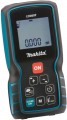 |
|---|---|---|
| Sndway SW-100G | Makita LD080P | |
| Outdated Product | from $229.05 | |
| TOP sellers | ||
Reference planes for measurement — 3 | ||
| Type | laser distance meter | laser distance meter |
Specs | ||
| Measurement range | 0.05 – 100 m | 0.05 – 80 m |
| Accuracy | 2 mm | 1.5 mm |
| Reference points | 3 | 3 |
| Operating temperature | 0 – 40 °C | -10 – 50 °C |
| Tripod thread | 1/4" | |
| Auto power off |  | |
| Auto power off | 2.5 min | 3 min |
| Laser auto-off | 20 с | 90 с |
Laser characteristics | ||
| Diode emission | 535 nm | 635 nm |
| Laser colour | green | red |
| Laser class | 2 | 2 |
| Point projections | 1 | 1 |
Features | ||
| positioning pin |  | |
| Display | b/w with backlit | b/w without backlight |
| Distance meter functions | area / volume measurement indirect measurements (Pythagorean) tilt angle measurement add / subtract minimum / max. values continuous measurement (tracking) stake out mode last measurements memory 100 | area / volume measurement indirect measurements (Pythagorean) add / subtract minimum / max. values continuous measurement (tracking) countdown stake out mode last measurements memory 20 |
General | ||
| IP protection rating | 54 | 54 |
| Power source | 3xAAA | 2xAAA |
| Number of measurements | 5000 | |
| In box | case / pouch non chargeable batteries belt | case / pouch non chargeable batteries belt |
| Dimensions | 118x52x27 mm | 57x117x32 mm |
| Weight | 140 g | |
| Added to E-Catalog | february 2024 | june 2014 |


Compare Sndway SW-100G and Makita LD080P
You may be interested in
Sndway SW-100G often compared

Makita LD080P often compared

Glossary
Measurement range
The range at which the device remains fully operational without the use of additional receivers (see below); in other words, the radius of its action without auxiliary devices.
In some models, a range may be specified that shows the minimum ( 3 cm, 5 cm) and maximum measurement ranges. But in most cases, only the maximum value is indicated.
The specific meaning of this parameter is determined by the type of instrument (see above). So, for optical levels, the measurement range is the greatest distance at which the operator can normally see the divisions of a standard leveling staff. For laser levels, this parameter determines the distance from the device to the surface on which the mark is projected, at which this projection will be easily visible to the naked eye; and in rangefinders we are talking about the greatest distance that can be measured. Typically, the measurement range is indicated for ideal conditions - in particular, in the absence of impurities in the air; in practice, it may be less due to dust, fog, or vice versa, bright sunlight "overlapping" the mark. At the same time, tools of the same type can be compared according to this characteristic.
Note that it is worth choosing a device according to the range of action, taking into account the features of the tasks that are planned to be solved with its help: after all, a large measurement range usually significa...ntly affects the dimensions, weight, power consumption and price, but it is far from always required. For example, it hardly makes sense to look for a powerful laser level at 30-40 m if you need a device for finishing work in standard apartments.
In some models, a range may be specified that shows the minimum ( 3 cm, 5 cm) and maximum measurement ranges. But in most cases, only the maximum value is indicated.
The specific meaning of this parameter is determined by the type of instrument (see above). So, for optical levels, the measurement range is the greatest distance at which the operator can normally see the divisions of a standard leveling staff. For laser levels, this parameter determines the distance from the device to the surface on which the mark is projected, at which this projection will be easily visible to the naked eye; and in rangefinders we are talking about the greatest distance that can be measured. Typically, the measurement range is indicated for ideal conditions - in particular, in the absence of impurities in the air; in practice, it may be less due to dust, fog, or vice versa, bright sunlight "overlapping" the mark. At the same time, tools of the same type can be compared according to this characteristic.
Note that it is worth choosing a device according to the range of action, taking into account the features of the tasks that are planned to be solved with its help: after all, a large measurement range usually significa...ntly affects the dimensions, weight, power consumption and price, but it is far from always required. For example, it hardly makes sense to look for a powerful laser level at 30-40 m if you need a device for finishing work in standard apartments.
Accuracy
Measuring accuracy provided by a laser distance meter (see "Type")
This parameter is traditionally indicated by the error - the maximum deviation of the obtained results from the actual values, which may occur due to the imperfection of the device. The physical features of laser rangefinders are such that in such devices the error is practically independent of the measured distance. Therefore, the accuracy of such rangefinders is indicated in millimeters. At the same time, in our time, models are generally considered to be high- precision, where this indicator does not exceed 1.5 mm (in some models it is only 1 mm); but even in relatively simple and inexpensive devices, deviations of more than 3 mm are practically not encountered.
The general selection rules for this indicator are traditional: the more accurate the device, the more expensive it is, as a rule. In addition, we emphasize that for everyday and even many professional tasks, the difference described above is not fundamental in accuracy. Therefore, it makes sense to specifically look for a rangefinder with a minimum error in the case when the measurement accuracy “to the millimeter” is fundamental. At the same time, it should be borne in mind that for such measurements, appropriate accuracy in the placement and use of the device itself will be required - otherwise, all the advantages will be nullified by errors from incorrect installation and operation.
This parameter is traditionally indicated by the error - the maximum deviation of the obtained results from the actual values, which may occur due to the imperfection of the device. The physical features of laser rangefinders are such that in such devices the error is practically independent of the measured distance. Therefore, the accuracy of such rangefinders is indicated in millimeters. At the same time, in our time, models are generally considered to be high- precision, where this indicator does not exceed 1.5 mm (in some models it is only 1 mm); but even in relatively simple and inexpensive devices, deviations of more than 3 mm are practically not encountered.
The general selection rules for this indicator are traditional: the more accurate the device, the more expensive it is, as a rule. In addition, we emphasize that for everyday and even many professional tasks, the difference described above is not fundamental in accuracy. Therefore, it makes sense to specifically look for a rangefinder with a minimum error in the case when the measurement accuracy “to the millimeter” is fundamental. At the same time, it should be borne in mind that for such measurements, appropriate accuracy in the placement and use of the device itself will be required - otherwise, all the advantages will be nullified by errors from incorrect installation and operation.
Operating temperature
The temperature range at which the device is guaranteed to work for a sufficiently long time without failures, breakdowns and exceeding the measurement error specified in the characteristics. Note that we are talking primarily about the temperature of the device case, and it depends not only on the ambient temperature — for example, a tool left in the sun can overheat even in fairly cool weather.
In general, you should pay attention to this parameter when you are looking for a model for working outdoors, in unheated rooms and other places with conditions that are significantly different from indoor ones; in the first case, it makes sense to also make sure that there is dust and water protection (see "Protection class"). On the other hand, even relatively simple and "myopic" levels / rangefinders usually tolerate both heat and cold quite well.
In general, you should pay attention to this parameter when you are looking for a model for working outdoors, in unheated rooms and other places with conditions that are significantly different from indoor ones; in the first case, it makes sense to also make sure that there is dust and water protection (see "Protection class"). On the other hand, even relatively simple and "myopic" levels / rangefinders usually tolerate both heat and cold quite well.
Tripod thread
The standard size of the thread used to mount the level/rangefinder on a tripod (if available). This option can be useful if you already have a surveying tripod that you want to use with the tool.
The most popular options in modern devices are 1/4" and 5/8". It is worth noting that 1/4" is a standard size for photographic equipment - accordingly, levels with such a thread can be installed even on ordinary photographic tripods.
The most popular options in modern devices are 1/4" and 5/8". It is worth noting that 1/4" is a standard size for photographic equipment - accordingly, levels with such a thread can be installed even on ordinary photographic tripods.
Auto power off
The time after which the device turns off by itself completely if the user does not perform any action.
See above for more information on auto power off; and his time has a double meaning. On the one hand, if this time is short, then the idle time of the device will be minimal, which helps to save energy. On the other hand, too frequent auto-shutdown (with subsequent switching on for work) is also undesirable — it increases the wear of components and reduces the resource, and it is not always convenient for the user. So manufacturers choose the time, taking into account the balance between these moments, as well as the general class and purpose of the device. So, in some rangefinders, this indicator does not even reach a minute, although in most such devices it is in the range from 3 to 8 minutes; and in some professional devices (primarily levels), the auto-off time can be 30 minutes or more (up to 3 hours).
See above for more information on auto power off; and his time has a double meaning. On the one hand, if this time is short, then the idle time of the device will be minimal, which helps to save energy. On the other hand, too frequent auto-shutdown (with subsequent switching on for work) is also undesirable — it increases the wear of components and reduces the resource, and it is not always convenient for the user. So manufacturers choose the time, taking into account the balance between these moments, as well as the general class and purpose of the device. So, in some rangefinders, this indicator does not even reach a minute, although in most such devices it is in the range from 3 to 8 minutes; and in some professional devices (primarily levels), the auto-off time can be 30 minutes or more (up to 3 hours).
Laser auto-off
takes no action.
This parameter is relevant primarily for laser rangefinders. This is due to the fact that in such devices the laser is one of the most “gluttonous” (in terms of power consumption) components, moreover, it is used only directly in the measurement process. Therefore, along with auto-shutdown of the device itself (see above), such devices can also provide auto-shutdown of the laser — mainly as a “safety” function in case the user himself forgets to turn off the emitter. The time of such an auto-shutdown usually does not exceed a minute — one and a half, although there are exceptions.
This parameter is relevant primarily for laser rangefinders. This is due to the fact that in such devices the laser is one of the most “gluttonous” (in terms of power consumption) components, moreover, it is used only directly in the measurement process. Therefore, along with auto-shutdown of the device itself (see above), such devices can also provide auto-shutdown of the laser — mainly as a “safety” function in case the user himself forgets to turn off the emitter. The time of such an auto-shutdown usually does not exceed a minute — one and a half, although there are exceptions.
Diode emission
The wavelength of the radiation emitted by the LED of the level or rangefinder; this parameter determines primarily the colour of the laser beam. The most widespread in modern models are LEDs with a wavelength of about 635 nm — at a relatively low cost, they provide bright red radiation, giving a well-visible projection. There are also green lasers, usually at 532 nm — the marks from them are even better visible, but such LEDs are quite expensive and rarely used. And radiation with a wave longer than 780 nm belongs to the infrared spectrum. Such a laser is invisible to the naked eye and is poorly suited for leveling, but it can be used in rangefinders — of course, with a viewfinder (see "Type" for more details).
Laser colour
The color of the laser beam emitted by the device.
Red lasers are the most popular in our time: they are relatively inexpensive, while they are quite effective and functional, and also quite noticeable on most surfaces. In turn, green lasers are better visible to the human eye (with the same emitter power); however, they are noticeably more expensive than red ones, consume more energy and have a shorter service life, and therefore are much less common.
Blue lines are rarely seen in laser instruments. Their competitive advantage over traditional green and red lasers is their high brightness, which ensures excellent visibility of the beams on many surfaces, incl. when doing outdoor work.
In some devices, you can find two types of lasers at once - both red and green. As a rule, these are levels with several projections, where green is used to build planes, and red is used for point projections.
Red lasers are the most popular in our time: they are relatively inexpensive, while they are quite effective and functional, and also quite noticeable on most surfaces. In turn, green lasers are better visible to the human eye (with the same emitter power); however, they are noticeably more expensive than red ones, consume more energy and have a shorter service life, and therefore are much less common.
Blue lines are rarely seen in laser instruments. Their competitive advantage over traditional green and red lasers is their high brightness, which ensures excellent visibility of the beams on many surfaces, incl. when doing outdoor work.
In some devices, you can find two types of lasers at once - both red and green. As a rule, these are levels with several projections, where green is used to build planes, and red is used for point projections.
positioning pin
A design feature found in rangefinders — mainly laser ones.
The position bracket is a special stop on the body of the device, designed for convenience when measuring distances in some situations. This stop is one of the reference points — that is, by setting the appropriate settings, you can measure the distance not from the front or rear edge of the case, but from the bracket. This is useful, in particular, when measuring the distance from various edges — door and window openings, the edges of countertops and borders, etc.: in such situations, it can be convenient to rest the bracket on the starting point of measurement.
The position bracket is a special stop on the body of the device, designed for convenience when measuring distances in some situations. This stop is one of the reference points — that is, by setting the appropriate settings, you can measure the distance not from the front or rear edge of the case, but from the bracket. This is useful, in particular, when measuring the distance from various edges — door and window openings, the edges of countertops and borders, etc.: in such situations, it can be convenient to rest the bracket on the starting point of measurement.