
Comparison Procraft LE-4G vs Protester LL516G
Add to comparison | 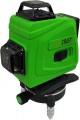 | 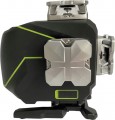 |
|---|---|---|
| Procraft LE-4G | Protester LL516G | |
| Outdated Product | Outdated Product | |
| User reviews | ||
| TOP sellers | ||
As a battery, you can use a rechargeable battery or four AA batteries. | ||
| Type | laser level | laser level |
| Suitable for | 360° area | 360° area |
Specs | ||
| Measurement range | 40 m | 45 m |
| Measurement range (with receiver) | 60 m | |
| Accuracy | 0.15 mm/m | 0.2 mm/m |
| Self-leveling angle | 3 ° | 3.5 ° |
| Leveling time | 4 с | 3 с |
| Operating temperature | 5 – 40 °C | -10 – 50 °C |
| Tripod thread | 5/8" | 1/4" |
Laser characteristics | ||
| Diode emission | 532 nm | 520 nm |
| Laser colour | green | green |
| Laser class | 2 | 2 |
| Vertical projections | 2 | 2 |
| Beam angle (vertical) | 360 ° | 360 ° |
| Horizontal projections | 2 | 2 |
| Beam angle (horizontal) | 360 ° | 360 ° |
Features | ||
| Compensator locking |  | |
| Display | b/w with backlit | |
General | ||
| IP protection rating | 54 | |
| Power source | battery | AA x4 or battery |
| Connection port | USB C | |
| Operating time | 5 h | |
| In box | tribrach magnetic holder case / pouch remote control non chargeable batteries glasses | holder case / pouch non chargeable batteries battery charger target plate USB cable |
| Dimensions | 110x90x115 mm | |
| Weight | 500 g | |
| Added to E-Catalog | may 2022 | october 2021 |


Compare Procraft LE-4G and Protester LL516G
You may be interested in
My comparisons
Procraft LE-4G often compared


Protester LL516G often compared


Glossary
Measurement range
The range at which the device remains fully operational without the use of additional receivers (see below); in other words, the radius of its action without auxiliary devices.
In some models, a range may be specified that shows the minimum ( 3 cm, 5 cm) and maximum measurement ranges. But in most cases, only the maximum value is indicated.
The specific meaning of this parameter is determined by the type of instrument (see above). So, for optical levels, the measurement range is the greatest distance at which the operator can normally see the divisions of a standard leveling staff. For laser levels, this parameter determines the distance from the device to the surface on which the mark is projected, at which this projection will be easily visible to the naked eye; and in rangefinders we are talking about the greatest distance that can be measured. Typically, the measurement range is indicated for ideal conditions - in particular, in the absence of impurities in the air; in practice, it may be less due to dust, fog, or vice versa, bright sunlight "overlapping" the mark. At the same time, tools of the same type can be compared according to this characteristic.
Note that it is worth choosing a device according to the range of action, taking into account the features of the tasks that are planned to be solved with its help: after all, a large measurement range usually significa...ntly affects the dimensions, weight, power consumption and price, but it is far from always required. For example, it hardly makes sense to look for a powerful laser level at 30-40 m if you need a device for finishing work in standard apartments.
In some models, a range may be specified that shows the minimum ( 3 cm, 5 cm) and maximum measurement ranges. But in most cases, only the maximum value is indicated.
The specific meaning of this parameter is determined by the type of instrument (see above). So, for optical levels, the measurement range is the greatest distance at which the operator can normally see the divisions of a standard leveling staff. For laser levels, this parameter determines the distance from the device to the surface on which the mark is projected, at which this projection will be easily visible to the naked eye; and in rangefinders we are talking about the greatest distance that can be measured. Typically, the measurement range is indicated for ideal conditions - in particular, in the absence of impurities in the air; in practice, it may be less due to dust, fog, or vice versa, bright sunlight "overlapping" the mark. At the same time, tools of the same type can be compared according to this characteristic.
Note that it is worth choosing a device according to the range of action, taking into account the features of the tasks that are planned to be solved with its help: after all, a large measurement range usually significa...ntly affects the dimensions, weight, power consumption and price, but it is far from always required. For example, it hardly makes sense to look for a powerful laser level at 30-40 m if you need a device for finishing work in standard apartments.
Measurement range (with receiver)
The longest measurement range provided by a laser level (see “Type”) when using a special receiver with a photocell.
Thanks to its sensitivity, such a receiver is able to respond even to a weak laser beam, the mark from which is no longer visible to the naked eye; At the same time, the area of the photocell is quite large, and special indicators make it possible to determine the exact position of the mark. Among other things, this significantly expands the range of action of the level - the measurement range with a receiver is usually several times greater than without it. On the other hand, such equipment inevitably affects the overall cost of the device; and in some models the receiver is not included in the package at all; it must be purchased separately. However, the second option also has its advantages: you do not need to immediately pay for an additional accessory, it can be purchased later, when a real need arises, while some models allow you to choose the optimal receiver model from several options at your discretion.
Note that the receiver can be useful not only for increasing range; These points are described in detail in paragraph “Included parts”.
Thanks to its sensitivity, such a receiver is able to respond even to a weak laser beam, the mark from which is no longer visible to the naked eye; At the same time, the area of the photocell is quite large, and special indicators make it possible to determine the exact position of the mark. Among other things, this significantly expands the range of action of the level - the measurement range with a receiver is usually several times greater than without it. On the other hand, such equipment inevitably affects the overall cost of the device; and in some models the receiver is not included in the package at all; it must be purchased separately. However, the second option also has its advantages: you do not need to immediately pay for an additional accessory, it can be purchased later, when a real need arises, while some models allow you to choose the optimal receiver model from several options at your discretion.
Note that the receiver can be useful not only for increasing range; These points are described in detail in paragraph “Included parts”.
Accuracy
Accuracy is described as the maximum deviation from the true value of the measured parameter, which the device can give if all the rules for its operation and the corresponding measurements are observed. In both rangefinders and levels, this parameter is usually designated for a certain distance — for example, 3 mm at 30 m; but even for one manufacturer, these "control" distances may be different. Therefore, in our catalog, the accuracy of all devices is recalculated for 1 m distance; with such a record, for the example above, it will be 3/30 \u003d 0.1 mm / m. This makes it easier to compare different models with each other.
It is also worth mentioning that the meaning of the "accuracy" parameter for different types of measuring instruments (see "Type") will be different. For optical levels, it is described in the "SKP" paragraph above. For laser levels of all types, accuracy is the maximum deviation of the mark from the true horizontal (or vertical, if such a function is provided), and for the horizontal, we can talk about both moving the mark up / down and turning it. In rangefinders, this characteristic describes the maximum difference (both in "plus" and "minus") between the readings of the device and the actual distance to the object.
Anyway, the smaller the error, the better; on the other hand, accuracy significantly affects the price of the device. Therefore, it is necessary to choose a specific model for this parameter, taking into account the...specifics of the planned work. For example, for a relatively simple repair in a residential apartment, a high-precision tool is unlikely to be required; and recommendations for more complex tasks can be found in specialized sources, ranging from expert advice to official instructions.
It is also worth mentioning that the meaning of the "accuracy" parameter for different types of measuring instruments (see "Type") will be different. For optical levels, it is described in the "SKP" paragraph above. For laser levels of all types, accuracy is the maximum deviation of the mark from the true horizontal (or vertical, if such a function is provided), and for the horizontal, we can talk about both moving the mark up / down and turning it. In rangefinders, this characteristic describes the maximum difference (both in "plus" and "minus") between the readings of the device and the actual distance to the object.
Anyway, the smaller the error, the better; on the other hand, accuracy significantly affects the price of the device. Therefore, it is necessary to choose a specific model for this parameter, taking into account the...specifics of the planned work. For example, for a relatively simple repair in a residential apartment, a high-precision tool is unlikely to be required; and recommendations for more complex tasks can be found in specialized sources, ranging from expert advice to official instructions.
Self-leveling angle
The maximum deviation from the horizontal position that the device is able to correct "by its own means".
Self-leveling in itself greatly simplifies the installation and initial calibration of levels (see "Type"), which often (and for optical models — mandatory) need to be set horizontally to work. With this function, it is enough to install the device more or less evenly (in many models, special devices are provided for this, such as round levels) — and fine tuning in the longitudinal and transverse planes will be carried out automatically. And the limits of self-leveling are usually indicated for both planes; the higher this indicator, the easier the device is to install, the less demanding it is to the initial placement. In some models, this figure can reach 6 – 8 °.
Self-leveling in itself greatly simplifies the installation and initial calibration of levels (see "Type"), which often (and for optical models — mandatory) need to be set horizontally to work. With this function, it is enough to install the device more or less evenly (in many models, special devices are provided for this, such as round levels) — and fine tuning in the longitudinal and transverse planes will be carried out automatically. And the limits of self-leveling are usually indicated for both planes; the higher this indicator, the easier the device is to install, the less demanding it is to the initial placement. In some models, this figure can reach 6 – 8 °.
Leveling time
Approximate time it takes for the self-levelling mechanism to bring the level to a perfectly level position.
For more information on such a mechanism, see Self-Level Limits. And the actual time of its alignment directly depends on the actual deviation of the device from the horizontal. Therefore, in the characteristics, usually, the maximum alignment time is given — that is, for the situation when in the initial position the device is tilted to the maximum angle along both axes, longitudinal and transverse. Since the levels are far from being installed in this position, in fact the speed of bringing to the horizontal is often higher than the claimed one. Nevertheless, it makes sense to evaluate different models precisely according to the figures stated in the characteristics — they allow you to estimate the maximum amount of time that will have to be spent on alignment after the next movement of the device. As for specific indicators, they can vary from 1.5 – 2 s to 30 s.
Theoretically, the shorter the alignment time, the better, especially if there are large volumes of work ahead with frequent movements from place to place. However, in fact, when comparing different models, it is worth considering other points. First, we reiterate that the rate of leveling is highly dependent on the leveling limits; after all, the greater the deviation angles, the more time it usually takes for the mechanism to return the level to the horizontal. So, to directly compare w...ith each other in terms of the speed of self-leveling, it is mainly those devices in which the permissible deviation angles are the same or differ slightly. Secondly, when choosing, it is worth considering the specifics of the proposed work. So, if the device is to be used frequently on very uneven surfaces, then, for example, a model with a leveling time of 20 s and self-levelling limits of 6 ° will be a more reasonable choice than a device with a time of 5 s and limits of 2 °, since in In the second case, a lot of time will be spent on the initial (manual) installation of the device. And for more or less even horizontal planes, on the contrary, a faster device may be the best option.
For more information on such a mechanism, see Self-Level Limits. And the actual time of its alignment directly depends on the actual deviation of the device from the horizontal. Therefore, in the characteristics, usually, the maximum alignment time is given — that is, for the situation when in the initial position the device is tilted to the maximum angle along both axes, longitudinal and transverse. Since the levels are far from being installed in this position, in fact the speed of bringing to the horizontal is often higher than the claimed one. Nevertheless, it makes sense to evaluate different models precisely according to the figures stated in the characteristics — they allow you to estimate the maximum amount of time that will have to be spent on alignment after the next movement of the device. As for specific indicators, they can vary from 1.5 – 2 s to 30 s.
Theoretically, the shorter the alignment time, the better, especially if there are large volumes of work ahead with frequent movements from place to place. However, in fact, when comparing different models, it is worth considering other points. First, we reiterate that the rate of leveling is highly dependent on the leveling limits; after all, the greater the deviation angles, the more time it usually takes for the mechanism to return the level to the horizontal. So, to directly compare w...ith each other in terms of the speed of self-leveling, it is mainly those devices in which the permissible deviation angles are the same or differ slightly. Secondly, when choosing, it is worth considering the specifics of the proposed work. So, if the device is to be used frequently on very uneven surfaces, then, for example, a model with a leveling time of 20 s and self-levelling limits of 6 ° will be a more reasonable choice than a device with a time of 5 s and limits of 2 °, since in In the second case, a lot of time will be spent on the initial (manual) installation of the device. And for more or less even horizontal planes, on the contrary, a faster device may be the best option.
Operating temperature
The temperature range at which the device is guaranteed to work for a sufficiently long time without failures, breakdowns and exceeding the measurement error specified in the characteristics. Note that we are talking primarily about the temperature of the device case, and it depends not only on the ambient temperature — for example, a tool left in the sun can overheat even in fairly cool weather.
In general, you should pay attention to this parameter when you are looking for a model for working outdoors, in unheated rooms and other places with conditions that are significantly different from indoor ones; in the first case, it makes sense to also make sure that there is dust and water protection (see "Protection class"). On the other hand, even relatively simple and "myopic" levels / rangefinders usually tolerate both heat and cold quite well.
In general, you should pay attention to this parameter when you are looking for a model for working outdoors, in unheated rooms and other places with conditions that are significantly different from indoor ones; in the first case, it makes sense to also make sure that there is dust and water protection (see "Protection class"). On the other hand, even relatively simple and "myopic" levels / rangefinders usually tolerate both heat and cold quite well.
Tripod thread
The standard size of the thread used to mount the level/rangefinder on a tripod (if available). This option can be useful if you already have a surveying tripod that you want to use with the tool.
The most popular options in modern devices are 1/4" and 5/8". It is worth noting that 1/4" is a standard size for photographic equipment - accordingly, levels with such a thread can be installed even on ordinary photographic tripods.
The most popular options in modern devices are 1/4" and 5/8". It is worth noting that 1/4" is a standard size for photographic equipment - accordingly, levels with such a thread can be installed even on ordinary photographic tripods.
Diode emission
The wavelength of the radiation emitted by the LED of the level or rangefinder; this parameter determines primarily the colour of the laser beam. The most widespread in modern models are LEDs with a wavelength of about 635 nm — at a relatively low cost, they provide bright red radiation, giving a well-visible projection. There are also green lasers, usually at 532 nm — the marks from them are even better visible, but such LEDs are quite expensive and rarely used. And radiation with a wave longer than 780 nm belongs to the infrared spectrum. Such a laser is invisible to the naked eye and is poorly suited for leveling, but it can be used in rangefinders — of course, with a viewfinder (see "Type" for more details).
Display
Own screen on the device body.
All displays are used to display various additional information, which makes control more convenient and clear compared to models without displays ; but the specific functionality and features of the screen may vary, depending on the type. There are black and white options, backlit displays, color and even touch screens. More details about each:
— B/W without backlight. The simplest and most inexpensive type of display: a black-and-white LCD sensor without its own backlight. Despite their overall simplicity, such screens can have quite extensive capabilities: technically, they can display data related to the operation of the device (for example, the results of rangefinder measurements), and other additional information, including quite specific ones. In fact, the only thing that b/w displays are not suitable for is displaying images from a digital camera. In practice, the functionality of the display is selected according to the capabilities of a particular device. As for the lack of backlighting, this feature makes it difficult to use in low light conditions, but it reduces the price and power consumption. In addition, under the sun or other bright lighting on advanced backlit screens the image may “fade”, while on the simplest black and white screens wi...thout backlight it, on the contrary, becomes even clearer.
— B/W with backlight. Black and white screens equipped with backlight systems. Note that this category actually includes two types of displays: traditional black-and-white LCD matrices in the “black image on a white background” format, supplemented by an external lighting system, as well as single-color screens in the “light image on a black background” format, where the light itself can glow. image. Be that as it may, such displays can be used without restrictions in low light, but the downside of this is increased power consumption - especially in models where the backlight is constantly on.
- Colored. The functionality of color displays can be different - from the simplest LCD screens, capable of displaying only a few primary colors (for example, highlighting the most important numbers on the screen in a different color), to full-color matrices (like tech used, for example, in laptops). The first type is somewhat more convenient and clearer than the b/w displays described above, costs a little more, but has no other differences. The most advanced color screens, in turn, can even display a picture from a digital camera - and, in fact, they are mainly used in devices equipped with such cameras.
- Touch. The most advanced type of display. Such screens are almost always made in color and equipped with backlighting, and touch controls also allow them to be used to control the device (similar to what happens in smartphones and tablets). In terms of control, touch screens are more convenient and intuitive than traditional panels with buttons, switches, etc.; they are much better suited to handle the abundance of functions, and also provide some additional capabilities that are not available with traditional controls. On the other hand, such equipment is not cheap, and it simply does not make sense to use it in relatively simple and inexpensive devices - for such models, more affordable displays, even the simplest black and white ones, are quite sufficient. Therefore, the presence of a touch screen is almost guaranteed to be a sign of a high-end device with an abundance of functions.
All displays are used to display various additional information, which makes control more convenient and clear compared to models without displays ; but the specific functionality and features of the screen may vary, depending on the type. There are black and white options, backlit displays, color and even touch screens. More details about each:
— B/W without backlight. The simplest and most inexpensive type of display: a black-and-white LCD sensor without its own backlight. Despite their overall simplicity, such screens can have quite extensive capabilities: technically, they can display data related to the operation of the device (for example, the results of rangefinder measurements), and other additional information, including quite specific ones. In fact, the only thing that b/w displays are not suitable for is displaying images from a digital camera. In practice, the functionality of the display is selected according to the capabilities of a particular device. As for the lack of backlighting, this feature makes it difficult to use in low light conditions, but it reduces the price and power consumption. In addition, under the sun or other bright lighting on advanced backlit screens the image may “fade”, while on the simplest black and white screens wi...thout backlight it, on the contrary, becomes even clearer.
— B/W with backlight. Black and white screens equipped with backlight systems. Note that this category actually includes two types of displays: traditional black-and-white LCD matrices in the “black image on a white background” format, supplemented by an external lighting system, as well as single-color screens in the “light image on a black background” format, where the light itself can glow. image. Be that as it may, such displays can be used without restrictions in low light, but the downside of this is increased power consumption - especially in models where the backlight is constantly on.
- Colored. The functionality of color displays can be different - from the simplest LCD screens, capable of displaying only a few primary colors (for example, highlighting the most important numbers on the screen in a different color), to full-color matrices (like tech used, for example, in laptops). The first type is somewhat more convenient and clearer than the b/w displays described above, costs a little more, but has no other differences. The most advanced color screens, in turn, can even display a picture from a digital camera - and, in fact, they are mainly used in devices equipped with such cameras.
- Touch. The most advanced type of display. Such screens are almost always made in color and equipped with backlighting, and touch controls also allow them to be used to control the device (similar to what happens in smartphones and tablets). In terms of control, touch screens are more convenient and intuitive than traditional panels with buttons, switches, etc.; they are much better suited to handle the abundance of functions, and also provide some additional capabilities that are not available with traditional controls. On the other hand, such equipment is not cheap, and it simply does not make sense to use it in relatively simple and inexpensive devices - for such models, more affordable displays, even the simplest black and white ones, are quite sufficient. Therefore, the presence of a touch screen is almost guaranteed to be a sign of a high-end device with an abundance of functions.