
Comparison Yamaha PSR-E473 vs Casio CT-X3000
Add to comparison | 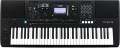 | 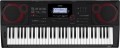 |
|---|---|---|
| Yamaha PSR-E473 | Casio CT-X3000 | |
from $399.99 | Compare prices 1 | |
| TOP sellers | ||
| Type | synthesizer (rompler) | synthesizer (rompler) |
Keys | ||
| Number of keys | 61 | 61 |
| Size | full size | full size |
| Mechanics | active | active |
| Sensitivity adjustment |  |  |
| Rigidity | semi-weighted | semi-weighted |
Specs | ||
| Polyphony | 64 voices | 64 voices |
| Built-in timbres | 820 шт | 800 шт |
| User timbres | 100 шт | |
| Auto accompaniment | | |
| Accompaniment styles | 290 шт | 235 шт |
| Custom styles | 50 шт | |
| Learning mode | | |
| Tempo change | 11 – 280 | 20 – 255 |
| Metronome | | |
| Sequencer (recording) | | |
| Built-in compositions | | |
Effects and control | ||
| Timbres layering | | |
| Keyboard split | | |
| Octave shift | | |
| Arpeggiator | | |
| Reverberation | | |
| Chorus | | |
| Transposition | | |
| Pitch controller | | |
| Fine tuning | | |
Connectors | ||
| Inputs | mini-Jack (3.5 mm) USB to device (type A) | mini-Jack (3.5 mm) USB to device (type A) |
| Connectable pedals | 1 шт | 2 шт |
| Outputs | USB to host (type B) headphones | USB to host (type B) headphones |
| Linear outputs | 1 | |
In box | ||
| In box | music stand | PSU |
General | ||
| Built-in acoustics | 12 W | 12 W |
| Number of bands | 2 | 1 |
| Display | monochrome | monochrome |
| Power consumption | 8 W | 8 W |
| Autonomous power supply | aA batteries | aA batteries |
| Operating hours | 10 h | |
| Dimensions (WxHxD) | 992x136x404 mm | 948x116x384 mm |
| Weight | 7 kg | 7 kg |
| Color | ||
| Added to E-Catalog | november 2022 | november 2018 |



Compare Yamaha PSR-E473 and Casio CT-X3000
Price comparison
You may be interested in
My comparisons
Yamaha PSR-E473 often compared


Casio CT-X3000 often compared


Glossary
Sensitivity adjustment
Ability to change the sensitivity of active mechanics (see above) in the synthesizer.
This function allows you to adjust the intensity of the key's response to pressing. Simply put, the higher the sensitivity, the louder and sharper the sound will be, with the same pressing force. This allows you to change the characteristics of the instrument's sound.
Also in synthesizers with this function, it is often possible to completely turn off the active mechanics and play on a “passive” keyboard. This can be useful for making certain voices, such as harpsichord or organ, sound realistic.
This function allows you to adjust the intensity of the key's response to pressing. Simply put, the higher the sensitivity, the louder and sharper the sound will be, with the same pressing force. This allows you to change the characteristics of the instrument's sound.
Also in synthesizers with this function, it is often possible to completely turn off the active mechanics and play on a “passive” keyboard. This can be useful for making certain voices, such as harpsichord or organ, sound realistic.
Built-in timbres
The number of built-in sounds provided in the synthesizer.
The number of timbres is often described as the number of instruments that a given model can imitate. However, this is not entirely true — rather, this parameter can be called "the number of instruments and sound effects." For example, the same instrument — an electric guitar — with different "gadgets" (distortion, overdrive) will sound differently, and in the synthesizer each such gadget will be considered a separate timbre. The “drums” timbre usually combines different types of drums and other percussion instruments — in other words, it allows you to portray both the “bass drum” and the cymbals without switching settings, just by pressing the desired keys. And some timbres may not have analogues among real instruments at all.
The more built-in timbres, the more extensive the possibilities of the synthesizer, the more diverse the sounds that can be extracted from it. At the same time, in high-end models like workstations (see "Type"), this number can reach 1000 or even more.
The number of timbres is often described as the number of instruments that a given model can imitate. However, this is not entirely true — rather, this parameter can be called "the number of instruments and sound effects." For example, the same instrument — an electric guitar — with different "gadgets" (distortion, overdrive) will sound differently, and in the synthesizer each such gadget will be considered a separate timbre. The “drums” timbre usually combines different types of drums and other percussion instruments — in other words, it allows you to portray both the “bass drum” and the cymbals without switching settings, just by pressing the desired keys. And some timbres may not have analogues among real instruments at all.
The more built-in timbres, the more extensive the possibilities of the synthesizer, the more diverse the sounds that can be extracted from it. At the same time, in high-end models like workstations (see "Type"), this number can reach 1000 or even more.
User timbres
The number of memory slots for user tones provided in the synthesizer.
For Voices in general, see “Preset Voices” above. User timbres are sound settings that were not originally provided in the synthesizer's memory and are created by the user according to their preferences. This feature is indispensable in cases where the built-in set of timbres does not contain the necessary options. However, the capabilities of the User Voices may vary from model to model. So, one instrument only allows you to edit and supplement existing timbres (for example, add a “wah-wah” effect to a bass guitar and save such a bunch as a user setting), another makes it possible to set the sound parameters almost manually, and the third even allows you to load timbres through USB (see below).
The more user timbres in the synthesizer, the more personal “instruments” you can register in its memory.
For Voices in general, see “Preset Voices” above. User timbres are sound settings that were not originally provided in the synthesizer's memory and are created by the user according to their preferences. This feature is indispensable in cases where the built-in set of timbres does not contain the necessary options. However, the capabilities of the User Voices may vary from model to model. So, one instrument only allows you to edit and supplement existing timbres (for example, add a “wah-wah” effect to a bass guitar and save such a bunch as a user setting), another makes it possible to set the sound parameters almost manually, and the third even allows you to load timbres through USB (see below).
The more user timbres in the synthesizer, the more personal “instruments” you can register in its memory.
Accompaniment styles
The number of auto accompaniment styles (see above) originally provided in the synthesizer, in other words, the number of accompaniment options available to the user.
The more extensive this set, the higher the probability of finding among these melodies suitable options for a particular case. At the same time, the abundance of styles in itself is not yet a 100% guarantee that among them there will be a suitable one, especially since different synthesizer models can differ markedly in a specific set of melodies. So the list does not hurt to clarify before buying. Also note that the situation can be corrected by user styles (see below) — many synthesizers with auto accompaniment support them.
The more extensive this set, the higher the probability of finding among these melodies suitable options for a particular case. At the same time, the abundance of styles in itself is not yet a 100% guarantee that among them there will be a suitable one, especially since different synthesizer models can differ markedly in a specific set of melodies. So the list does not hurt to clarify before buying. Also note that the situation can be corrected by user styles (see below) — many synthesizers with auto accompaniment support them.
Custom styles
The number of user auto accompaniment styles supported by the synthesizer, in other words, the number of additional styles that can be stored in memory in addition to the built-in ones. Note that styles can have different volumes (depending on the number of notes used), so this parameter often turns out to be not exact, but only an average-approximate one.
Modern synthesizers may have a fairly extensive set of built-in auto accompaniment styles (see above), but even the richest set may not contain the desired melody. Thus, many models allow you to supplement the standard list with custom melodies. The addition methods themselves can be different: in some models, these melodies need to be downloaded from external media, in others they can even be composed manually. Nevertheless, the presence of user styles allows you to expand the range of auto accompaniment melodies, moreover, at the request of the user himself.
Modern synthesizers may have a fairly extensive set of built-in auto accompaniment styles (see above), but even the richest set may not contain the desired melody. Thus, many models allow you to supplement the standard list with custom melodies. The addition methods themselves can be different: in some models, these melodies need to be downloaded from external media, in others they can even be composed manually. Nevertheless, the presence of user styles allows you to expand the range of auto accompaniment melodies, moreover, at the request of the user himself.
Tempo change
The range in which you can change the tempo of the programme played by the synthesizer — auto accompaniment, lesson tune (see above), metronome (see below), recorded sample, etc.
Pace is measured in beats per minute. Changing it allows you to adjust the speed of the synthesizer to the specifics of the situation — for example, slightly slow down the tutorial if it is too hard to master at the initial pace. The wider the range of tempo adjustment, the more options the musician has to choose from, especially in the area of very slow and very fast tempos.
Note that the traditional range of musical tempos covers values from 40 beats / min (“grave”, “very slowly”) to 208 beats / min (“prestissimo”, “very fast”), however, in synthesizers it can be more extensive — for example, 30 – 255 bpm.
Pace is measured in beats per minute. Changing it allows you to adjust the speed of the synthesizer to the specifics of the situation — for example, slightly slow down the tutorial if it is too hard to master at the initial pace. The wider the range of tempo adjustment, the more options the musician has to choose from, especially in the area of very slow and very fast tempos.
Note that the traditional range of musical tempos covers values from 40 beats / min (“grave”, “very slowly”) to 208 beats / min (“prestissimo”, “very fast”), however, in synthesizers it can be more extensive — for example, 30 – 255 bpm.
Octave shift
Synthesizer support for octave shift function.
This function allows you to shift the sound of the instrument one or more octaves up or down — for example, so that the keys of the first octave sound the notes of the second, or vice versa. This function can be used for both simple convenience and more practical purposes — it allows you to play very low and very high notes that are not initially covered by the keyboard range. This is especially useful for shortened 49- or 61-key synths that do not initially fit the full range of the piano.
This function allows you to shift the sound of the instrument one or more octaves up or down — for example, so that the keys of the first octave sound the notes of the second, or vice versa. This function can be used for both simple convenience and more practical purposes — it allows you to play very low and very high notes that are not initially covered by the keyboard range. This is especially useful for shortened 49- or 61-key synths that do not initially fit the full range of the piano.
Connectable pedals
The number of pedals that can be connected to the synthesizer at the same time.
Pedals are additional controls that expand the capabilities of the instrument. One of the most famous pedal functions, familiar to many from classical pianos and grand pianos, is “sustain”, where the sound continues to sound after the key is released, slowly fading out. However, the matter is not limited to this, the purpose of the pedals can be very diverse: enabling or disabling additional effects, switching between octaves or keys, etc. At the same time, in some synthesizers, mostly inexpensive, the assignment of the pedals is fixed, in others it can be reconfigured to fit your goals.
For most instruments, one pedal is sufficient, but high-end models such as workstations (see "Type") may support multiple connections.
Pedals are additional controls that expand the capabilities of the instrument. One of the most famous pedal functions, familiar to many from classical pianos and grand pianos, is “sustain”, where the sound continues to sound after the key is released, slowly fading out. However, the matter is not limited to this, the purpose of the pedals can be very diverse: enabling or disabling additional effects, switching between octaves or keys, etc. At the same time, in some synthesizers, mostly inexpensive, the assignment of the pedals is fixed, in others it can be reconfigured to fit your goals.
For most instruments, one pedal is sufficient, but high-end models such as workstations (see "Type") may support multiple connections.
Linear outputs
The number of line outputs provided in the design of the synthesizer.
The line output is used to transmit the sound produced by the synthesizer to external devices. At the same time, unlike the MIDI output, a “ready” sound is transmitted through such a connector — an analogue line-level audio signal that can be connected to another audio device — for example, to a power amplifier or active speakers for playback, to a computer or mixing console for recording, etc. Keep in mind that the line outputs can use different types of connectors — for example, 3.5 mm mini-Jack or 6.35 mm Jack; Specifically, these connectors are described in more detail in the “Inputs” section, but the matter is not limited to them.
Multiple analogue inputs make it possible to connect the synthesizer to several external audio devices at the same time — for example, to an amplifier for playback and a recorder for recording.
The line output is used to transmit the sound produced by the synthesizer to external devices. At the same time, unlike the MIDI output, a “ready” sound is transmitted through such a connector — an analogue line-level audio signal that can be connected to another audio device — for example, to a power amplifier or active speakers for playback, to a computer or mixing console for recording, etc. Keep in mind that the line outputs can use different types of connectors — for example, 3.5 mm mini-Jack or 6.35 mm Jack; Specifically, these connectors are described in more detail in the “Inputs” section, but the matter is not limited to them.
Multiple analogue inputs make it possible to connect the synthesizer to several external audio devices at the same time — for example, to an amplifier for playback and a recorder for recording.