
Comparison Parksons JB4111C vs Cort AD810
Add to comparison | 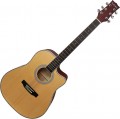 | 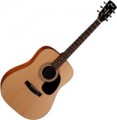 |
|---|---|---|
| Parksons JB4111C | Cort AD810 | |
| Outdated Product | from $209.99 | |
| User reviews | ||
| TOP sellers | ||
| Type | acoustic | acoustic |
| Number of strings | 6 | 6 |
Body | ||
| Size | 4/4 | 4/4 |
| Shape | dreadnought (western) | dreadnought (western) |
| Cutaway |  |  |
| Pickguard | | |
| Top deck | spruce | spruce |
| Bottom deck | linden | mahogany |
| Shell | linden | mahogany |
| Bridge | rosewood | rosewood |
Neck | ||
| Number of frets | 20 | 20 |
| Anchor | single | single |
| Scale | 25.6 " | |
| Neck material | mahogany | |
| Fretboard | rosewood | rosewood |
| Color | ||
| Added to E-Catalog | december 2018 | july 2016 |


Compare Parksons JB4111C and Cort AD810
You may be interested in
My comparisons
Parksons JB4111C often compared


Cort AD810 often compared


Glossary
Cutaway
Special cutout on the body of the guitar. It is located at the base of the neck, to the right of it, if you look at the upright guitar from the front (in left-handed models — on the left). This feature makes it much easier to play on the upper frets (located near the rosette): without a cutout, the body would prevent reaching them. Therefore, this feature is highly desirable for guitarists who play notes at high frets (from the 12th and above).
There is an opinion that the cutout negatively affects the acoustics of the guitar (reduces the useful volume of the body, reduces the volume and saturation). However, in most cases, this effect is almost imperceptible, especially since manufacturers often use various tricks to compensate for this effect.
There is an opinion that the cutout negatively affects the acoustics of the guitar (reduces the useful volume of the body, reduces the volume and saturation). However, in most cases, this effect is almost imperceptible, especially since manufacturers often use various tricks to compensate for this effect.
Pickguard
A special protective pad that protects the soundboard from accidental contact with the pick.
The pickguard is usually located at the sound hole below the strings (if the guitar is considered in the standard playing position). With a dynamic, aggressive performance (especially when playing chords), it is in this place that the pick clamped in the hand most often hits; hitting an unprotected body causes damage to the surface of the body, which degrades the appearance and acoustic characteristics of the guitar. Pickguard prevents such damage: such an overlay is usually made of a hard material that is resistant to contact with most picks. Accordingly, the presence of this part is highly recommended if you plan to use the pick extensively when playing.
Note that the protective overlay usually differs in colour from the main material of the deck, due to which it is clearly visible.
The pickguard is usually located at the sound hole below the strings (if the guitar is considered in the standard playing position). With a dynamic, aggressive performance (especially when playing chords), it is in this place that the pick clamped in the hand most often hits; hitting an unprotected body causes damage to the surface of the body, which degrades the appearance and acoustic characteristics of the guitar. Pickguard prevents such damage: such an overlay is usually made of a hard material that is resistant to contact with most picks. Accordingly, the presence of this part is highly recommended if you plan to use the pick extensively when playing.
Note that the protective overlay usually differs in colour from the main material of the deck, due to which it is clearly visible.
Bottom deck
The material from which the lower soundboard of the guitar is made is a flat surface on the opposite side from the upper soundboard (it is this surface that is adjacent to the musician's body when the instrument is held normally).
The value of this parameter is described in detail in the “Upper deck” section — what is stated there is also true in this case. We only note that a wider range of materials is used for the lower deck: this part is less demanding on the characteristics of the material, which gives manufacturers additional choice.
In terms of specific materials, rosewood, sapele, maple, meranti and nato, among others, enjoy considerable popularity in modern times. Here is a brief description of each of them:
— Rosewood. A name that combines the wood of several species of tropical trees. This material is said to provide deep sound and enhance bass quality, thereby improving the guitar's efficiency when playing rhythm parts on chords.
— Sapele. Also known as "African mahogany" due to its characteristic hue. It contributes to an even sound with medium depth and good expression of individual notes, which is considered important especially in solo parts.
— Maple. Maple wood is prone to a rather sharp and sonorous sound without much depth. However, this is...not a drawback, but a feature: for some styles of music, just such a coloring of the sound is perfect.
— Meranti. Wood of trees of the genus Shorey, growing in the tropical forests of Southeast Asia. This material is mainly used in instruments manufactured by Yamaha, mainly classical guitars and ukuleles — it is for these varieties that meranti is considered the best option.
— Nato. A relatively inexpensive variety of mahogany (mahogany) used in guitars in the corresponding price range. Contributes to a dense, but not very bright sound.
The value of this parameter is described in detail in the “Upper deck” section — what is stated there is also true in this case. We only note that a wider range of materials is used for the lower deck: this part is less demanding on the characteristics of the material, which gives manufacturers additional choice.
In terms of specific materials, rosewood, sapele, maple, meranti and nato, among others, enjoy considerable popularity in modern times. Here is a brief description of each of them:
— Rosewood. A name that combines the wood of several species of tropical trees. This material is said to provide deep sound and enhance bass quality, thereby improving the guitar's efficiency when playing rhythm parts on chords.
— Sapele. Also known as "African mahogany" due to its characteristic hue. It contributes to an even sound with medium depth and good expression of individual notes, which is considered important especially in solo parts.
— Maple. Maple wood is prone to a rather sharp and sonorous sound without much depth. However, this is...not a drawback, but a feature: for some styles of music, just such a coloring of the sound is perfect.
— Meranti. Wood of trees of the genus Shorey, growing in the tropical forests of Southeast Asia. This material is mainly used in instruments manufactured by Yamaha, mainly classical guitars and ukuleles — it is for these varieties that meranti is considered the best option.
— Nato. A relatively inexpensive variety of mahogany (mahogany) used in guitars in the corresponding price range. Contributes to a dense, but not very bright sound.
Shell
The material from which the side of the guitar is made is the “side” surface of the body, which unites the upper and lower soundboards (see above).
About the meaning of the material of the body, see paragraph "Top deck" — everything stated in it is also true for the shell. Unless the range of materials used for this part is noticeably wider; also note that most often the material of the shell coincides with the material of the bottom deck. Here is a summary of some of the more popular options:
— Rosewood. A name that combines the wood of several species of tropical trees. This material is said to provide deep sound and enhance bass quality, thereby improving the guitar's efficiency when playing rhythm parts on chords.
— Sapele. Also known as "African mahogany" due to its characteristic hue. It contributes to an even sound with medium depth and good expression of individual notes, which is considered important especially in solo parts.
— Maple. Maple wood is prone to a rather sharp and sonorous sound without much depth. However, this is not a drawback, but a feature: for some styles of music, just such a coloring of the sound is perfect.
— Meranti. Wood of trees of the genus Shorey, growing in the tropical forests of Southeast Asia. This material is mainly used in instruments manufactured by Yamaha, mainly classical guitars and ukuleles — it is for these varieties that meranti is considered the best option.
— Nato.... A relatively inexpensive variety of mahogany (mahogany) used in guitars in the corresponding price range. Contributes to a dense, but not very bright sound.
About the meaning of the material of the body, see paragraph "Top deck" — everything stated in it is also true for the shell. Unless the range of materials used for this part is noticeably wider; also note that most often the material of the shell coincides with the material of the bottom deck. Here is a summary of some of the more popular options:
— Rosewood. A name that combines the wood of several species of tropical trees. This material is said to provide deep sound and enhance bass quality, thereby improving the guitar's efficiency when playing rhythm parts on chords.
— Sapele. Also known as "African mahogany" due to its characteristic hue. It contributes to an even sound with medium depth and good expression of individual notes, which is considered important especially in solo parts.
— Maple. Maple wood is prone to a rather sharp and sonorous sound without much depth. However, this is not a drawback, but a feature: for some styles of music, just such a coloring of the sound is perfect.
— Meranti. Wood of trees of the genus Shorey, growing in the tropical forests of Southeast Asia. This material is mainly used in instruments manufactured by Yamaha, mainly classical guitars and ukuleles — it is for these varieties that meranti is considered the best option.
— Nato.... A relatively inexpensive variety of mahogany (mahogany) used in guitars in the corresponding price range. Contributes to a dense, but not very bright sound.
Scale
Scale length of the guitar. The scale in this case is the working part of the string, in other words, the distance from the saddle (on the headstock) to the saddle (on the bridge). In most acoustic and similar guitars, the scale is set during production and is unchanged. Without going into technical details, we can say that the value of this parameter is generally a reference: it allows you to some extent estimate the overall dimensions of the instrument, as well as the size of the frets (the longer the scale, the larger the size of the frets, regardless of their number). However, there is also a practical application: with an adjustable anchor (see above), the scale length data can be useful in the tuning process.