
Comparison FiiO KA15 vs Moondrop Dawn Pro
Add to comparison | 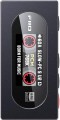 |  |
|---|---|---|
| FiiO KA15 | Moondrop Dawn Pro | |
from $80.49 | from $157.98 | |
| TOP sellers | ||
Desktop mode, dual DAC. Control via proprietary app. | ||
| Type | portable | portable |
| Number of channels | 2 шт | |
Specs | ||
| DAC sample rate | 768 kHz | 384 kHz |
| DAC bit depth | 32 bit | 32 bit |
| Power (32 Ohm) | 1120 mW | |
| Power (16 ohm) | 1020 mW | |
| Frequency range | 20 – 50000 Hz | 5 – 82000 Hz |
| Signal to noise ratio | 123 dB | 123 dB |
| Coef. harmonic distortion | 0.0004 % | 0.00014 % |
Functions and features | ||
| IPhone/iPad connection |  |  |
| Equalizer | | |
| Mobile app | | |
| Level adjustment | buttons | buttons |
Connectors | ||
| Inputs | USB-C | USB-C |
| Headphone outputs | 1x mini-Jack (3.5 mm) шт 1x Pentaconn (4.4 mm) шт | 1x mini-Jack (3.5 mm) шт 1x Pentaconn (4.4 mm) шт |
Power source | ||
| Power type | USB powered | USB powered |
General | ||
| Screen | | |
| Metal body | | |
| Dimensions | 28x13x64 mm | 42x22x12 mm |
| Weight | 33 g | 13 g |
| Color | ||
| Added to E-Catalog | february 2025 | february 2025 |


Compare FiiO KA15 and Moondrop Dawn Pro
You may be interested in
My comparisons
FiiO KA15 often compared


Moondrop Dawn Pro often compared


Glossary
Number of channels
The number of audio channels supported by the amplifier; only specified if the number is greater than one.
Since we are talking about dedicated headphone amplifiers, the term “channel” is used in this case in a slightly different sense than is usual in audio technology. This term most often means a set of two traditional channels (left and right), which allows you to provide full stereo sound in headphones. Simply put, the number of channels is the number of stereo sound sources that can be connected to the amplifier at the same time, and the number of headphones that can simultaneously output the signal from these sources. However, in addition to this, other types of channels can be provided — for example, monophonic. However, anyway, each channel uses its own signal source, its own headphone output (or other playback device) and its own set of adjustments.
Thus, on a multi-channel amplifier, several people can simultaneously listen to different sound sources in headphones; and some models are capable of reproducing individual channels also on external acoustics. At the same time, such functionality complicates the design of the device, increases the likelihood of interference and significantly affects the cost (including due to the need to take measures to compensate for interference). Therefore, there are relatively few multi-channel models nowadays, and these are exclusively stationary solutions (see "Type"), designed mainly for professional use.
...
Also note that the number of headphone outputs can be greater than the number of channels; in such cases, several connectors are “attached” to some channels at once, usually of different types (for example, Jack and XLR), which allows the user to choose the option depending on the headphones at hand. Theoretically, the outputs of one channel can be used simultaneously, but it's ok to clarify this possibility separately.
Since we are talking about dedicated headphone amplifiers, the term “channel” is used in this case in a slightly different sense than is usual in audio technology. This term most often means a set of two traditional channels (left and right), which allows you to provide full stereo sound in headphones. Simply put, the number of channels is the number of stereo sound sources that can be connected to the amplifier at the same time, and the number of headphones that can simultaneously output the signal from these sources. However, in addition to this, other types of channels can be provided — for example, monophonic. However, anyway, each channel uses its own signal source, its own headphone output (or other playback device) and its own set of adjustments.
Thus, on a multi-channel amplifier, several people can simultaneously listen to different sound sources in headphones; and some models are capable of reproducing individual channels also on external acoustics. At the same time, such functionality complicates the design of the device, increases the likelihood of interference and significantly affects the cost (including due to the need to take measures to compensate for interference). Therefore, there are relatively few multi-channel models nowadays, and these are exclusively stationary solutions (see "Type"), designed mainly for professional use.
...
Also note that the number of headphone outputs can be greater than the number of channels; in such cases, several connectors are “attached” to some channels at once, usually of different types (for example, Jack and XLR), which allows the user to choose the option depending on the headphones at hand. Theoretically, the outputs of one channel can be used simultaneously, but it's ok to clarify this possibility separately.
DAC sample rate
The sampling rate of the digital-to-analogue converter (DAC) installed in the amplifier. Recall that such a converter is responsible for converting digital audio into an analogue audio signal, which is then processed by the main amplifier and fed to the headphones (or other analogue audio device).
The sound in digital form is most often recorded as follows: the original sinusoid of the analogue audio signal is divided into separate sections (samples) — “steps” of a certain length and height, and each of these steps is encoded with its own set of numbers. The sampling rate determines how many such steps there are in a certain section of the original audio signal. Accordingly, the higher this frequency, the more accurately the digital record corresponds to the original signal; on the other hand, an increase in the number of samples per unit of time increases the volume of files and increases the requirements for the hardware power of digital circuits.
Specifically, for a DAC, the native sampling rate of such a module is, in fact, the maximum sampling rate of the incoming digital signal that the converter can effectively handle. With higher input values, the sound quality will at best be limited by the capabilities of the DAC, at worst, the amplifier will not be able to work correctly at all. Anyway, higher numbers in this paragraph (ceteris paribus) mean a more advanced and high-quality converter; on the other hand, this moment significantly affects the...cost, and you can evaluate all the capabilities of a high-end DAC only on audio materials of the appropriate quality.
As for specific numbers, the lowest value that can be found in headphone amplifiers is 44 kHz. According to the laws of physics, it is this sampling frequency that is the minimum necessary for the full transmission of all human-audible sound frequencies (16 — 22,000 Hz), and it is this frequency that is used in the Audio CD format. Many models provide values in 96 kHz and 192 kHz (this is already enough to work with different types of DVD-Audio), and in the most advanced devices this figure can reach 384 kHz and even 768 kHz.
The sound in digital form is most often recorded as follows: the original sinusoid of the analogue audio signal is divided into separate sections (samples) — “steps” of a certain length and height, and each of these steps is encoded with its own set of numbers. The sampling rate determines how many such steps there are in a certain section of the original audio signal. Accordingly, the higher this frequency, the more accurately the digital record corresponds to the original signal; on the other hand, an increase in the number of samples per unit of time increases the volume of files and increases the requirements for the hardware power of digital circuits.
Specifically, for a DAC, the native sampling rate of such a module is, in fact, the maximum sampling rate of the incoming digital signal that the converter can effectively handle. With higher input values, the sound quality will at best be limited by the capabilities of the DAC, at worst, the amplifier will not be able to work correctly at all. Anyway, higher numbers in this paragraph (ceteris paribus) mean a more advanced and high-quality converter; on the other hand, this moment significantly affects the...cost, and you can evaluate all the capabilities of a high-end DAC only on audio materials of the appropriate quality.
As for specific numbers, the lowest value that can be found in headphone amplifiers is 44 kHz. According to the laws of physics, it is this sampling frequency that is the minimum necessary for the full transmission of all human-audible sound frequencies (16 — 22,000 Hz), and it is this frequency that is used in the Audio CD format. Many models provide values in 96 kHz and 192 kHz (this is already enough to work with different types of DVD-Audio), and in the most advanced devices this figure can reach 384 kHz and even 768 kHz.
Power (32 Ohm)
Rated power delivered by the amplifier when connected to headphones (or other load) with an impedance of 32 ohms.
By itself, the rated power is the highest average power that the device is capable of delivering for a long time without overloading; individual "jumps" of the signal may have a higher level, but in general, the capabilities of the amplifier are determined primarily by this indicator. At the same time, the physical features of the audio equipment are such that the actual power delivered to the load will depend on the resistance of this load. Therefore, in the characteristics of headphone amplifiers, data is often given for different impedance values. A resistance of 32 ohms allows you to achieve quite good sound quality by the standards of low-impedance headphones, while it is not so high as to create problems for the built-in amplifiers of smartphones and other compact equipment. Therefore, most wired general-purpose (non-professional) headphones are made precisely in this resistance, and if the amplifier characteristics generally indicate power for a certain impedance, then most often it is for 32 ohms.
In the most modest modern amplifiers, the output power at this impedance is between 10 and 250 mW ; values of 250 – 500 mW can be called average, 500 – 100 mW are above average, and the most powerful models are capable of delivering more than 1000 watts.... The choice for specific power indicators depends on the sensitivity of the headphones used, as well as on the sound pressure level (in other words, loudness), which is planned to be achieved by the amplifier. There are special formulas and tables that allow you to calculate the minimum required power for a certain volume at a given sensitivity of the "ears". However, in the case of 32-ohm headphones, it does not always make sense to "get into the calculations." For example, the mentioned 10 mW is more than enough to drive headphones with a modest sensitivity of 96 dB to a volume of more than 105 dB — this is already enough to listen to music at quite a decent volume. And in order to achieve the same "ears" level of 120 dB, which provides a full perception of the loudest sounds (like explosions, thunder, etc.), you need to give out a power slightly higher than 251 mW. So in fact, you have to pay attention to this characteristic and resort to calculations / tables mainly in those cases when you have to use 32 Ohm headphones with a relatively low sensitivity — 95 dB or less.
By itself, the rated power is the highest average power that the device is capable of delivering for a long time without overloading; individual "jumps" of the signal may have a higher level, but in general, the capabilities of the amplifier are determined primarily by this indicator. At the same time, the physical features of the audio equipment are such that the actual power delivered to the load will depend on the resistance of this load. Therefore, in the characteristics of headphone amplifiers, data is often given for different impedance values. A resistance of 32 ohms allows you to achieve quite good sound quality by the standards of low-impedance headphones, while it is not so high as to create problems for the built-in amplifiers of smartphones and other compact equipment. Therefore, most wired general-purpose (non-professional) headphones are made precisely in this resistance, and if the amplifier characteristics generally indicate power for a certain impedance, then most often it is for 32 ohms.
In the most modest modern amplifiers, the output power at this impedance is between 10 and 250 mW ; values of 250 – 500 mW can be called average, 500 – 100 mW are above average, and the most powerful models are capable of delivering more than 1000 watts.... The choice for specific power indicators depends on the sensitivity of the headphones used, as well as on the sound pressure level (in other words, loudness), which is planned to be achieved by the amplifier. There are special formulas and tables that allow you to calculate the minimum required power for a certain volume at a given sensitivity of the "ears". However, in the case of 32-ohm headphones, it does not always make sense to "get into the calculations." For example, the mentioned 10 mW is more than enough to drive headphones with a modest sensitivity of 96 dB to a volume of more than 105 dB — this is already enough to listen to music at quite a decent volume. And in order to achieve the same "ears" level of 120 dB, which provides a full perception of the loudest sounds (like explosions, thunder, etc.), you need to give out a power slightly higher than 251 mW. So in fact, you have to pay attention to this characteristic and resort to calculations / tables mainly in those cases when you have to use 32 Ohm headphones with a relatively low sensitivity — 95 dB or less.
Power (16 ohm)
Rated power delivered by the amplifier when connected to headphones (or other load) with an impedance of 16 ohms.
By itself, the rated power is the highest average power that the device is capable of delivering for a long time without overloading; individual "jumps" of the signal may have a higher level, but in general, the capabilities of the amplifier are determined primarily by this indicator. At the same time, the physical features of the audio equipment are such that the actual power delivered to the load will depend on the resistance of this load. Therefore, in the characteristics of headphone amplifiers, data is often given for different impedance values. And 16 ohms is a rather low resistance indicator even for low-resistance "ears"; such characteristics are provided mainly in general-purpose headphones designed for pocket gadgets with low-power amplifiers.
As for the choice for specific power values, it depends on the sensitivity of the headphones used, as well as on the sound pressure level (in other words, loudness) that is planned to be achieved by the amplifier. There are special formulas and tables that allow you to calculate the minimum required power for a certain volume at a given sensitivity of the "ears". At the same time, it is worth noting that at 16 ohms, even the most low-power modern “amps” are capable of delivering about 20 mW — this is enough to drive headphones with a sensitivity of 88 dB (far from the highest figure) to a vo...lume of 105 dB (the minimum value recommended for a complete listening experience). And in most amplifiers, when operated with a given impedance, they provide much more power. So paying attention to this point and going into the calculations makes sense mainly either with low sensitivity of the "ears" (less than the mentioned 88 dB), or if you want to end up with a level above 105 dB.
By itself, the rated power is the highest average power that the device is capable of delivering for a long time without overloading; individual "jumps" of the signal may have a higher level, but in general, the capabilities of the amplifier are determined primarily by this indicator. At the same time, the physical features of the audio equipment are such that the actual power delivered to the load will depend on the resistance of this load. Therefore, in the characteristics of headphone amplifiers, data is often given for different impedance values. And 16 ohms is a rather low resistance indicator even for low-resistance "ears"; such characteristics are provided mainly in general-purpose headphones designed for pocket gadgets with low-power amplifiers.
As for the choice for specific power values, it depends on the sensitivity of the headphones used, as well as on the sound pressure level (in other words, loudness) that is planned to be achieved by the amplifier. There are special formulas and tables that allow you to calculate the minimum required power for a certain volume at a given sensitivity of the "ears". At the same time, it is worth noting that at 16 ohms, even the most low-power modern “amps” are capable of delivering about 20 mW — this is enough to drive headphones with a sensitivity of 88 dB (far from the highest figure) to a vo...lume of 105 dB (the minimum value recommended for a complete listening experience). And in most amplifiers, when operated with a given impedance, they provide much more power. So paying attention to this point and going into the calculations makes sense mainly either with low sensitivity of the "ears" (less than the mentioned 88 dB), or if you want to end up with a level above 105 dB.
Frequency range
Frequency range supported by the output amplifier; in other words, the range that this model is capable of delivering to headphones or another analogue audio device.
Theoretically, the wider the frequency range — the richer the sound of the amplifier, the lower the likelihood that the lower or upper edge of audible frequencies will be “cut off”. However, when evaluating this parameter, several nuances should be taken into account. Firstly, the average person is able to hear frequencies from 16 to 22,000 Hz, and with age, these boundaries gradually narrow. However, headphone amplifiers often have wider operating ranges, and they are very impressive — for example, for some models, a set of frequencies from 1 Hz to 60,000 Hz, or even up to 100,000 Hz, is claimed. Such characteristics are a kind of "side effect" from the use of high-end sound processing circuits; from a practical point of view, these numbers do not make much sense, but they are an indicator of the high class of the amplifier and are often used for advertising purposes.
The second nuance is that any headphones also inevitably have their own frequency limitations — and these limitations can be more significant than in an amplifier. Therefore, when choosing, it's ok to take into account the characteristics of the headphones: for example, you should not specifically look for an amplifier with an upper frequency limit of the full 22 kHz, if in the headphones that you plan to use with it, th...is limit is only 20 kHz.
In conclusion, also note that an extensive frequency range in itself does not guarantee high sound quality — it largely depends on other factors (frequency response, distortion level, etc.).
Theoretically, the wider the frequency range — the richer the sound of the amplifier, the lower the likelihood that the lower or upper edge of audible frequencies will be “cut off”. However, when evaluating this parameter, several nuances should be taken into account. Firstly, the average person is able to hear frequencies from 16 to 22,000 Hz, and with age, these boundaries gradually narrow. However, headphone amplifiers often have wider operating ranges, and they are very impressive — for example, for some models, a set of frequencies from 1 Hz to 60,000 Hz, or even up to 100,000 Hz, is claimed. Such characteristics are a kind of "side effect" from the use of high-end sound processing circuits; from a practical point of view, these numbers do not make much sense, but they are an indicator of the high class of the amplifier and are often used for advertising purposes.
The second nuance is that any headphones also inevitably have their own frequency limitations — and these limitations can be more significant than in an amplifier. Therefore, when choosing, it's ok to take into account the characteristics of the headphones: for example, you should not specifically look for an amplifier with an upper frequency limit of the full 22 kHz, if in the headphones that you plan to use with it, th...is limit is only 20 kHz.
In conclusion, also note that an extensive frequency range in itself does not guarantee high sound quality — it largely depends on other factors (frequency response, distortion level, etc.).
Coef. harmonic distortion
The coefficient of harmonic distortion that occurs during the operation of the amplifier.
Any electronic circuits are inevitably subject to such distortions, and the quality and reliability of the sound at the output depends on their level. Accordingly, ideally, the harmonic coefficient should be as low as possible. So, as a general rule, a level of 0.09% and below (hundredths of a percent) is considered good, and a level of less than 0.01% (thousandths of a percent) is excellent. The exception is lamp devices: higher values \u200b\u200bare allowed in them (in tenths of a percent), however, this point in many cases is not a drawback, but a feature (for more details, see "Lamp").
It is also worth noting that a low harmonic coefficient is especially important when using the amplifier as part of multicomponent audio systems — for example, when listening to music from a vinyl player with an external phono stage. The fact is that in such systems the sum of distortions from all components affects the final sound — and it, again, should be as low as possible.
Any electronic circuits are inevitably subject to such distortions, and the quality and reliability of the sound at the output depends on their level. Accordingly, ideally, the harmonic coefficient should be as low as possible. So, as a general rule, a level of 0.09% and below (hundredths of a percent) is considered good, and a level of less than 0.01% (thousandths of a percent) is excellent. The exception is lamp devices: higher values \u200b\u200bare allowed in them (in tenths of a percent), however, this point in many cases is not a drawback, but a feature (for more details, see "Lamp").
It is also worth noting that a low harmonic coefficient is especially important when using the amplifier as part of multicomponent audio systems — for example, when listening to music from a vinyl player with an external phono stage. The fact is that in such systems the sum of distortions from all components affects the final sound — and it, again, should be as low as possible.
IPhone/iPad connection
The presence in the amplifier of special features for connecting iPhone, iPad and other Apple gadgets.
Usually, a standard USB port (microUSB, USB-C) is used for such a connection — the same as for other portable (or even stationary) devices. However, models with this feature are additionally optimized for use with Apple products, and may also have special functions for working with such gadgets — for example, playback control via remote control on headphones connected to the amplifier. So if you are purchasing an amplifier for use with an Apple gadget, it makes sense to pay attention to models that directly declare compatibility with such gadgets.
Usually, a standard USB port (microUSB, USB-C) is used for such a connection — the same as for other portable (or even stationary) devices. However, models with this feature are additionally optimized for use with Apple products, and may also have special functions for working with such gadgets — for example, playback control via remote control on headphones connected to the amplifier. So if you are purchasing an amplifier for use with an Apple gadget, it makes sense to pay attention to models that directly declare compatibility with such gadgets.
Equalizer
The presence of an equalizer in the design of the amplifier.
Initially, the equalizer is a regulator that allows you to change the volume of the sound of individual frequency bands and thus adjust the overall colour of the sound. However, in headphone amplifiers, this function is usually implemented in software, as follows: the settings provide several preset equalizer settings (presets), between which the user can switch at will. These presets are often created for certain genres of music (Pop, Rock, Classical, etc.) or content types (Movie, Live Concert, etc.); so the listener doesn't have to fiddle with manual adjustments — just choose the option of their choice. However, in some models, the equalizer can also be controlled manually, including creating your own custom presets. And in tube devices (see above), the equalizer controls can be completely analogue and provide only manual adjustment.
Note that the set of bass and treble controls (see above) theoretically represents the simplest two-band equalizer. However, in fact, it is customary to refer to equalizers as systems that have at least three adjustment bands (in the most advanced models, the number of bands can reach 10). It is also worth mentioning that for a number of reasons this function is used quite rarely — in particular, the equalizer electronics affect the cost of the device and increase the likelihood of interference.
Initially, the equalizer is a regulator that allows you to change the volume of the sound of individual frequency bands and thus adjust the overall colour of the sound. However, in headphone amplifiers, this function is usually implemented in software, as follows: the settings provide several preset equalizer settings (presets), between which the user can switch at will. These presets are often created for certain genres of music (Pop, Rock, Classical, etc.) or content types (Movie, Live Concert, etc.); so the listener doesn't have to fiddle with manual adjustments — just choose the option of their choice. However, in some models, the equalizer can also be controlled manually, including creating your own custom presets. And in tube devices (see above), the equalizer controls can be completely analogue and provide only manual adjustment.
Note that the set of bass and treble controls (see above) theoretically represents the simplest two-band equalizer. However, in fact, it is customary to refer to equalizers as systems that have at least three adjustment bands (in the most advanced models, the number of bands can reach 10). It is also worth mentioning that for a number of reasons this function is used quite rarely — in particular, the equalizer electronics affect the cost of the device and increase the likelihood of interference.
Mobile app
Presence of a program to enhance the quality and volume of sound when listening through headphones. Mobile applications allow you to increase volume, adjust the equalizer, boost bass, add surround sound effects, and customize sound to individual preferences.