
Comparison Alligator JS848 vs Alligator JS847
Add to comparison | 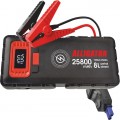 |  |
|---|---|---|
| Alligator JS848 | Alligator JS847 | |
| Expecting restock | Expecting restock | |
| TOP sellers | ||
Built-in 10W wireless charging. | ||
| Device | booster | booster |
Specs | ||
| Battery voltage | 12 В | 12 В |
| Rated starting power | 1500 А | 1500 А |
| Peak output current | 2500 А | 2500 А |
| Built-in battery capacity | 25800 mAh | 25800 mAh |
Charging gadgets (outputs) | ||
| USB-A | 1 pcs 5В/2.4А 12 W | 1 pcs 5В/2.4А 12 W |
| USB-A (fast charge) | Quick Charge 1 pcs 5В/3А, 9В/2А, 12В/1.5А 18 W | Quick Charge 1 pcs 5В/3А, 9В/2А, 12В/1.5А 18 W |
| USB-C | 1 pcs 5В/2А, 9В/2А 18 W | |
| DC connector for gadgets |  |  |
| Wireless charger | 10 W | |
General | ||
| Built-in flashlight | | |
| Power source | 12/230 В | 230 В |
| Added to E-Catalog | december 2023 | december 2023 |


Compare Alligator JS848 and JS847
You may be interested in
My comparisons
Alligator JS848 often compared


Alligator JS847 often compared
Glossary
USB-C
The design includes a USB-C port for charging gadgets with a compatible cable. Due to the popularization of this port, such a solution does not seem unusual, but rather helps keep up with the times.
In addition to the number of such ports, the voltage and current on which the port operates, as well as the maximum charging power, may be specified.
— Current. The maximum current delivered through the USB type-C port to the charging device. Note that different ports of the charging station can output different currents (for example, 1.5 A and 2.1 A). In such a case, the highest current is usually indicated.
— Power. The maximum power in watts (W) that the charging station can deliver to one charging gadget. The high output power of the USB type-C port allows for a faster charging process. However, the charging device must support the corresponding power, otherwise, the speed of the process will be limited by the gadget's specifications.
In addition to the number of such ports, the voltage and current on which the port operates, as well as the maximum charging power, may be specified.
— Current. The maximum current delivered through the USB type-C port to the charging device. Note that different ports of the charging station can output different currents (for example, 1.5 A and 2.1 A). In such a case, the highest current is usually indicated.
— Power. The maximum power in watts (W) that the charging station can deliver to one charging gadget. The high output power of the USB type-C port allows for a faster charging process. However, the charging device must support the corresponding power, otherwise, the speed of the process will be limited by the gadget's specifications.
DC connector for gadgets
The presence of a DC connector (or several such connectors) in the device to power external gadgets with direct current.
The standard DC jack is round and has a pin in the centre. And the voltages output to it can be different, the most popular options are 18 – 20 V for powering laptops and 12 V for various specialized devices. A cigarette lighter adapter can be connected to the same socket, see below for more details about it.
The standard DC jack is round and has a pin in the centre. And the voltages output to it can be different, the most popular options are 18 – 20 V for powering laptops and 12 V for various specialized devices. A cigarette lighter adapter can be connected to the same socket, see below for more details about it.
Wireless charger
The power output of the device in wireless charging mode. As the name suggests, this type of charging transfers energy to the device being charged literally "through the air". However, the range of such transfer is only a few centimeters, so the gadget usually has to be placed directly on the ROM. However, it is still much easier and more convenient than fiddling with connecting wires, and the connectors do not wear out.
As for the power, the higher it is, the faster the external device can be charged. Of course, to use all the possibilities of wireless charging, the gadget being charged must also support the corresponding power.
As for the power, the higher it is, the faster the external device can be charged. Of course, to use all the possibilities of wireless charging, the gadget being charged must also support the corresponding power.
Power source
External power sources for which the device is designed.
— 230 V. Powered by a normal household network. Most devices with such a power supply allow connection directly to the outlet; however, if the power consumption exceeds 3.5 kW, another method of connection may be required — directly to the panel. These details should be clarified in the instructions.
— 12/230 V. Possibility of power supply both from a standard 230 V household network and from a 12-volt vehicle on-board network. This option is found mainly among boosters, while the connection to the 12 V network is usually carried out through the cigarette lighter and is used to charge the built-in battery of the device.
— 400 V. Powered by 400 V three-phase networks. Three-phase connection is not as common as 230 V, it is available mainly in workshops, large car park garages and other industrial premises. Therefore, power supply from 400 V is provided only in the most powerful "starters", for which 230 V is no longer enough. Such devices are designed mainly for heavy equipment such as buses, trucks, bulldozers, etc.
— 230/400 V. Ability to connect the device to both 230-volt and 400-volt networks. See above for details on the features of both. Here we note that such versatility is found in some high-power units that regularly use three-phase networks, however, in the absen...ce of such a connection, they can also work from single-phase ones. Note that such a device, most likely, will not be able to connect to a regular outlet — it will need a special connection format.
— From the cigarette lighter. Connection to the car's on-board network through a standard cigarette lighter socket. In this case, it is meant to work only from the cigarette lighter, without any other options for external power supply. This option is extremely rare (more often such a connection is combined with the ability to work from 230 V, see above for details). It is used in some models of chargers designed to work in the "cigarette lighter to cigarette lighter" format. This format allows you to charge the battery directly in the car without removing it: one plug is inserted into the cigarette lighter of the car with the engine running, which plays the role of a “field power station”, the second plug is inserted into the cigarette lighter of the car, where the rechargeable battery is installed.
— From the generator. Models designed for connection to generators with unstable voltage indicators. The most popular way to use such devices is to connect directly to a car generator, hence the name. However, in addition to this, compatibility with less traditional energy sources, such as solar panels or wind turbines, may be envisaged. Anyway, with such a connection, it is necessary to constantly monitor signal fluctuations and respond to them, leaving the current parameters at the output practically unchanged; only automatic charger devices are fully capable of this (see "Type").
— 230 V. Powered by a normal household network. Most devices with such a power supply allow connection directly to the outlet; however, if the power consumption exceeds 3.5 kW, another method of connection may be required — directly to the panel. These details should be clarified in the instructions.
— 12/230 V. Possibility of power supply both from a standard 230 V household network and from a 12-volt vehicle on-board network. This option is found mainly among boosters, while the connection to the 12 V network is usually carried out through the cigarette lighter and is used to charge the built-in battery of the device.
— 400 V. Powered by 400 V three-phase networks. Three-phase connection is not as common as 230 V, it is available mainly in workshops, large car park garages and other industrial premises. Therefore, power supply from 400 V is provided only in the most powerful "starters", for which 230 V is no longer enough. Such devices are designed mainly for heavy equipment such as buses, trucks, bulldozers, etc.
— 230/400 V. Ability to connect the device to both 230-volt and 400-volt networks. See above for details on the features of both. Here we note that such versatility is found in some high-power units that regularly use three-phase networks, however, in the absen...ce of such a connection, they can also work from single-phase ones. Note that such a device, most likely, will not be able to connect to a regular outlet — it will need a special connection format.
— From the cigarette lighter. Connection to the car's on-board network through a standard cigarette lighter socket. In this case, it is meant to work only from the cigarette lighter, without any other options for external power supply. This option is extremely rare (more often such a connection is combined with the ability to work from 230 V, see above for details). It is used in some models of chargers designed to work in the "cigarette lighter to cigarette lighter" format. This format allows you to charge the battery directly in the car without removing it: one plug is inserted into the cigarette lighter of the car with the engine running, which plays the role of a “field power station”, the second plug is inserted into the cigarette lighter of the car, where the rechargeable battery is installed.
— From the generator. Models designed for connection to generators with unstable voltage indicators. The most popular way to use such devices is to connect directly to a car generator, hence the name. However, in addition to this, compatibility with less traditional energy sources, such as solar panels or wind turbines, may be envisaged. Anyway, with such a connection, it is necessary to constantly monitor signal fluctuations and respond to them, leaving the current parameters at the output practically unchanged; only automatic charger devices are fully capable of this (see "Type").