
Comparison Aspiring Storm 3 vs Aspiring Storm 2
Add to comparison | 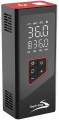 | 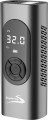 |
|---|---|---|
| Aspiring Storm 3 | Aspiring Storm 2 | |
| Outdated Product | Outdated Product | |
| User reviews | ||
| TOP sellers | ||
Dual power supply system from battery and cigarette lighter. Power Bank function. Preset modes. | Power Bank with a capacity of 4500 mAh. Charging from USB type-C and DC 12 volts | |
| Type | compressor | compressor |
| Power source | 12 В battery | 12 В battery |
Specs | ||
| Pressure gauge | digital | digital |
| Max. pressure | 8.3 Atm | 8.2 Atm |
| Performance | 30 L/min | 25 L/min |
| Power | 90 W | |
| Connection | cigarette lighter | cigarette lighter |
| Hose length | 0.15 m | 0.15 m |
Battery | ||
| Battery in set | built-in | built-in |
| Battery capacity | 6 Ah | 4.5 Ah |
| Charging time | 4 h | |
| Power Bank mode | USB-A and USB-C | USB-A and USB-C |
General | ||
| Autostop function |  | |
| Gauge backlight |  | |
| Lamp | | |
| Size | 170x70x60 mm | 158x86x265 mm |
| Weight | 0.8 kg | 1 kg |
| Added to E-Catalog | july 2024 | april 2023 |


Compare Aspiring Storm 3 and Storm 2
You may be interested in
My comparisons
Aspiring Storm 3 often compared


Aspiring Storm 2 often compared
Glossary
Max. pressure
The maximum pressure provided by the pump or compressor — in other words, the highest tyre pressure that can be achieved using this unit.
In most models, this figure is from 2.5 to 10 atm, and in mechanical pumps (manual and foot, see "Type") pressure of more than 10 atm is practically not found at all. This is due to the fact that even for heavy trucks, the optimal tyre pressure is usually about 5 – 9 atm (depending on a number of parameters — there are special formulas and tables for calculations); and in passenger car tyres, a pressure of more than 2.5 atm is extremely rarely used. However, there are compressors with higher pressure parameters — 11 – 15 atm, 16 – 20 atm and even higher. The meaning of such characteristics is mainly in the "power reserve": a higher working pressure contributes to faster pumping. However, be careful not to over-inflate the tyre and damage it.
In most models, this figure is from 2.5 to 10 atm, and in mechanical pumps (manual and foot, see "Type") pressure of more than 10 atm is practically not found at all. This is due to the fact that even for heavy trucks, the optimal tyre pressure is usually about 5 – 9 atm (depending on a number of parameters — there are special formulas and tables for calculations); and in passenger car tyres, a pressure of more than 2.5 atm is extremely rarely used. However, there are compressors with higher pressure parameters — 11 – 15 atm, 16 – 20 atm and even higher. The meaning of such characteristics is mainly in the "power reserve": a higher working pressure contributes to faster pumping. However, be careful not to over-inflate the tyre and damage it.
Performance
The capacity of the compressor (see "Type") is the maximum amount of air that it can pump into the tyre in a minute.
Higher performance reduces the time required to inflate the wheel; on the other hand, this parameter directly affects the dimensions, weight, power consumption and price of the compressor. So it is worth choosing according to performance, taking into account real needs. So, for a “duty” tyre inflation in a passenger car, a compressor with a low operating speed is quite enough — up to 20 L / min inclusive. And if the speed of full pumping is also important for you (for example, after replacing the rubber) — you can choose a unit for 21 – 40 L / min. In turn, models with more solid characteristics — 41 – 60 L / min and more — are intended mainly for heavy equipment like SUVs, trucks, tractors, etc.
Separately, it should be noted that this parameter is NOT suitable for calculating the exact inflation time (even if the exact volume of air in the wheel is known). The fact is that the actual performance of the compressor is always lower than the claimed one: the figures in the characteristics are indicated for free air outlet, and when pumping the wheels, the pumping speed will inevitably be lower due to the resistance of the nipple.
Higher performance reduces the time required to inflate the wheel; on the other hand, this parameter directly affects the dimensions, weight, power consumption and price of the compressor. So it is worth choosing according to performance, taking into account real needs. So, for a “duty” tyre inflation in a passenger car, a compressor with a low operating speed is quite enough — up to 20 L / min inclusive. And if the speed of full pumping is also important for you (for example, after replacing the rubber) — you can choose a unit for 21 – 40 L / min. In turn, models with more solid characteristics — 41 – 60 L / min and more — are intended mainly for heavy equipment like SUVs, trucks, tractors, etc.
Separately, it should be noted that this parameter is NOT suitable for calculating the exact inflation time (even if the exact volume of air in the wheel is known). The fact is that the actual performance of the compressor is always lower than the claimed one: the figures in the characteristics are indicated for free air outlet, and when pumping the wheels, the pumping speed will inevitably be lower due to the resistance of the nipple.
Power
Rated power consumed by the compressor during operation.
This parameter primarily affects the features of connecting the unit to the on-board network through the cigarette lighter socket. Such a socket has restrictions on load power, and these restrictions are different for different cars; and even in the same car, different connectors — the cigarette lighter itself and a separate socket of the same format — can differ in allowable power. However, most of these connectors can easily cope with units with a power of up to 100 – 120 W; but if you get a more powerful compressor, you should clarify the possibility of using it with a specific cigarette lighter (the easiest way to do this is according to the documentation for the car). If the device is planned to be powered through "crocodiles" or from a 230 V socket (see "Connection"), you can not pay much attention to the power consumption.
Also, more powerful compressors, usually, have a greater capacity and/or maximum pressure, but there is no strict relationship here.
This parameter primarily affects the features of connecting the unit to the on-board network through the cigarette lighter socket. Such a socket has restrictions on load power, and these restrictions are different for different cars; and even in the same car, different connectors — the cigarette lighter itself and a separate socket of the same format — can differ in allowable power. However, most of these connectors can easily cope with units with a power of up to 100 – 120 W; but if you get a more powerful compressor, you should clarify the possibility of using it with a specific cigarette lighter (the easiest way to do this is according to the documentation for the car). If the device is planned to be powered through "crocodiles" or from a 230 V socket (see "Connection"), you can not pay much attention to the power consumption.
Also, more powerful compressors, usually, have a greater capacity and/or maximum pressure, but there is no strict relationship here.
Battery capacity
In theory, the higher the capacity, the longer a cordless tool can last on a single battery charge. However, in practice, everything is far from so simple. Firstly, ampere-hours are a fairly specific unit; its features are such that only batteries with the same voltage can be directly compared by the number of ampere-hours. If there is a difference in voltage, you need to convert the capacity into watt hours and use them for comparison. Secondly, the actual autonomy of the tool depends not only on the properties of the battery, but also on power consumption and other performance characteristics. Thus, it is possible to compare different models in terms of battery capacity only with the same supply voltage and similar capabilities.
Charging time
The time it takes to fully charge the battery that comes with the tool from a standard charger (when using other batteries or a “non-native” charger, this time can vary in one direction or the other).
Gauge backlight
The presence of backlight pressure gauge in the design of the device.
This function requires a power supply, so it is found mainly in the corresponding type of device — compressors (see "Type"). Its purpose is generally obvious: thanks to the backlight, you can easily see the readings of the pressure gauge in low light conditions and even in complete darkness. Such an opportunity when working with a compressor is useful — and not only at dusk and at night, but even in the daytime: many garages, boxes and other places where you have to service a car are very sparingly lit, and even during the day the pressure gauge scale may not be visible without additional illumination.
This function requires a power supply, so it is found mainly in the corresponding type of device — compressors (see "Type"). Its purpose is generally obvious: thanks to the backlight, you can easily see the readings of the pressure gauge in low light conditions and even in complete darkness. Such an opportunity when working with a compressor is useful — and not only at dusk and at night, but even in the daytime: many garages, boxes and other places where you have to service a car are very sparingly lit, and even during the day the pressure gauge scale may not be visible without additional illumination.