
Comparison Intertool HT-0080 sponges 100 mm vs Tolsen 10107 sponges 50 mm
Add to comparison | 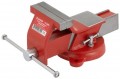 | 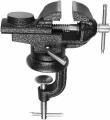 |
|---|---|---|
| Intertool HT-0080 sponges 100 mm | Tolsen 10107 sponges 50 mm | |
| Outdated Product | Outdated Product | |
| TOP sellers | ||
| Type | vise | vise |
| Vice type | metalwork | metalwork |
Specs | ||
| Compression mechanism | screw | screw |
| Jaw opening | 100 mm | 50 mm |
| Jaw width | 100 mm | 50 mm |
| Jaw height | 18 mm | |
General | ||
| Design features | rotating base anvil | rotating base anvil |
| Installation | fixed base | clamp |
| Material | steel | steel |
| Weight | 4.4 kg | |
| Added to E-Catalog | february 2021 | may 2020 |


Compare Intertool HT-0080 and Tolsen 10107
You may be interested in
Tolsen 10107 often compared


Glossary
Jaw opening
Clamping width provided by vise or clamp (see "Type")
In this case, the width of the clamp means the maximum distance that the jaws or stops of the tool can be spread, in other words, the maximum size of an object that can be clamped with this device. Large clamping width, on the one hand, makes the tool more versatile and expands its capabilities; on the other hand, it affects the dimensions, weight and price, and also makes it difficult to work with small objects (a large tool is poorly suited for this). So, when choosing according to this parameter, you should not chase after the maximum margin, but take into account the size of the parts that you really plan to work with: for example, it hardly makes sense to buy a 500 mm clamp if you need a clamp for gluing plywood planks together.
In this case, the width of the clamp means the maximum distance that the jaws or stops of the tool can be spread, in other words, the maximum size of an object that can be clamped with this device. Large clamping width, on the one hand, makes the tool more versatile and expands its capabilities; on the other hand, it affects the dimensions, weight and price, and also makes it difficult to work with small objects (a large tool is poorly suited for this). So, when choosing according to this parameter, you should not chase after the maximum margin, but take into account the size of the parts that you really plan to work with: for example, it hardly makes sense to buy a 500 mm clamp if you need a clamp for gluing plywood planks together.
Jaw width
Tool jaw width. It is indicated mainly for vices (see "Type") — among the clamps there are not so many models equipped with jaws.
Larger jaws provide a more secure hold, especially with large workpiece sizes, but make it difficult to work with small parts, and also affect the dimensions and weight of the entire tool.
Larger jaws provide a more secure hold, especially with large workpiece sizes, but make it difficult to work with small parts, and also affect the dimensions and weight of the entire tool.
Jaw height
Tool jaw height. It is indicated mainly for machine vices (see "Purpose of a vice") — among the clamps there are not so many models equipped with jaws, and for other types of vices this parameter is not so critical. In the case of a machine tool, the height of the jaws actually corresponds to the clamping depth (see above)
Installation
Method of mounting the vice to the tabletop:
— Clamp. Fixation with a clamp attached to the edge of the table. Clamps are more limited in the choice of installation location than bolts - such a fastener cannot be installed in the middle of a tabletop. At the same time, such installation is much simpler both during the initial installation and when moving the structure from place to place: there is no need to drill the table to prepare a place for the bolts.
— Through (bolted). Installation using bolts inserted into through holes in the tabletop. The main advantages of this option are reliability, as well as the ability to choose the installation point almost anywhere on the countertop. On the other hand, the installation procedure itself is quite complicated and requires permanent placement in one place, without moving - after all, it is necessary to drill holes for the bolts.
— Vacuum (suction cup). A mechanism that operates on the principle of a conventional suction cup and allows the tool to reliably “stick” to flat surfaces. The design and application of such a mechanism depend on the type and design of the tool. Thus, among clamps (see “Type”), models for plates are equipped with this function (see “Design”) - such devices provide a pair of suction cups, thanks to which the clamp is attached to the plates being connected. But in a vice, a vacu...um mechanism is used to fix the tool itself on a workbench, work table or other base. This design is found among relatively small models - the vacuum mechanism is poorly suited for large and heavy vices.
— Clamp. Fixation with a clamp attached to the edge of the table. Clamps are more limited in the choice of installation location than bolts - such a fastener cannot be installed in the middle of a tabletop. At the same time, such installation is much simpler both during the initial installation and when moving the structure from place to place: there is no need to drill the table to prepare a place for the bolts.
— Through (bolted). Installation using bolts inserted into through holes in the tabletop. The main advantages of this option are reliability, as well as the ability to choose the installation point almost anywhere on the countertop. On the other hand, the installation procedure itself is quite complicated and requires permanent placement in one place, without moving - after all, it is necessary to drill holes for the bolts.
— Vacuum (suction cup). A mechanism that operates on the principle of a conventional suction cup and allows the tool to reliably “stick” to flat surfaces. The design and application of such a mechanism depend on the type and design of the tool. Thus, among clamps (see “Type”), models for plates are equipped with this function (see “Design”) - such devices provide a pair of suction cups, thanks to which the clamp is attached to the plates being connected. But in a vice, a vacu...um mechanism is used to fix the tool itself on a workbench, work table or other base. This design is found among relatively small models - the vacuum mechanism is poorly suited for large and heavy vices.