
Comparison Qplay Comfo Max vs Lionelo Bart
Add to comparison | 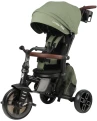 |  |
|---|---|---|
| Qplay Comfo Max | Lionelo Bart | |
| Compare prices 1 | from $140.86 | |
| TOP sellers | ||
| Type | tricycle | balance bike |
| Age group | from 1 to 3 years old | from 2 to 4 years old |
| Max. weight | 25 kg | 30 kg |
Design | ||
| Frame material | steel | magnesium alloy |
| Wheel diameter | 11 " | 12 " |
| Wheels | rubber | rubber |
| Alloy wheels |  | |
| Rear brake | parental | |
| Parent handle | |  |
| Handlebar lock | | |
| Footrest | | |
| Pedal lock | | |
| Backrest tilt adjustment | | |
| Swivel seat | | |
| Foldable | | |
| In box | fenders cup holder bag for things bumper bar seat belts protective visor | |
General | ||
| Dimensions | 108x53x108 cm | 39x88x57 cm |
| Weight | 10.2 kg | 3 kg |
| Country of origin | Germany | |
| Added to E-Catalog | june 2025 | august 2020 |



Compare Qplay Comfo Max and Lionelo Bart
Price comparison
You may be interested in
Glossary
Type
— Tricycle. Classic children's tricycles: one wheel with pedals in front and two in the back. Such bicycles, unlike two-wheeled ones, do not fall, even while standing still. In addition, it is impossible to accelerate strongly on them, and various special devices can be provided in the design, such as a parent handle (see below) or a protective bumper (see "Complete set"). This makes tricycles perfect for the younger age group — some models can be used from 1 year old. However, there are also more “older” options — for children from 2 to 4 years old. But after 4 years, it hardly makes sense to use a tricycle — at this age, you can already pay attention to two-wheeled cars (see below).
— Two-wheeled. Two-wheeled children's bicycles have the same design as adult bicycles, and are distinguished primarily by their smaller dimensions. In addition, they are often equipped with side wheels (for more details, see "Complete set"), but this is not necessary — models for older ages do not have additional wheels. Anyway, such a bike is more difficult to master than a tricycle, but it perfectly develops coordination and a sense of balance; at the same time, many of these machines belong to the age category “from 2 to 4”, so you can start your acquaintance with bicycles immediately from a two-wheeled vehicle.
— Runbike. A kind of hybrid of a two-wheeled bicycle and a s...cooter. On such an apparatus, the child sits astride, as on a conventional bicycle, but there are no pedals in the design, and for movement you need to push off with your feet from the ground. This allows you to develop the coordination and sense of balance necessary for riding two-wheeled bicycles; at the same time, there is practically no risk of falling, since the child’s legs are constantly in contact with the ground. Accordingly, a balance bike can be useful not only as entertainment, but also as a kind of simulator in front of an “adult” design bike. Such models are produced mainly for children 2-4 years old (see "Age category").
— Two-wheeled. Two-wheeled children's bicycles have the same design as adult bicycles, and are distinguished primarily by their smaller dimensions. In addition, they are often equipped with side wheels (for more details, see "Complete set"), but this is not necessary — models for older ages do not have additional wheels. Anyway, such a bike is more difficult to master than a tricycle, but it perfectly develops coordination and a sense of balance; at the same time, many of these machines belong to the age category “from 2 to 4”, so you can start your acquaintance with bicycles immediately from a two-wheeled vehicle.
— Runbike. A kind of hybrid of a two-wheeled bicycle and a s...cooter. On such an apparatus, the child sits astride, as on a conventional bicycle, but there are no pedals in the design, and for movement you need to push off with your feet from the ground. This allows you to develop the coordination and sense of balance necessary for riding two-wheeled bicycles; at the same time, there is practically no risk of falling, since the child’s legs are constantly in contact with the ground. Accordingly, a balance bike can be useful not only as entertainment, but also as a kind of simulator in front of an “adult” design bike. Such models are produced mainly for children 2-4 years old (see "Age category").
Age group
— Ages 1 to 3. The youngest age group. This group consists exclusively of tricycles (see "Type"), and the design often includes additional features that ensure safety and allow parents to use the bike as a stroller. Some of these features include, in particular, safety belts, bumper, canopy (see "Package") and a parent handle (see below).
— Ages 2 to 4. This group may include all 3 types of bicycles (see "Type"). However, tricycle models typically resemble strollers less and are more suited for a child's independent movement than those in the previous group; for bicycles with two wheels, side wheels are necessary (see "Package"). Balance bikes are almost all designed for children aged 2-4 years.
— Ages 3 to 6. For children in this age range, tricycles have become uninteresting, and their physical development is adequate to learn riding on two wheels. Therefore, this category mainly includes bicycles with two wheels (see "Type") and must include side wheels in the package (see "Package").
— Ages 5 to 8. Bicycles for kids in early school years closely resemble adult models: only two-wheeled bikes belong here, and side wheels (see "Package") are not mandatory, though they can sometimes be found.
— Ages 6 to 10.... Models for the older age group offer the ability to ride like adults. This category includes bikes with 20-inch wheels. Some examples for this age already feature a hand brake and some additional functions. However, selecting such bicycles requires considering the child's readiness for independent riding.
— Ages 8 to 10. The age group from 8 to 10 years encompasses children's bicycles with truly "adult" equipment. This includes models with 20-inch wheels, multi-speed transmissions, handlebar-mounted brake levers (including advanced disc brakes), and other attributes of genuine adult bikes, but in a smaller format. Essentially, bicycles in this age range are a transitional link between children's and teenage models.
The limits of age groups are quite arbitrary, but it is not recommended to greatly exceed them. It is important to consider not only the age range specified by the manufacturer but also the child's overall level of development. Additionally, children of a certain age may have different heights and body builds — when choosing, it is worth considering not only the age group but also the maximum load (see below).
— Ages 2 to 4. This group may include all 3 types of bicycles (see "Type"). However, tricycle models typically resemble strollers less and are more suited for a child's independent movement than those in the previous group; for bicycles with two wheels, side wheels are necessary (see "Package"). Balance bikes are almost all designed for children aged 2-4 years.
— Ages 3 to 6. For children in this age range, tricycles have become uninteresting, and their physical development is adequate to learn riding on two wheels. Therefore, this category mainly includes bicycles with two wheels (see "Type") and must include side wheels in the package (see "Package").
— Ages 5 to 8. Bicycles for kids in early school years closely resemble adult models: only two-wheeled bikes belong here, and side wheels (see "Package") are not mandatory, though they can sometimes be found.
— Ages 6 to 10.... Models for the older age group offer the ability to ride like adults. This category includes bikes with 20-inch wheels. Some examples for this age already feature a hand brake and some additional functions. However, selecting such bicycles requires considering the child's readiness for independent riding.
— Ages 8 to 10. The age group from 8 to 10 years encompasses children's bicycles with truly "adult" equipment. This includes models with 20-inch wheels, multi-speed transmissions, handlebar-mounted brake levers (including advanced disc brakes), and other attributes of genuine adult bikes, but in a smaller format. Essentially, bicycles in this age range are a transitional link between children's and teenage models.
The limits of age groups are quite arbitrary, but it is not recommended to greatly exceed them. It is important to consider not only the age range specified by the manufacturer but also the child's overall level of development. Additionally, children of a certain age may have different heights and body builds — when choosing, it is worth considering not only the age group but also the maximum load (see below).
Max. weight
The maximum rider weight that the bike can normally carry. This point is directly related to the age group (see above), however, bikes with the same age recommendations may differ in maximum load.
Of course, it is impossible to exceed the load specified by the manufacturer: even if an accident does not happen immediately, it can happen at any time. And ideally, you should choose a bike with a margin of weight — both in case of emergency situations, and taking into account the fact that the child will grow.
Of course, it is impossible to exceed the load specified by the manufacturer: even if an accident does not happen immediately, it can happen at any time. And ideally, you should choose a bike with a margin of weight — both in case of emergency situations, and taking into account the fact that the child will grow.
Frame material
— Steel. A fairly common material, widely used in all types of children's bicycles (see "Type"). Although inexpensive, steel is very durable, reliable, and resistant to impacts and shocks. Many consider its main drawback to be its relatively large weight; however, the difference in weight with the same aluminum is usually not that great (especially compared to the weight of the cyclist). It is worth noting that different grades of steel can be used in children's bicycles, and the overall quality of this material often depends on the price category of the machine.
— Aluminum. Aluminum-based alloys are very strong, weigh little, and are also much less susceptible to corrosion than steel. On the other hand, the cost of such materials is significantly higher, and high strength is not always critical (considering the peculiarities of riding children's bicycles, especially three-wheeled ones). Therefore, aluminum is less common, although it can also be used in all types of machines.
— Plastic. Plastic is relatively light in weight, completely insensitive to moisture and easy to process — it can be given almost any shape and color. At the same time, this material is inexpensive. On the other hand, plastic is not durable; therefore, it is used exclusively in bicycles for the smallest, mainly in three-wheeled models and balance bikes (see "Type").
— Wood.... The general characteristics of wood are such that this material is poorly suited for classic bicycles — both two- and three-wheeled — but is very convenient for balance bikes (see "Type"). Wood, even unpainted, looks good, and this material is quite pleasant to the touch. Its disadvantages include some fragility — while the same plastic is likely to bend from a strong impact, wood can crack. However, it is still difficult to damage a wooden balance bike frame. But such a product does not tolerate moisture well, so it should be stored in a dry place.
— Fiberglass. As a rule, in this case it is not pure fiberglass that is meant, but fiberglass — a composite material made of glass fiber filled with plastic filler. This material is noticeably stronger than regular plastic, but it is also more expensive, and in terms of overall reliability it still does not reach the level of steel and aluminum. Therefore, fiberglass frames are quite rare, and mainly among balance bikes (see "Type").
— Magnesium. Magnesium alloys are similar to the aluminum alloys described above: they are highly durable and lightweight. At the same time, compared to aluminum, this alloy is stronger and more durable, weighs more, but not much, but costs significantly more — and the difference in price rarely outweighs the advantages mentioned. As a result, magnesium frames are not very widespread; they are found only in certain models of two-wheeled bicycles of the older age group.
— Aluminum. Aluminum-based alloys are very strong, weigh little, and are also much less susceptible to corrosion than steel. On the other hand, the cost of such materials is significantly higher, and high strength is not always critical (considering the peculiarities of riding children's bicycles, especially three-wheeled ones). Therefore, aluminum is less common, although it can also be used in all types of machines.
— Plastic. Plastic is relatively light in weight, completely insensitive to moisture and easy to process — it can be given almost any shape and color. At the same time, this material is inexpensive. On the other hand, plastic is not durable; therefore, it is used exclusively in bicycles for the smallest, mainly in three-wheeled models and balance bikes (see "Type").
— Wood.... The general characteristics of wood are such that this material is poorly suited for classic bicycles — both two- and three-wheeled — but is very convenient for balance bikes (see "Type"). Wood, even unpainted, looks good, and this material is quite pleasant to the touch. Its disadvantages include some fragility — while the same plastic is likely to bend from a strong impact, wood can crack. However, it is still difficult to damage a wooden balance bike frame. But such a product does not tolerate moisture well, so it should be stored in a dry place.
— Fiberglass. As a rule, in this case it is not pure fiberglass that is meant, but fiberglass — a composite material made of glass fiber filled with plastic filler. This material is noticeably stronger than regular plastic, but it is also more expensive, and in terms of overall reliability it still does not reach the level of steel and aluminum. Therefore, fiberglass frames are quite rare, and mainly among balance bikes (see "Type").
— Magnesium. Magnesium alloys are similar to the aluminum alloys described above: they are highly durable and lightweight. At the same time, compared to aluminum, this alloy is stronger and more durable, weighs more, but not much, but costs significantly more — and the difference in price rarely outweighs the advantages mentioned. As a result, magnesium frames are not very widespread; they are found only in certain models of two-wheeled bicycles of the older age group.
Wheel diameter
Bicycle wheel diameter is traditionally indicated in ". The overall height of the bike directly depends on this parameter, so each age category has its own wheel size - in accordance with the height of the young cyclist. However, cars of the same type and age group may differ in wheel diameter; this is especially pronounced among two-wheeled bicycles. In such cases, it is worth considering the following point: larger wheels behave better on rough roads and allow you to coast for a long time, but they are reluctant to accelerate and require more effort on the pedals; small wheels - on the contrary, they spin without much effort, but they hold speed worse and are more sensitive to pits and potholes.
Tricycles predominantly have a wheel diameter of 10 ", balance bikes - 12 ". In two-wheeled models, there are sizes in 14, 16, 18 and 20 ". Larger diameter wheels are no longer used in children's, but in teenage bicycles (they are listed in our catalog in the section with older bikes).
Tricycles predominantly have a wheel diameter of 10 ", balance bikes - 12 ". In two-wheeled models, there are sizes in 14, 16, 18 and 20 ". Larger diameter wheels are no longer used in children's, but in teenage bicycles (they are listed in our catalog in the section with older bikes).
Rear brake
— Pedal. A variant used mainly in two-wheeled models (see "Type"). To brake, you need to press the pedals in the opposite direction; the braking itself is provided by the pads inside the rear hub. Pedal brakes are simple, inexpensive, do not require maintenance and are quite reliable, which is why they are extremely popular in children's bicycles. Their main disadvantage is that if the chain falls off, the bicycle loses the rear brake; however, the probability of this is not so high that this moment is critical.
— Rim mechanical. A brake in the form of a pair of pads, which are pressed against the wheel rim by pressing the handle ( manual type of brake); the force from the handle is transmitted by mechanical traction in the form of a cable (hence the name). Such brakes, unlike the pedal brakes described above, work even with a chain that has come off. At the same time, they are more complex, more expensive and require periodic maintenance, which is why they are rare, mainly in fairly advanced models of the older age category.
— Disc. A brake in the form of a pair of pads, which, when pressed on the handle, are pressed against a special disk fixed on the wheel hub. The force from the handle to the pads is transmitted through mechanical traction, as in rim mechanical ones. However, disc brakes are considered more advanced — they are more powerful, more e...fficient, and less sensitive to dirt and rim curvature. On the other hand, such systems are more complex and more expensive than rim ones, which is why they are used extremely rarely — mainly in high-end two-wheeled bicycles of the older age category.
— Trigger sleeve. A type of brake that combines the features of the two types described above: the pads are located inside the drum in the rear sleeve (like in pedal brakes), but the braking force is transmitted to them not from the pedals via a chain, but from the handle on the steering wheel via a cable (like in rim mechanical brakes). Due to this, such brakes can be installed on balance bikes (see "Type"), where pedals are absent by definition; in fact, trigger sleeve systems were created specifically for balance bikes.
— Pedal and rim. Bicycles equipped with both a pedal and rim rear brake. For more information on each of these types, see above; and their combination is used to increase the efficiency and safety of braking. Thus, a bicycle with such equipment is not afraid of a chain falling off: the pedal brake will fail, but the rim brake will remain functional. And the simultaneous use of two brakes can be useful for an emergency stop. On the other hand, such a combination significantly affects the price of the bicycle, despite the fact that in practice it is not needed so often. Therefore, this option has not become very widespread.
— Handbrake. A type of brake used exclusively on tricycles. It looks like a lever, usually mounted to the side of the seat; when this lever is raised, special stoppers are lowered onto the rear wheels. Note that tricycles are not designed for high speeds, and to brake, it is often enough to slow down the movement of the feet on the pedals. In light of this, the handbrake is provided more for “just in case” than for regular use; in some models, it can be used as a parking brake.
— Parental. A variant used in the youngest age group of tricycles, equipped with a parental handle (see below). As the name suggests, in such models the brake is controlled by the parent leading the bicycle — for example, by pressing a special lever on the parental handle.
— Rim mechanical. A brake in the form of a pair of pads, which are pressed against the wheel rim by pressing the handle ( manual type of brake); the force from the handle is transmitted by mechanical traction in the form of a cable (hence the name). Such brakes, unlike the pedal brakes described above, work even with a chain that has come off. At the same time, they are more complex, more expensive and require periodic maintenance, which is why they are rare, mainly in fairly advanced models of the older age category.
— Disc. A brake in the form of a pair of pads, which, when pressed on the handle, are pressed against a special disk fixed on the wheel hub. The force from the handle to the pads is transmitted through mechanical traction, as in rim mechanical ones. However, disc brakes are considered more advanced — they are more powerful, more e...fficient, and less sensitive to dirt and rim curvature. On the other hand, such systems are more complex and more expensive than rim ones, which is why they are used extremely rarely — mainly in high-end two-wheeled bicycles of the older age category.
— Trigger sleeve. A type of brake that combines the features of the two types described above: the pads are located inside the drum in the rear sleeve (like in pedal brakes), but the braking force is transmitted to them not from the pedals via a chain, but from the handle on the steering wheel via a cable (like in rim mechanical brakes). Due to this, such brakes can be installed on balance bikes (see "Type"), where pedals are absent by definition; in fact, trigger sleeve systems were created specifically for balance bikes.
— Pedal and rim. Bicycles equipped with both a pedal and rim rear brake. For more information on each of these types, see above; and their combination is used to increase the efficiency and safety of braking. Thus, a bicycle with such equipment is not afraid of a chain falling off: the pedal brake will fail, but the rim brake will remain functional. And the simultaneous use of two brakes can be useful for an emergency stop. On the other hand, such a combination significantly affects the price of the bicycle, despite the fact that in practice it is not needed so often. Therefore, this option has not become very widespread.
— Handbrake. A type of brake used exclusively on tricycles. It looks like a lever, usually mounted to the side of the seat; when this lever is raised, special stoppers are lowered onto the rear wheels. Note that tricycles are not designed for high speeds, and to brake, it is often enough to slow down the movement of the feet on the pedals. In light of this, the handbrake is provided more for “just in case” than for regular use; in some models, it can be used as a parking brake.
— Parental. A variant used in the youngest age group of tricycles, equipped with a parental handle (see below). As the name suggests, in such models the brake is controlled by the parent leading the bicycle — for example, by pressing a special lever on the parental handle.
Parent handle
A long handle mounted on tricycles (see "Type") behind the back of a child so that an adult can comfortably hold on to it while standing next to it. Thus, the parent can to a certain extent control the movement of the child, stop him at the right time or vice versa, push, or even carry the baby, like in a stroller. And in many models, the parent handles are also connected to the steering wheel with special rods, so you can also easily turn the car where you want.
Handlebar lock
The ability to lock the front wheel of the bike in a straight position. This feature is found exclusively in three-wheeled models (see "Type") with a parent handle (see above): with the handlebars locked, the bike practically turns into a sidecar, and only the parent controls it. Features of the lock may vary from model to model: in some cars, the steering wheel is also fixed motionless, in others, the child can turn it, but this does not affect the position of the wheel.
Footrest
A special stand on which the child can put his feet while sitting on a bicycle. It is found exclusively in three-wheeled models (see "Type") equipped with a parent handle (see above), and is another "pram" function: when the parent pushes the car, it is inconvenient and sometimes unsafe for the baby to keep his feet on the pedals. do not confuse this feature with a bicycle footrest, which allows you to put the bike on your own without a stop.