
Comparison Nokta Makro Simplex Ultra vs Minelab Equinox 900
Add to comparison | 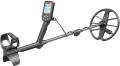 | 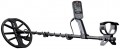 |
|---|---|---|
| Nokta Makro Simplex Ultra | Minelab Equinox 900 | |
| Compare prices 1 | Compare prices 2 | |
| TOP sellers | ||
Function of fast cutting of ferrous metal. Possibility of firmware update. Built-in battery. | Fast and accurate target identification. Expanded arsenal of features. Informative screen. Wireless headphones. Sound volume adjustment. Waterproof construction. Multi-IQ is a technology for simultaneous operation of the device at different frequencies. 25 semitones when detecting metal. | |
| Type | metal detector | metal detector |
| Suitable for | underwater | underwater |
| Principle of operation | VLF | |
Coil/frame | ||
| Type | DD | DD |
| Shape | butterfly | elliptical |
| Waterproof |  | |
| Dimensions (WxD) | 27.9x27.9 cm | 27.9x27.9 cm |
| Number of coils | 1 | 1 |
Specs | ||
| Number of detection frequencies | 1 | |
| Detection frequency | 15 kHz | 4, 5, 10, 15, 20, 40 kHz |
| Discriminator | | |
| Discrimination segments | 20 | 119 |
| Ground balance | manual / automatic | manual / automatic |
Features | ||
| Number of modes | 6 | 4 |
| Search modes | field, park, 4 tones, 99 tones, beach, all metals | park, field, beach, gold |
| Functions | Pin-Point mode sensitivity adjustment threshold tone anti-interference tone identification VDI identification / Target ID target depth determination vibration response volume control low charge indicator | Pin-Point mode sensitivity adjustment threshold tone anti-interference tone identification VDI identification / Target ID target depth determination vibration response volume control low charge indicator |
| More features | LCD display display backlight armrest built-in speaker headphone output Bluetooth headphones built-in flashlight | LCD display display backlight USB port armrest built-in speaker headphone output headphones |
General | ||
| Power source | proprietary battery | proprietary battery |
| Additionally included | uSB cable for charging and data transfer, headphone case | charger, USB cable |
| Shaft length | 63 – 132 cm | |
| Weight | 1.2 kg | 1.27 kg |
| Added to E-Catalog | september 2023 | april 2023 |



Compare Nokta Makro Simplex Ultra and Minelab Equinox 900
Price comparison
You may be interested in
My comparisons
Nokta Makro Simplex Ultra often compared


Minelab Equinox 900 often compared


Glossary
Principle of operation
A method used by a metal detector to find items. Describes both the general scheme of the signal and how it is processed.
— VLF. Abbreviation for "very low frequency". As the name implies, these metal detectors operate at relatively low electromagnetic frequencies (less than 20 kHz). They use the “transmitter-receiver” operation scheme: one winding transmits the search signal, the other receives it. The transmitting and receiving windings are located in the same plane, in a concentric pattern or DD (see Coil Type). This technology allows you to create relatively inexpensive devices with good ground balance, minimal sensitivity to false alarms and a high degree of accuracy in metal recognition. Of the shortcomings, it is worth noting the rather high cost of production (coils require precision tuning), as well as the relatively small working depth of such metal detectors.
— VFLEX. A variation of the VLF technology described above, developed by Minelab. The key principles of operation in such metal detectors are the same, however, the control unit in them receives not an analogue, but a digital signal. This has a positive effect on the quality of its processing, but significantly increases the price of the devices themselves.
— R.F. This principle involves the use of high frequencies and the presence of two coils — a receiver and a transmitter — sep...arated by a certain distance (usually several tens of centimeters) and located perpendicular to one another. Such a scheme provides a greater depth of detection, but does not allow you to search for small objects and determine the type of metal. Therefore, it is mainly used in "deep" metal detectors.
— P.I. Abbreviation for "pulse induction" — "pulse induction". In such devices, one coil is provided, "mono" (see "Type of coil"), which plays the role of both a receiver and a transmitter. The coil emits signals in separate pulses, and in between them it works as a receiver, "listening" to the response signal from the ground. Such a scheme allows you to effectively search for objects even in an environment unfavorable for electromagnetic pulses — in particular, highly mineralized soils and in salt water. The latter makes PI instruments extremely useful for marine archeology, both underwater and on wet, salty sand beaches. On the other hand, qualitative discrimination in such models is not available.
— OR. A method based on the so-called breakdown of resonance. The coil in such metal detectors is part of an oscillatory circuit, to which a signal is supplied from the generator with a frequency close to the resonant frequency of the circuit. When a metal object enters the field created by the coil, the characteristics of its inductance and, accordingly, the resonant frequency of the entire circuit change. Based on the change in resonance characteristics, the control unit determines not only the presence of metallic objects, but also, to some extent, their composition. OR-devices are simple in design and inexpensive, since they do not require precision settings; at the same time, the depth of detection and the reliability of operation in them are low, and mineralized or wet soil further worsen the performance. Therefore, this method has not received wide popularity; it is used mainly in entry-level devices.
— ZVT. Minelab's proprietary technology, developed primarily for searching for gold treasures and nuggets. The abbreviation stands for "zero voltage transmission", the principle of operation is described as "the creation of ultra-constant high-power magnetic fields of opposite polarity." Due to this, according to the manufacturer, the efficiency and depth of gold detection are significantly increased, as well as the resistance to interference is improved and it becomes possible to work even on soils with very high levels of mineralization. However, ZVT-metal detectors are quite expensive, and the possibility of working with other metals, except for gold, is usually not mentioned in the description of such devices.
— VLF. Abbreviation for "very low frequency". As the name implies, these metal detectors operate at relatively low electromagnetic frequencies (less than 20 kHz). They use the “transmitter-receiver” operation scheme: one winding transmits the search signal, the other receives it. The transmitting and receiving windings are located in the same plane, in a concentric pattern or DD (see Coil Type). This technology allows you to create relatively inexpensive devices with good ground balance, minimal sensitivity to false alarms and a high degree of accuracy in metal recognition. Of the shortcomings, it is worth noting the rather high cost of production (coils require precision tuning), as well as the relatively small working depth of such metal detectors.
— VFLEX. A variation of the VLF technology described above, developed by Minelab. The key principles of operation in such metal detectors are the same, however, the control unit in them receives not an analogue, but a digital signal. This has a positive effect on the quality of its processing, but significantly increases the price of the devices themselves.
— R.F. This principle involves the use of high frequencies and the presence of two coils — a receiver and a transmitter — sep...arated by a certain distance (usually several tens of centimeters) and located perpendicular to one another. Such a scheme provides a greater depth of detection, but does not allow you to search for small objects and determine the type of metal. Therefore, it is mainly used in "deep" metal detectors.
— P.I. Abbreviation for "pulse induction" — "pulse induction". In such devices, one coil is provided, "mono" (see "Type of coil"), which plays the role of both a receiver and a transmitter. The coil emits signals in separate pulses, and in between them it works as a receiver, "listening" to the response signal from the ground. Such a scheme allows you to effectively search for objects even in an environment unfavorable for electromagnetic pulses — in particular, highly mineralized soils and in salt water. The latter makes PI instruments extremely useful for marine archeology, both underwater and on wet, salty sand beaches. On the other hand, qualitative discrimination in such models is not available.
— OR. A method based on the so-called breakdown of resonance. The coil in such metal detectors is part of an oscillatory circuit, to which a signal is supplied from the generator with a frequency close to the resonant frequency of the circuit. When a metal object enters the field created by the coil, the characteristics of its inductance and, accordingly, the resonant frequency of the entire circuit change. Based on the change in resonance characteristics, the control unit determines not only the presence of metallic objects, but also, to some extent, their composition. OR-devices are simple in design and inexpensive, since they do not require precision settings; at the same time, the depth of detection and the reliability of operation in them are low, and mineralized or wet soil further worsen the performance. Therefore, this method has not received wide popularity; it is used mainly in entry-level devices.
— ZVT. Minelab's proprietary technology, developed primarily for searching for gold treasures and nuggets. The abbreviation stands for "zero voltage transmission", the principle of operation is described as "the creation of ultra-constant high-power magnetic fields of opposite polarity." Due to this, according to the manufacturer, the efficiency and depth of gold detection are significantly increased, as well as the resistance to interference is improved and it becomes possible to work even on soils with very high levels of mineralization. However, ZVT-metal detectors are quite expensive, and the possibility of working with other metals, except for gold, is usually not mentioned in the description of such devices.
Shape
The shape of the coil (frame) of the metal detector.
— Round. The traditional form used in almost all types of ground and underwater metal detectors (see "Type"); the only exceptions are models that work according to the RF method (see "Operating principle"). When using concentric coils (see "Coil Type"), this option allows you to create a conical field, which is convenient for pinpointing the location of the find, but reduces the covered area and makes it difficult to search over a large area; models with DD coils do not have this drawback.
— Elliptical. The shape in the form of a longitudinally elongated ellipse allows you to somewhat "stretch" the field created by the metal detector in length. This is especially true for coils of the concentric type — however, such an expansion somewhat reduces the positioning accuracy of individual finds. But in coils of the DD type, where the accuracy is by definition low, the choice between round and elliptical shape is most often not fundamental.
— Rectangular. A specific form used in RF or PI instruments. For technical reasons, it is considered optimal for such devices, but it is practically not found in other types of metal detectors.
— Butterfly. Another option used in DD coils along with the ellipse (see above). In fact, it consists of two elliptical windings..., partially combined and resembling butterfly wings in shape — hence the name. This option is typical mainly for large-sized DD coils; with a large width, it is considered more optimal than an ellipse.
— Round. The traditional form used in almost all types of ground and underwater metal detectors (see "Type"); the only exceptions are models that work according to the RF method (see "Operating principle"). When using concentric coils (see "Coil Type"), this option allows you to create a conical field, which is convenient for pinpointing the location of the find, but reduces the covered area and makes it difficult to search over a large area; models with DD coils do not have this drawback.
— Elliptical. The shape in the form of a longitudinally elongated ellipse allows you to somewhat "stretch" the field created by the metal detector in length. This is especially true for coils of the concentric type — however, such an expansion somewhat reduces the positioning accuracy of individual finds. But in coils of the DD type, where the accuracy is by definition low, the choice between round and elliptical shape is most often not fundamental.
— Rectangular. A specific form used in RF or PI instruments. For technical reasons, it is considered optimal for such devices, but it is practically not found in other types of metal detectors.
— Butterfly. Another option used in DD coils along with the ellipse (see above). In fact, it consists of two elliptical windings..., partially combined and resembling butterfly wings in shape — hence the name. This option is typical mainly for large-sized DD coils; with a large width, it is considered more optimal than an ellipse.
Number of detection frequencies
The number of individual operating frequencies at which the metal detector can operate. For more on the frequencies themselves, see "Detection Frequency" below; here we note that the more options ( 3 frequencies and more) are provided in the design, the wider the capabilities of the metal detector, the easier it is to adjust it to the specifics of the objects being searched and the environment. However, most models have one frequency.
Detection frequency
The operating frequency (or frequency range) of the metal detector. This is one of the most important parameters when choosing a device, because the optimal frequency for different cases will be different — depending on the size and material of the items being searched, the characteristics of the soil and other factors. Detailed recommendations on the choice of frequency for each specific situation can be found in special sources; And already on the basis of this information, it is worth choosing a specific model.
Note that the actual frequency at which the metal detector will operate also depends on the installed coil — they are usually made for a specific frequency. Therefore, to use the full capabilities of the device with the ability to adjust this parameter, you may need replaceable coils.
Note that the actual frequency at which the metal detector will operate also depends on the installed coil — they are usually made for a specific frequency. Therefore, to use the full capabilities of the device with the ability to adjust this parameter, you may need replaceable coils.
Discrimination segments
The number of individual discrimination programs provided in the design of the metal detector. In this case, discrimination means filtering the detected objects using a discriminator (see above) so that the device does not work on unwanted objects such as pieces of foil, bottle caps, etc. You can also configure such a filter completely manually, but this may require special knowledge and create difficulties for inexperienced users. To avoid this, some models may have preset programs instead of manual settings. Thanks to such programs, the user just needs to select from the list what type of objects the metal detector should react to, and all the necessary settings will be set by the device's electronics.
Number of modes
The number of pre-installed programs for searching for various materials. Their number reflects the capabilities of a particular model, allowing you to start working right off the bat.
Search modes
Regular metal detector search programs include detection of coins, all metals, jewelry and relics. In some models, this list can be expanded with "Beach" programs, custom (user) detection mode, etc.
More features
— LCD display. The presence of its own display in the design of metal detectors. This feature makes working with the device more convenient and visual: through the display, you can display more different information than with the help of an audible alarm or indicator lights, and it is easier to perceive. On the other hand, such devices are more expensive than similar models without a screen.
— Arrow indicator. The presence in the design of the metal detector of an analogue dial indicator to display data on the search process. Such an implementation is much more modest and cheaper than the same LCD display, but an order of magnitude more convenient than without visual notification at all.
— Display backlight. The presence of a backlight allows you to use the display of the metal detector in low light conditions — up to complete darkness. Note that this function can be useful not only at dusk, but also in the daytime — for example, when searching in a dense forest in cloudy weather. See above for details on the display.
— Built-in speaker. The presence in the design of the metal detector of its own speaker. Such a speaker allows you to use the device without headphones, which are not always convenient, and sometimes unsafe (for example, when working in places where traffic can move).
— GPS module. The pre...sence of a GPS satellite navigation module in the design of the metal detector. This module allows you to determine the current geographic coordinates of the device, and the options for using this data can be different: recording search routes, fixing the places of individual finds, and even full-fledged navigation with laying routes from point to point.
— Armrest. The presence in the design of the metal detector of an additional support in the area of the operator's elbow. This support reduces the load on the hand, and also makes the hold more stable and at the same time controllable, allowing you to comfortably hold the device in one hand.
— Headphone output. The presence of a headphone output in the design of the metal detector. This can be either a standard connector that allows you to connect any compatible "ears" (for example, a 3.5 mm mini-jack output, popular in portable audio equipment), or an original proprietary interface that allows you to use only specialized "native" accessories. Anyway, headphones are often more convenient than a speaker, as they allow you to hear the signals from the device well even in a rather noisy environment.
— Headphones. The presence of headphones in the scope of delivery of the metal detector. Usually, such headphones have high quality and accuracy of sound transmission, so that the user can be guaranteed to hear all the signals and tone shades of the signals. "Ears" can be wired and wireless, and in underwater models (see "Type"), they are, respectively, made waterproof. This function is convenient because you do not have to search and purchase the best headphones for the metal detector on your own.
— Arrow indicator. The presence in the design of the metal detector of an analogue dial indicator to display data on the search process. Such an implementation is much more modest and cheaper than the same LCD display, but an order of magnitude more convenient than without visual notification at all.
— Display backlight. The presence of a backlight allows you to use the display of the metal detector in low light conditions — up to complete darkness. Note that this function can be useful not only at dusk, but also in the daytime — for example, when searching in a dense forest in cloudy weather. See above for details on the display.
— Built-in speaker. The presence in the design of the metal detector of its own speaker. Such a speaker allows you to use the device without headphones, which are not always convenient, and sometimes unsafe (for example, when working in places where traffic can move).
— GPS module. The pre...sence of a GPS satellite navigation module in the design of the metal detector. This module allows you to determine the current geographic coordinates of the device, and the options for using this data can be different: recording search routes, fixing the places of individual finds, and even full-fledged navigation with laying routes from point to point.
— Armrest. The presence in the design of the metal detector of an additional support in the area of the operator's elbow. This support reduces the load on the hand, and also makes the hold more stable and at the same time controllable, allowing you to comfortably hold the device in one hand.
— Headphone output. The presence of a headphone output in the design of the metal detector. This can be either a standard connector that allows you to connect any compatible "ears" (for example, a 3.5 mm mini-jack output, popular in portable audio equipment), or an original proprietary interface that allows you to use only specialized "native" accessories. Anyway, headphones are often more convenient than a speaker, as they allow you to hear the signals from the device well even in a rather noisy environment.
— Headphones. The presence of headphones in the scope of delivery of the metal detector. Usually, such headphones have high quality and accuracy of sound transmission, so that the user can be guaranteed to hear all the signals and tone shades of the signals. "Ears" can be wired and wireless, and in underwater models (see "Type"), they are, respectively, made waterproof. This function is convenient because you do not have to search and purchase the best headphones for the metal detector on your own.
Additionally included
Additional accessories and parts included with the metal detector. These can be devices for protection and ease of carrying in the working position or during transportation — belts, bags, cases, rain covers for the control unit; special equipment required for work — for example, a grounding rod for models with the RF operating principle; and other additional equipment. The presence of batteries and a charger for them in this paragraph is indicated only if the device uses replaceable elements (see "Power"), because cordless metal detectors are by default equipped with a battery and “charging”, and there is no need to specify this. Also, this paragraph does not cover spare replacement coils — their presence or absence characterizes the “Number of coils” paragraph.