
Comparison NeoLight SOLO IPW vs NeoLight Solo
Add to comparison |  | 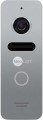 |
|---|---|---|
| NeoLight SOLO IPW | NeoLight Solo | |
from $171.95 up to $228.87 | from $40.00 up to $68.82 | |
| User reviews | ||
| TOP sellers | ||
Tamper for tamper protection. 2 lockable exits. Connecting an exit button. PoE adapter included. Can work independently without an intercom. Record motion videos into the built-in 32 GB memory. You can connect cameras and record data from them. View the archive through the mobile application. | The Solo X version does not come with a corner bracket. | |
Main specs | ||
| Type | call panel | call panel |
| Connection | Wi-Fi / RJ-45 | wired |
| Mobile application |  |  |
Call panel | ||
| Number of subscribers | 1 | 1 |
| Mount | wall | wall |
| Buttons backlight | | |
| PoE power | | |
| Protection level | IP66 | |
| Material | metal (anti-vandal) | metal (anti-vandal) |
| Power consumption | 6 W | |
| Operating temperature | -30 °C ~ +60 °C | -30 °C ~ +60 °C |
| Dimensions | 131x47x20 mm | 48x133x15.5 mm |
Camera | ||
| Megapixels | 2 MP | 1.23 MP |
| Video resolution | 1920x1080 px | |
| Horizontal viewing angle | 110 ° | 110 ° |
| IR illumination (night shooting) | | |
| Motion detector | | |
| Color | ||
| Added to E-Catalog | october 2023 | october 2017 |


Compare NeoLight SOLO IPW and Solo
You may be interested in
NeoLight SOLO IPW often compared

Glossary
Connection
— Wired. A classic setup where the signal is transmitted directly via cable without digitization, typically using a 4-core or coaxial cable. This type of connection is simple, stable, and does not require network infrastructure, making it a reliable solution for basic systems. It ensures the transmission of video, audio, and control signal (lock opening) with minimal delay, but is limited in functionality—lacking remote access, integration into IP systems, and high-resolution transmission. Suitable for inexpensive or existing analog installations.
— LAN (RJ-45). The LAN port (RJ-45) in intercom systems and call panels is designed for wired connection to a local network and provides stable data transmission, which is especially important for IP models. It allows the device to be integrated into a surveillance system, connected to a network video recorder, transmit video and sound without delays, and also provides remote access via an app or cloud service. Compared to Wi-Fi, LAN connection is more reliable, protected from interference, and better suited for systems where constant communication and quick response are crucial.
— Wi-Fi. Wi-Fi in intercom systems and call panels provides a wireless connection to the network, allowing the transmission of video and audio signals, device management via an app, and notifications on a smartphone. This option simpli...fies installation, especially in places where cable routing is difficult, and provides access to remote management and cloud storage functions. However, Wi-Fi is more susceptible to interference and signal loss, especially with weak coverage or an overloaded network, so it requires a stable connection for proper operation, particularly during video calls and recording.
— LAN (RJ-45). The LAN port (RJ-45) in intercom systems and call panels is designed for wired connection to a local network and provides stable data transmission, which is especially important for IP models. It allows the device to be integrated into a surveillance system, connected to a network video recorder, transmit video and sound without delays, and also provides remote access via an app or cloud service. Compared to Wi-Fi, LAN connection is more reliable, protected from interference, and better suited for systems where constant communication and quick response are crucial.
— Wi-Fi. Wi-Fi in intercom systems and call panels provides a wireless connection to the network, allowing the transmission of video and audio signals, device management via an app, and notifications on a smartphone. This option simpli...fies installation, especially in places where cable routing is difficult, and provides access to remote management and cloud storage functions. However, Wi-Fi is more susceptible to interference and signal loss, especially with weak coverage or an overloaded network, so it requires a stable connection for proper operation, particularly during video calls and recording.
Mobile application
This feature means that the device (whether it's an intercom or a call panel) can be operated through a smartphone or tablet with a special application installed on it. Such applications are usually released for both of the most popular mobile operating systems today — Android and iOS; however, it's worth confirming this separately. In any case, control from a mobile device can offer quite extensive functionality; and interacting with the device through a gadget that can be kept on hand is definitely more convenient than having to approach the intercom or other stationary equipment every time.
PoE power
Support by the intercom panel POE (Power Over Ethernet). This feature is only found in models with LAN connectivity. As the name suggests, it allows power to be supplied through the same network cable that connects the devices to the intercom or another device. This is much more convenient than running a separate power cable or dealing with independent power sources.
Protection level
This protection describes how much the calling panel body. Protects sensitive internal components from dust and moisture. Standardly, it is designated by the letters IP with two numbers after them IP44, IP65, etc. The first digit means protection against penetration of solid objects and dust; its individual values correspond to the following levels of protection:
4 - protection against objects with a diameter of more than 1 mm
5 - dust protection (complete protection from contact; dust can penetrate inside, but does not affect the operation of the device)
6 — dust-tight (the housing is fully protected from dust and contact). br>Smaller values do not occur and there is no point in indicating them.
The second number characterizes protection against moisture, here the values can be as follows:
4 - protection against splashes from any direction;
5 - from jets from any direction;
6 - from sea waves or strong water jets;
7 - possibility of short-term immersion to a depth of up to 1 m (without the possibility of constant operation in submerged mode);
Of course, calling panels are not designed to be submerged under water - the latter option only characterizes a high degree of moisture resistance.
In some models, one of the numbers may be replaced by the letter X - for example, IPX7. This does not mean that there is no protection, but that the corresponding parameter is not IP certified. At the same tim...e, the degree of uncertified protection can be quite high - for example, the example above corresponds to the possibility of complete immersion under water, which requires a high degree of closure (at least dust resistance level 5).
4 - protection against objects with a diameter of more than 1 mm
5 - dust protection (complete protection from contact; dust can penetrate inside, but does not affect the operation of the device)
6 — dust-tight (the housing is fully protected from dust and contact). br>Smaller values do not occur and there is no point in indicating them.
The second number characterizes protection against moisture, here the values can be as follows:
4 - protection against splashes from any direction;
5 - from jets from any direction;
6 - from sea waves or strong water jets;
7 - possibility of short-term immersion to a depth of up to 1 m (without the possibility of constant operation in submerged mode);
Of course, calling panels are not designed to be submerged under water - the latter option only characterizes a high degree of moisture resistance.
In some models, one of the numbers may be replaced by the letter X - for example, IPX7. This does not mean that there is no protection, but that the corresponding parameter is not IP certified. At the same tim...e, the degree of uncertified protection can be quite high - for example, the example above corresponds to the possibility of complete immersion under water, which requires a high degree of closure (at least dust resistance level 5).
Megapixels
Camera sensor resolution in megapixels (millions of pixels).
The higher the resolution of the matrix, the higher the video resolution can be, the more detailed the image is capable of providing the camera. At the same time, note that as the number of megapixels increases (without changing the size of the matrix), the size of each individual pixel decreases, which increases the likelihood of noise and deterioration in the overall image quality. Therefore, in itself, high resolution is not necessarily a sign of high quality — a lot depends on other points, in particular, on the size of the matrix.
The higher the resolution of the matrix, the higher the video resolution can be, the more detailed the image is capable of providing the camera. At the same time, note that as the number of megapixels increases (without changing the size of the matrix), the size of each individual pixel decreases, which increases the likelihood of noise and deterioration in the overall image quality. Therefore, in itself, high resolution is not necessarily a sign of high quality — a lot depends on other points, in particular, on the size of the matrix.
Video resolution
The maximum video resolution that the camera can record.
The higher the video resolution, the more details you can see on it, the fewer little details will be blurred. On the other hand, high resolution means large volumes of video materials, which, accordingly, requires capacious media for storing them and fast communication channels for broadcasting video in real time. One of the popular resolutions in calling panel cameras is Full HD (1920x1080 pixels).
The higher the video resolution, the more details you can see on it, the fewer little details will be blurred. On the other hand, high resolution means large volumes of video materials, which, accordingly, requires capacious media for storing them and fast communication channels for broadcasting video in real time. One of the popular resolutions in calling panel cameras is Full HD (1920x1080 pixels).
Motion detector
A function that allows the intercom to detect motion within the visibility range of connected cameras and respond to it. The specific method of such a response may vary in different models: starting a recording, sending a notification to a user-specified device, triggering a signal to an alarm output, etc.; these details should be clarified separately. In any case, the motion detector reduces the likelihood of missing significant events within the camera's field of view.