
Comparison Bukovyna CL-16B vs Bukovyna CL-12A
Add to comparison |  | 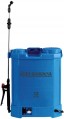 |
|---|---|---|
| Bukovyna CL-16B | Bukovyna CL-12A | |
| Outdated Product | Outdated Product | |
| TOP sellers | ||
| Type | battery | battery |
| Design | backpack | backpack |
Specs | ||
| Volume | 16 L | 12 L |
| Productivity (liquid) | 1.15 L/min | |
| Max. spraying distance | 7 m | 7 m |
| Max. pressure | 5 bar | 5 bar |
| Spray wand length | 110 cm | 110 cm |
| Telescopic wand |  | |
| Wand type | narrow | narrow |
| Wand material | stainless steel | |
Battery | ||
| Voltage | 12 В | 12 В |
| Capacity | 8 Ah | 8 Ah |
| Operating time | 4 h | |
| Charge indicator | | |
General | ||
| Spray lock | | |
| Replaceable nozzles | | |
| Wand holder | | |
| Weight | 5.5 kg | 5.5 kg |
| Dimensions | 45x35x15 cm | 36x18.5x42.5 cm |
| Added to E-Catalog | may 2024 | march 2023 |


Compare Bukovyna CL-16B and CL-12A
You may be interested in
Bukovyna CL-16B often compared

Bukovyna CL-12A often compared


Glossary
Volume
The nominal volume of the sprayer tank. Usually, in this case, the working volume is indicated, and not the full capacity (“for the cork”).
The more capacious the sprayer is, the more work can be done with it without refueling. On the other hand, a large volume accordingly affects the price, dimensions, and most importantly, the weight of the unit (and not only in a filled, but also in a “dry” state). Therefore, even with large volumes of work, it is sometimes more rational to use a relatively small unit, refueling it several times.
Detailed recommendations on the optimal volume of the tank for a particular situation can be found in special sources. With regard to specific values, in the most compact manual sprayers (see above), the capacity does not exceed 2 liters. Tanks for 2.1 – 5 liters can be found both in hand-held devices, and in pump-action and battery models (see "Type") with a shoulder carry. Sprayers for 5.1 – 10 liters are almost all made shoulder-mounted, the capacity of gasoline units actually starts from 10 liters, and the most capacious modern sprayers have tanks of more than 15 liters.
The more capacious the sprayer is, the more work can be done with it without refueling. On the other hand, a large volume accordingly affects the price, dimensions, and most importantly, the weight of the unit (and not only in a filled, but also in a “dry” state). Therefore, even with large volumes of work, it is sometimes more rational to use a relatively small unit, refueling it several times.
Detailed recommendations on the optimal volume of the tank for a particular situation can be found in special sources. With regard to specific values, in the most compact manual sprayers (see above), the capacity does not exceed 2 liters. Tanks for 2.1 – 5 liters can be found both in hand-held devices, and in pump-action and battery models (see "Type") with a shoulder carry. Sprayers for 5.1 – 10 liters are almost all made shoulder-mounted, the capacity of gasoline units actually starts from 10 liters, and the most capacious modern sprayers have tanks of more than 15 liters.
Productivity (liquid)
Maximum performance of the sprayer when working with liquid; Please note that in pump (see "Type of pumping") and battery (see "Type") models, the actual performance may decrease as the air supply or battery charge is exhausted.
High performance allows you to quickly process large areas; moreover, it is often combined with a good spraying distance (see below). On the other hand, such models require fairly large tanks — or they often have to be refilled; neither one nor the other contributes to the convenience of work. In addition, over-capacity is even more undesirable than under-capacity: a low-capacity sprayer will just take longer to process, and a too-capacity sprayer can ruin the job by “overdosing” the chemical. Therefore, it makes sense to use high-performance devices only for specific tasks.
Detailed data on optimal performance values for different situations can be found in special sources.
High performance allows you to quickly process large areas; moreover, it is often combined with a good spraying distance (see below). On the other hand, such models require fairly large tanks — or they often have to be refilled; neither one nor the other contributes to the convenience of work. In addition, over-capacity is even more undesirable than under-capacity: a low-capacity sprayer will just take longer to process, and a too-capacity sprayer can ruin the job by “overdosing” the chemical. Therefore, it makes sense to use high-performance devices only for specific tasks.
Detailed data on optimal performance values for different situations can be found in special sources.
Wand material
The material from which the complete spray tube of the sprayer is made.
— Plastic. The key advantage of plastic over other materials used for spray wands is its low cost. In addition, this material is chemically inert and does not corrode, and also has a low weight. On the other hand, the rigidity of the plastic is not very high, which is why such tubes tend to bend, sometimes even under their own weight.
— Aluminium. Aluminium alloys combine good strength and lightness, such a tube is easy to work with, and it takes quite a strong blow or pressure to bend it. On the other hand, aluminium is expensive.
— Brass. In addition to strength and reliability (including resistance to bending), brass is notable for its excellent resistance to corrosion. The disadvantages of such tubes are the high price, as well as the rather large weight.
- Stainless steel. "Stainless steel" is notable primarily for its high strength and rigidity, which is superior to other materials, despite the fact that this material is relatively inexpensive. However, such tubes weigh much more than aluminium or plastic ones.
- Copper. According to the main operational properties, copper pipes are similar to brass ones: they are strong, reliable and durable. On the other hand, such tubes are relatively expensive and do not have fundamental advantages over the same "stainless steel". Therefore, this option is rarely found.
— Plastic. The key advantage of plastic over other materials used for spray wands is its low cost. In addition, this material is chemically inert and does not corrode, and also has a low weight. On the other hand, the rigidity of the plastic is not very high, which is why such tubes tend to bend, sometimes even under their own weight.
— Aluminium. Aluminium alloys combine good strength and lightness, such a tube is easy to work with, and it takes quite a strong blow or pressure to bend it. On the other hand, aluminium is expensive.
— Brass. In addition to strength and reliability (including resistance to bending), brass is notable for its excellent resistance to corrosion. The disadvantages of such tubes are the high price, as well as the rather large weight.
- Stainless steel. "Stainless steel" is notable primarily for its high strength and rigidity, which is superior to other materials, despite the fact that this material is relatively inexpensive. However, such tubes weigh much more than aluminium or plastic ones.
- Copper. According to the main operational properties, copper pipes are similar to brass ones: they are strong, reliable and durable. On the other hand, such tubes are relatively expensive and do not have fundamental advantages over the same "stainless steel". Therefore, this option is rarely found.
Operating time
Time of continuous operation of the battery sprayer (see "Type") on one battery charge. The actual operating time may differ slightly from the claimed one due to the specifics of a particular situation, however, these differences are usually not very large, and this indicator can be used to evaluate not only theoretical, but also practical indicators of battery life.