
Comparison Grunhelm SP-12 vs Forte OG-12
Add to comparison | 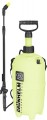 | 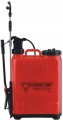 |
|---|---|---|
| Grunhelm SP-12 | Forte OG-12 | |
from $11.12 up to $11.96 | from $8.36 up to $9.52 | |
| TOP sellers | ||
Neck with filter. Replaceable nozzles. | ||
| Type | pump | lever |
| Design | backpack | backpack |
Specs | ||
| Volume | 12 L | 12 L |
| Max. spraying distance | 2 m | |
| Max. pressure | 3 bar | 3 bar |
| Max. fluid temperature | 40 °C | 40 °C |
| Spray wand length | 110 cm | |
| Telescopic wand |  | |
| Wand type | narrow | narrow |
| Wand material | plastic | stainless steel |
General | ||
| Replaceable nozzles |  | |
| Wand holder | | |
| Weight | 2.3 kg | |
| Dimensions | 33.5x17.5x47.5 cm | |
| Added to E-Catalog | april 2017 | march 2016 |


Compare Grunhelm SP-12 and Forte OG-12
You may be interested in
My comparisons
Grunhelm SP-12 often compared


Forte OG-12 often compared


Glossary
Type
General type of sprayer. Nowadays, there are mainly such options: pump action, lever, gasoline, battery(classic and hybrid) and electric(network). Here is a more detailed description of each variety:
— Pump. One of the varieties of sprayers that work on the user's muscular strength — along with lever ones. The difference lies in the fact that in this case the accumulative principle is used: with the help of a pump, a supply of compressed air is pre-inflated into the tank, which is gradually consumed during operation; the stock needs to be replenished from time to time by pumping up the pump. A characteristic external sign of a pump-action sprayer is the paging handle located in the upper part; Because of this, shoulder-carrying models (see "Design") have to be worn on one shoulder so that the handle remains within reach. This is somewhat less convenient than carrying lever models on two shoulders; on the other hand, one hand remains free when working with this type of shoulder sprayer. And the common advantage of all pump units is that during operation it is not necessary to constantly pump air. On the other hand, this design is poorly suited for more or less large volumes, so the tank capacity in this type of atomizers does not exceed 12 liters.
— Lever....Another type of sprayers that use the muscular strength of the operator to work. Such devices differ from pump-action models in that the pumping lever must be pumped constantly — each movement of it sends a portion of liquid to the nozzle. This can be quite tedious, however, lever sprayers have their advantages. Firstly, they are simpler, cheaper and at the same time more reliable and safer: damage to the tank does not lead to an “explosion” with splashing of the contents, and the performance of many models is maintained even with a leaky tank. Secondly, large shoulder units of this type are usually carried on two shoulders, like backpacks — this ensures the most even distribution of the load; the pumping lever in such sprayers is installed on the side, most often under the operator's left hand.
— Rechargeable. Sprayers with electric pumps powered by batteries. This design eliminates the need for the operator to manually inflate air, reducing fatigue and making it easier to treat large areas. At the same time, battery models are easier and cheaper to operate than gasoline ones, they are quieter and do not produce exhaust gases; and their advantage over mains sprayers is their independence from sockets. Among the disadvantages of this option, one can note the limited operating time on a charge and the need for long breaks to charge the batteries; however, in some models this moment is compensated by the use of removable batteries, which you can have in stock a few pieces. Note that this type of power supply is best suited for shoulder-mounted models, although there are also wheeled and combined sprayers (see "Design") on batteries.
— Battery hybrid. Sprayers (usually shoulder-mounted, see "Design"), equipped with two pumps at once, with two separate drives — (usually lever, see above) and battery. Thus, such models combine the advantages of both types: the battery allows you to work without additional physical effort, and when the battery runs out, you can switch to manual pumping and continue working for as long as you need. At the same time, such capabilities are rarely required, and additional equipment significantly affects the price of the unit; therefore, there are few models of this type nowadays.
— Petrol. Sprayers driven by a petrol engine. The key advantages of such units are high power and performance, battery life (including complete independence from sockets), as well as good suitability for long-term work (both due to the “endurance” of the engines themselves and due to the speed of refueling). On the other hand, gasoline engines are more complicated and more expensive than electric ones (both by themselves and in operation), weigh more, make a lot of noise and produce exhaust gases. Therefore, such engines are installed mainly in heavy performant models designed for large volumes of work.
— Electric. Sprayers with electric motors powered by conventional sockets. With the same power, such units have less weight and cost than battery counterparts, and their operation time is practically unlimited. On the other hand, the need to pull the wire from the outlet significantly limits mobility. Therefore, this option has not received much distribution, it is found only in some wheeled models (see "Design"), where battery life was sacrificed for the sake of the advantages of an electric motor.
— Pump. One of the varieties of sprayers that work on the user's muscular strength — along with lever ones. The difference lies in the fact that in this case the accumulative principle is used: with the help of a pump, a supply of compressed air is pre-inflated into the tank, which is gradually consumed during operation; the stock needs to be replenished from time to time by pumping up the pump. A characteristic external sign of a pump-action sprayer is the paging handle located in the upper part; Because of this, shoulder-carrying models (see "Design") have to be worn on one shoulder so that the handle remains within reach. This is somewhat less convenient than carrying lever models on two shoulders; on the other hand, one hand remains free when working with this type of shoulder sprayer. And the common advantage of all pump units is that during operation it is not necessary to constantly pump air. On the other hand, this design is poorly suited for more or less large volumes, so the tank capacity in this type of atomizers does not exceed 12 liters.
— Lever....Another type of sprayers that use the muscular strength of the operator to work. Such devices differ from pump-action models in that the pumping lever must be pumped constantly — each movement of it sends a portion of liquid to the nozzle. This can be quite tedious, however, lever sprayers have their advantages. Firstly, they are simpler, cheaper and at the same time more reliable and safer: damage to the tank does not lead to an “explosion” with splashing of the contents, and the performance of many models is maintained even with a leaky tank. Secondly, large shoulder units of this type are usually carried on two shoulders, like backpacks — this ensures the most even distribution of the load; the pumping lever in such sprayers is installed on the side, most often under the operator's left hand.
— Rechargeable. Sprayers with electric pumps powered by batteries. This design eliminates the need for the operator to manually inflate air, reducing fatigue and making it easier to treat large areas. At the same time, battery models are easier and cheaper to operate than gasoline ones, they are quieter and do not produce exhaust gases; and their advantage over mains sprayers is their independence from sockets. Among the disadvantages of this option, one can note the limited operating time on a charge and the need for long breaks to charge the batteries; however, in some models this moment is compensated by the use of removable batteries, which you can have in stock a few pieces. Note that this type of power supply is best suited for shoulder-mounted models, although there are also wheeled and combined sprayers (see "Design") on batteries.
— Battery hybrid. Sprayers (usually shoulder-mounted, see "Design"), equipped with two pumps at once, with two separate drives — (usually lever, see above) and battery. Thus, such models combine the advantages of both types: the battery allows you to work without additional physical effort, and when the battery runs out, you can switch to manual pumping and continue working for as long as you need. At the same time, such capabilities are rarely required, and additional equipment significantly affects the price of the unit; therefore, there are few models of this type nowadays.
— Petrol. Sprayers driven by a petrol engine. The key advantages of such units are high power and performance, battery life (including complete independence from sockets), as well as good suitability for long-term work (both due to the “endurance” of the engines themselves and due to the speed of refueling). On the other hand, gasoline engines are more complicated and more expensive than electric ones (both by themselves and in operation), weigh more, make a lot of noise and produce exhaust gases. Therefore, such engines are installed mainly in heavy performant models designed for large volumes of work.
— Electric. Sprayers with electric motors powered by conventional sockets. With the same power, such units have less weight and cost than battery counterparts, and their operation time is practically unlimited. On the other hand, the need to pull the wire from the outlet significantly limits mobility. Therefore, this option has not received much distribution, it is found only in some wheeled models (see "Design"), where battery life was sacrificed for the sake of the advantages of an electric motor.
Max. spraying distance
The longest distance a sprayer can effectively spray a liquid or powder. Usually, the horizontal range is implied, however, for “long-range” models, values bare also given for vertical spraying — in such units, the difference between horizontal and vertical ranges can be very noticeable.
A “long-range” sprayer (for 10–15 m or more) is convenient in that it allows you to process a large area without moving, and also to reach high branches without using ladders. On the other hand, a long range requires appropriate power, which affects the price, weight and dimensions of the unit — despite the fact that such capabilities are not always required: for example, for a cramped greenhouse, an atomizer with a short range ( 5 – 10 m, and often and less) So it is worth choosing according to this indicator, taking into account the features of the planned work.
A “long-range” sprayer (for 10–15 m or more) is convenient in that it allows you to process a large area without moving, and also to reach high branches without using ladders. On the other hand, a long range requires appropriate power, which affects the price, weight and dimensions of the unit — despite the fact that such capabilities are not always required: for example, for a cramped greenhouse, an atomizer with a short range ( 5 – 10 m, and often and less) So it is worth choosing according to this indicator, taking into account the features of the planned work.
Spray wand length
The length of the spray tube supplied with the sprayer.
A long tube, on the one hand, allows you to reach far without leaving your seat and without using stools, ladders, etc.; on the other hand, it is not very manoeuvrable and can be inconvenient when working in tight spaces. When choosing, it is worth proceeding from the optimal compromise between these characteristics. For example, a large tube length (up to 2 m in some models) is useful when processing fruit trees, but for a greenhouse it is better to choose a shorter sprayer. It is also worth considering that some sprayers use telescopic (sliding) tubes, the length of which can be adjusted as needed; in such cases, the unfolded size of the atomizer is usually indicated.
A long tube, on the one hand, allows you to reach far without leaving your seat and without using stools, ladders, etc.; on the other hand, it is not very manoeuvrable and can be inconvenient when working in tight spaces. When choosing, it is worth proceeding from the optimal compromise between these characteristics. For example, a large tube length (up to 2 m in some models) is useful when processing fruit trees, but for a greenhouse it is better to choose a shorter sprayer. It is also worth considering that some sprayers use telescopic (sliding) tubes, the length of which can be adjusted as needed; in such cases, the unfolded size of the atomizer is usually indicated.
Wand material
The material from which the complete spray tube of the sprayer is made.
— Plastic. The key advantage of plastic over other materials used for spray wands is its low cost. In addition, this material is chemically inert and does not corrode, and also has a low weight. On the other hand, the rigidity of the plastic is not very high, which is why such tubes tend to bend, sometimes even under their own weight.
— Aluminium. Aluminium alloys combine good strength and lightness, such a tube is easy to work with, and it takes quite a strong blow or pressure to bend it. On the other hand, aluminium is expensive.
— Brass. In addition to strength and reliability (including resistance to bending), brass is notable for its excellent resistance to corrosion. The disadvantages of such tubes are the high price, as well as the rather large weight.
- Stainless steel. "Stainless steel" is notable primarily for its high strength and rigidity, which is superior to other materials, despite the fact that this material is relatively inexpensive. However, such tubes weigh much more than aluminium or plastic ones.
- Copper. According to the main operational properties, copper pipes are similar to brass ones: they are strong, reliable and durable. On the other hand, such tubes are relatively expensive and do not have fundamental advantages over the same "stainless steel". Therefore, this option is rarely found.
— Plastic. The key advantage of plastic over other materials used for spray wands is its low cost. In addition, this material is chemically inert and does not corrode, and also has a low weight. On the other hand, the rigidity of the plastic is not very high, which is why such tubes tend to bend, sometimes even under their own weight.
— Aluminium. Aluminium alloys combine good strength and lightness, such a tube is easy to work with, and it takes quite a strong blow or pressure to bend it. On the other hand, aluminium is expensive.
— Brass. In addition to strength and reliability (including resistance to bending), brass is notable for its excellent resistance to corrosion. The disadvantages of such tubes are the high price, as well as the rather large weight.
- Stainless steel. "Stainless steel" is notable primarily for its high strength and rigidity, which is superior to other materials, despite the fact that this material is relatively inexpensive. However, such tubes weigh much more than aluminium or plastic ones.
- Copper. According to the main operational properties, copper pipes are similar to brass ones: they are strong, reliable and durable. On the other hand, such tubes are relatively expensive and do not have fundamental advantages over the same "stainless steel". Therefore, this option is rarely found.
Replaceable nozzles
The ability to change nozzles — sprayer working nozzles.
Different nozzles differ primarily in terms of spraying distance and width of the plume, as well as the degree of spraying (particle size). In addition, specific nozzles can be used in sprayers — for example, for working with powder. Replacement nozzles are usually included in the delivery, but this point (as well as the range of nozzles) is still worth clarifying separately.
Different nozzles differ primarily in terms of spraying distance and width of the plume, as well as the degree of spraying (particle size). In addition, specific nozzles can be used in sprayers — for example, for working with powder. Replacement nozzles are usually included in the delivery, but this point (as well as the range of nozzles) is still worth clarifying separately.
Wand holder
The presence of a tube clamp in the design of the sprayer.
Such a latch is a set of special clips, usually installed directly on the tank. It greatly simplifies the storage and transportation of the device: the handset, usually, is placed as compactly as possible and at the same time securely. Yes, and during breaks in work, this feature can come in handy — fixing the tube in the retainer is more convenient and safer than putting it on the ground, holding it in your hands, etc.
Such a latch is a set of special clips, usually installed directly on the tank. It greatly simplifies the storage and transportation of the device: the handset, usually, is placed as compactly as possible and at the same time securely. Yes, and during breaks in work, this feature can come in handy — fixing the tube in the retainer is more convenient and safer than putting it on the ground, holding it in your hands, etc.
Weight
The total weight of the sprayer. Specified without taking into account the liquid or powder in the working tank; at the same time, for battery models (see “Type”), usually, the weight is given with a complete battery, and for gasoline models, on the contrary, “dry” weight, without fuel in the tank.