
Comparison Procraft ES32Li/2 vs Start Pro SAP-21
Add to comparison |  | 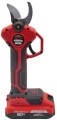 |
|---|---|---|
| Procraft ES32Li/2 | Start Pro SAP-21 | |
| Outdated Product | Outdated Product | |
| User reviews | ||
| TOP sellers | ||
Display. Brushless motor. | ||
| Type | cordless pruner | cordless pruner |
| Design | one-handed | one-handed |
Specs | ||
| Max. cutting diameter | 35 mm | 25 mm |
| Blade lock |  |  |
| Detachable blade | | |
| Blade adjustment | | |
| Finger loop | | |
General | ||
| Battery in set | 1 | 1 |
| Battery platform | Procraft 20V | |
| Battery voltage | 20 В | 20 В |
| Battery capacity | 2 Ah | 2.5 Ah |
| Battery type | Battery20/2 | |
| Compatible batteries | Procraft Battery20 | |
| Handle material | plastic | plastic |
| Handle material | rubber | rubber |
| Storage case | | |
| Weight | 1250 g | |
| Added to E-Catalog | august 2025 | january 2025 |


Compare Procraft ES32Li/2 and Start Pro SAP-21
You may be interested in
My comparisons
Procraft ES32Li/2 often compared


Start Pro SAP-21 often compared

Glossary
Max. cutting diameter
The largest diameter (thickness) of a branch that the tool can handle.
The larger the maximum cut diameter, the more powerful this model, the lower the likelihood that a certain branch will be too tough for the tool. At the same time, note that to ensure high power, long handles and strong blades are needed, which accordingly affects the dimensions, weight and price. Therefore, it is worth choosing according to this parameter with a certain margin, but at the same time, this margin should not be too large.
As for specific figures, a maximum diameter of 20 mm or less is considered relatively small, but it often turns out to be quite enough for simple work. 21 – 30 mm — the average value, 31 – 40 mm — above average, and in loppers the maximum thickness can exceed 40 mm.
The larger the maximum cut diameter, the more powerful this model, the lower the likelihood that a certain branch will be too tough for the tool. At the same time, note that to ensure high power, long handles and strong blades are needed, which accordingly affects the dimensions, weight and price. Therefore, it is worth choosing according to this parameter with a certain margin, but at the same time, this margin should not be too large.
As for specific figures, a maximum diameter of 20 mm or less is considered relatively small, but it often turns out to be quite enough for simple work. 21 – 30 mm — the average value, 31 – 40 mm — above average, and in loppers the maximum thickness can exceed 40 mm.
Blade lock
The ability to block the blades while the tool is not in use. Blade locking can be carried out in different ways, but the principle of its operation in all cases is the same: a special mechanism holds the blades in place, preventing them from opening and preventing unwanted contact of the cutting edges with surrounding objects. This provides additional security during storage and transportation.
Blade adjustment
The ability to adjust the blades of the tool. The specific meaning of this option in different models may be different, it should be clarified separately. So, in some cases we are talking about adjusting the distance between the blades, in others — about the angle of the blades relative to the handles, etc. However, anyway, this feature provides additional options for setting the tool for different situations.
Finger loop
The presence of a loop for the fingers in the design of the tool. Such a loop is used in one-handed tools: it is usually installed on one of the handles, four fingers are threaded into it, opposing the thumb. Such a device provides additional convenience and reliability in holding the tool (reduces the likelihood of letting it out of hand), and also provides some protection from branches and other foreign objects.
Battery platform
The name of the battery platform supported by the device. A single battery platform is used to combine various power tools of the same brand into one line (screwdriver, grinder, circular saw, etc.). Devices on the same platform use interchangeable batteries and chargers. Thanks to this, for example, there is no need to select a battery for each individual model of a power tool, because one purchased as a spare battery can be used in various power tools, depending on the situation or as needed. Batteries of the same platform basically differ from each other except perhaps in capacity.
Battery capacity
The capacity of the battery supplied with the tool.
Theoretically, the higher the capacity, the more energy the battery accumulates and the longer the tool is able to work on a single charge. In fact, however, two points must be taken into account. Firstly, only batteries with the same voltage can be directly compared in terms of capacity in ampere-hours (if there is a difference in voltage, you need to convert the capacity to watt-hours using a special formula, and use these values already). Secondly, the actual battery life will depend not only on the characteristics of the battery, but also on the power consumption of the device itself; at the same time, the power consumption for battery models is not directly indicated in the characteristics.
Theoretically, the higher the capacity, the more energy the battery accumulates and the longer the tool is able to work on a single charge. In fact, however, two points must be taken into account. Firstly, only batteries with the same voltage can be directly compared in terms of capacity in ampere-hours (if there is a difference in voltage, you need to convert the capacity to watt-hours using a special formula, and use these values already). Secondly, the actual battery life will depend not only on the characteristics of the battery, but also on the power consumption of the device itself; at the same time, the power consumption for battery models is not directly indicated in the characteristics.
Battery type
Model of the battery originally supplied with the tool.
This information will be useful primarily for finding detailed battery specifications. It also allows you to determine with what other tools you can use the complete battery (recall, construction staplers operate on universal batteries for power tools). As for the search for a power source for a pruner or lopper, here it is worth focus not so much on the model of the “native” battery, but on the list of compatible batteries (see below).
This information will be useful primarily for finding detailed battery specifications. It also allows you to determine with what other tools you can use the complete battery (recall, construction staplers operate on universal batteries for power tools). As for the search for a power source for a pruner or lopper, here it is worth focus not so much on the model of the “native” battery, but on the list of compatible batteries (see below).
Compatible batteries
Battery models compatible with the tool.
When choosing a tool, this information is relevant mainly for models without a battery included. For tools that come with batteries, the battery model is more of a reference—it's mostly "for the future" if a spare or replacement battery is needed. However, this data can also be useful in the selection process — for example, to assess compatibility with an existing battery on the farm, or to find detailed data on compatible batteries and determine how they meet your requirements (in particular, there are formulas that allow you to determine the time of continuous operation from a specific battery; these formulas can be found in special sources).
When choosing a tool, this information is relevant mainly for models without a battery included. For tools that come with batteries, the battery model is more of a reference—it's mostly "for the future" if a spare or replacement battery is needed. However, this data can also be useful in the selection process — for example, to assess compatibility with an existing battery on the farm, or to find detailed data on compatible batteries and determine how they meet your requirements (in particular, there are formulas that allow you to determine the time of continuous operation from a specific battery; these formulas can be found in special sources).
Storage case
A case is included with the instrument. Such cases can be made of both soft and hard materials; the former are more compact, the latter more reliable. Anyway, such an accessory provides additional convenience during storage and transportation: it protects the tool from dirt, moisture and other adverse factors, and the surrounding objects from accidental contact with the blades. Impromptu packaging can also be used for the same purpose, however, complete cases, usually, are much more convenient.