
Comparison Mar-Pol M80960 vs KRAFT&DELE KD11780
Add to comparison |  | 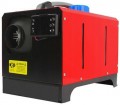 |
|---|---|---|
| Mar-Pol M80960 | KRAFT&DELE KD11780 | |
| Outdated Product | Outdated Product | |
| TOP sellers | ||
Remote control. | ||
| Power supply | diesel | diesel |
| Diesel exhaust type | indirect (outwards exhaust) | indirect (outwards exhaust) |
| Max. thermal output | 9 kW | 8 kW |
Specs | ||
| Supply voltage | 12 В | 12 В / 230 В |
| Heating element | heat exchanger | heat exchanger |
| Power adjustment | stepless | stepless |
| Fuel tank volume | 12 L | |
| Max. fuel consumption | 0.55 L/h | |
| Max. operating time | 21.8 h | |
| Features | temperature adjustment thermostat air filter | temperature adjustment thermostat |
| Safety features | overheat protection | overheat protection |
More cpecs | ||
| Display |  | |
| Dimensions (WxHxD) | 250x310x410 mm | 310x365x460 mm |
| Weight | 9.7 kg | 9.5 kg |
| Added to E-Catalog | october 2025 | june 2024 |


Compare Mar-Pol M80960 and KRAFT&DELE KD11780
You may be interested in
Glossary
Max. thermal output
The highest heating power produced by an industrial heater.
The maximum area that the unit can effectively heat directly depends on this parameter (see below). Even if it is not indicated in the specs, it can be approximately determined from the calculation that for heating 1 m² of a room with a standard ceiling height of 2.5 m and good thermal insulation will require 100 W of thermal power. If the ceiling height is significantly different, then the power required for heating can already be withdrawn from the volume of the room — every 2.5 cubic metres of volume will require the same 100 W (and the volume is found by multiplying the area by the height of the ceiling). There are also more complex formulas for the most accurate calculation, taking into account the degree of thermal insulation, the temperature difference between inside and outside the room, etc.; they can be found in special sources.
Note that in electric models (see "Power supply"), the maximum thermal power, in addition to all of the above, also determines the total power consumption of the unit: the power consumption (see below) cannot be less than the thermal output (usually, it is somewhat higher due to for the removal of part of the energy for the operation of the fan). In devices with a water circuit, the actual thermal output depends on the temperature of the coolant at the inlet and outlet. Therefore, in the characteristics, a certain standard value is usually indicated, and in t...he notes, it is specified for which temperatures it is relevant (for example, 90 ° / 70 °).
The maximum area that the unit can effectively heat directly depends on this parameter (see below). Even if it is not indicated in the specs, it can be approximately determined from the calculation that for heating 1 m² of a room with a standard ceiling height of 2.5 m and good thermal insulation will require 100 W of thermal power. If the ceiling height is significantly different, then the power required for heating can already be withdrawn from the volume of the room — every 2.5 cubic metres of volume will require the same 100 W (and the volume is found by multiplying the area by the height of the ceiling). There are also more complex formulas for the most accurate calculation, taking into account the degree of thermal insulation, the temperature difference between inside and outside the room, etc.; they can be found in special sources.
Note that in electric models (see "Power supply"), the maximum thermal power, in addition to all of the above, also determines the total power consumption of the unit: the power consumption (see below) cannot be less than the thermal output (usually, it is somewhat higher due to for the removal of part of the energy for the operation of the fan). In devices with a water circuit, the actual thermal output depends on the temperature of the coolant at the inlet and outlet. Therefore, in the characteristics, a certain standard value is usually indicated, and in t...he notes, it is specified for which temperatures it is relevant (for example, 90 ° / 70 °).
Supply voltage
The nominal supply voltage required for the operation of the industrial heater.
— Single-phase (400 V). Powered by standard household mains, in other words, ordinary sockets. This option is the most versatile: 230 V can be found almost everywhere where electricity is connected. At the same time, such power is not suitable for devices that consume more than 5 kW — in such cases, a special connection format will be required, and in general, the power of the units cannot be particularly high. Therefore, among electric industrial heaters (see "Power supply"), an operating voltage of 230 V is typical for entry-level models. But among other varieties, it is very common: the power consumption of the fan and auxiliary electronics is usually small, and 230 V is quite enough for it.
— Three-phase (400 V). This standard is common in industrial equipment with high power consumption, and industrial heaters are no exception: an operating voltage of 400 V. Usually, it indicates the high power and performance of an electric model. At the same time, this option is practically not used in units with other types of power supply — 230 V is enough for their operation (see above). In addition, note that a three-phase connection is far from being present wherever there is an electrical mains. Therefore, when buying an industrial heater for 400 V, you should make sure in advance that there is power for it at...the planned installation site.
— Single-phase/three-phase (230 / 400 V). Universal models are capable of using both types of networks described above. Usually, these are electrical units of relatively low power — otherwise, they could not work normally with 230 V networks. However, even for them, a three-phase connection may be useful, because 400 V mains are much better at handling loads of several kilowatts, and the ability to work with single-phase power insures against situations where three phases are not nearby.
— Single-phase (400 V). Powered by standard household mains, in other words, ordinary sockets. This option is the most versatile: 230 V can be found almost everywhere where electricity is connected. At the same time, such power is not suitable for devices that consume more than 5 kW — in such cases, a special connection format will be required, and in general, the power of the units cannot be particularly high. Therefore, among electric industrial heaters (see "Power supply"), an operating voltage of 230 V is typical for entry-level models. But among other varieties, it is very common: the power consumption of the fan and auxiliary electronics is usually small, and 230 V is quite enough for it.
— Three-phase (400 V). This standard is common in industrial equipment with high power consumption, and industrial heaters are no exception: an operating voltage of 400 V. Usually, it indicates the high power and performance of an electric model. At the same time, this option is practically not used in units with other types of power supply — 230 V is enough for their operation (see above). In addition, note that a three-phase connection is far from being present wherever there is an electrical mains. Therefore, when buying an industrial heater for 400 V, you should make sure in advance that there is power for it at...the planned installation site.
— Single-phase/three-phase (230 / 400 V). Universal models are capable of using both types of networks described above. Usually, these are electrical units of relatively low power — otherwise, they could not work normally with 230 V networks. However, even for them, a three-phase connection may be useful, because 400 V mains are much better at handling loads of several kilowatts, and the ability to work with single-phase power insures against situations where three phases are not nearby.
Fuel tank volume
The volume of the fuel tank provided in the design of the diesel industrial heater (see "Power supply").
Other things being equal (primarily with the same fuel consumption), a larger tank allows the unit to work longer without refuelling. On the other hand, an increase in volume requires an increase in the dimensions and weight of the entire device. Knowing the maximum fuel consumption (see below), you can determine the guaranteed time of operation of the heater on a single refill. This time is often less than the maximum; see "Maximum operating time" for details.
Other things being equal (primarily with the same fuel consumption), a larger tank allows the unit to work longer without refuelling. On the other hand, an increase in volume requires an increase in the dimensions and weight of the entire device. Knowing the maximum fuel consumption (see below), you can determine the guaranteed time of operation of the heater on a single refill. This time is often less than the maximum; see "Maximum operating time" for details.
Max. fuel consumption
Fuel consumption during operation of a gas or diesel (see "Power source") industrial heater at maximum power.
This parameter determines the efficiency of the unit; on the other hand, high power is inevitably associated with high consumption, therefore, only models with the same power source that do not have significant differences in power can be compared with each other in terms of high consumption. In addition, knowing the volume of the fuel tank (see above) or gas cylinder, this parameter can be used to calculate the time during which the heat gun can continuously work regardless of the selected power (for more details, see "Maximum operating time"). Note that this time is usually less than the maximum.
This parameter determines the efficiency of the unit; on the other hand, high power is inevitably associated with high consumption, therefore, only models with the same power source that do not have significant differences in power can be compared with each other in terms of high consumption. In addition, knowing the volume of the fuel tank (see above) or gas cylinder, this parameter can be used to calculate the time during which the heat gun can continuously work regardless of the selected power (for more details, see "Maximum operating time"). Note that this time is usually less than the maximum.
Max. operating time
The longest time during which the industrial heater can work without interruption.
The value of this parameter depends on the power supply (see above). So, in diesel models, the operating time is usually indicated on one full tank, without refuelling. Note that this implies operation at the lowest power, with minimal fuel consumption, and in optimal environmental conditions. Therefore, when choosing a diesel heat gun for this parameter, it is worth taking a certain margin, or better, separately calculating the operating time at the highest fuel consumption: for this, the volume of the tank (see above) must be divided by the maximum consumption. If we are talking about a gas or electric model, then the maximum operating time usually means the time during which the unit can work without overheating.
Regardless of the type, the long maximum run time provides additional convenience when working with an industrial heater. At the same time, it does not always make sense to pursue the maximum value of this parameter: in fact, the need for continuous heating for a long time occurs quite rarely. In addition, many diesel models allow refuelling right during operation (and in others, the refueling break usually does not exceed a few minutes). Therefore, it is worth specifically looking for a heat gun with a long time of continuous operation only if such a feature is fundamentally important to you.
The value of this parameter depends on the power supply (see above). So, in diesel models, the operating time is usually indicated on one full tank, without refuelling. Note that this implies operation at the lowest power, with minimal fuel consumption, and in optimal environmental conditions. Therefore, when choosing a diesel heat gun for this parameter, it is worth taking a certain margin, or better, separately calculating the operating time at the highest fuel consumption: for this, the volume of the tank (see above) must be divided by the maximum consumption. If we are talking about a gas or electric model, then the maximum operating time usually means the time during which the unit can work without overheating.
Regardless of the type, the long maximum run time provides additional convenience when working with an industrial heater. At the same time, it does not always make sense to pursue the maximum value of this parameter: in fact, the need for continuous heating for a long time occurs quite rarely. In addition, many diesel models allow refuelling right during operation (and in others, the refueling break usually does not exceed a few minutes). Therefore, it is worth specifically looking for a heat gun with a long time of continuous operation only if such a feature is fundamentally important to you.
Features
— Temperature control. The ability to change the heating temperature provided by the industrial heater. This function allows you to optimally adjust the operation of the device to the necessary conditions and heating intensity.
— Thermostat. A thermostat is a device for maintaining the air temperature at the same level. The principle of operation of this device is as follows: when the required air temperature is reached, it automatically turns off the heating, and when it gets cold, it turns it on again until the air warms up sufficiently. The temperature of the thermostat operation, usually, is set by the operator of the heater.
— Piezo ignition. The presence of a piezoelectric ignition system in the design of the industrial heater. In such systems, the spark necessary to ignite the fuel is generated by the operation of a piezoelectric generator, and its operation is based on the use of a special material that, when bent, generates an electric current. It means that no external power is required for ignition — the necessary energy is generated by the operator himself when the button is pressed. In addition, piezoelectric systems are considered very convenient for several other technical reasons. They are found mainly in gas industrial heaters (see "Power supply") because, for diesel fuel, such ignition is poorly suited.
— Complete fuel combustion.... This feature is found in gas and diesel models (see "Power supply"). It means that the fuel in the combustion chamber of the heater burns out completely, without forming soot and other by-products and practically without creating unpleasant odours. In addition, it has a positive effect on efficiency. This feature is especially important for diesel units because diesel and many types of liquid fuels are "dirtier" than gas and more prone to soot. Smokeless combustion facilitates the use of heaters in rooms where there are people — however, note that it does not cancel the requirements for good ventilation, since combustion products still need to be removed from the air.
— Fan mode. The ability to operate the heater in the ventilation-only mode, when the device circulates air but does not warm it up. The purpose of this function is obvious: situations when the room is already warm enough, or heating is not required for other reasons.
— Fuel level indicator. The presence in the design of a diesel heater of a sensor that signals the amount of fuel in the tank. The design and operation of this sensor may vary from model to model: in some devices, it constantly displays the remaining fuel; in others, it plays the role of an alarm and turns on only when the fuel level drops below a certain value. However, this feature makes it easier to monitor the condition of the unit and prevents troubles associated with unexpected emptying of the tank.
— Air filter. The presence of an air purification filter in the design of a diesel heater. One of the “weaknesses" of such units is the nozzles that supply the fuel-air mixture to the combustion chamber; contaminants that enter these nozzles clog them and can even disable them. The air purification filter prevents such troubles: it traps dust, sand and other mechanical impurities, ensuring stable operation and durability of the injectors.
— Thermostat. A thermostat is a device for maintaining the air temperature at the same level. The principle of operation of this device is as follows: when the required air temperature is reached, it automatically turns off the heating, and when it gets cold, it turns it on again until the air warms up sufficiently. The temperature of the thermostat operation, usually, is set by the operator of the heater.
— Piezo ignition. The presence of a piezoelectric ignition system in the design of the industrial heater. In such systems, the spark necessary to ignite the fuel is generated by the operation of a piezoelectric generator, and its operation is based on the use of a special material that, when bent, generates an electric current. It means that no external power is required for ignition — the necessary energy is generated by the operator himself when the button is pressed. In addition, piezoelectric systems are considered very convenient for several other technical reasons. They are found mainly in gas industrial heaters (see "Power supply") because, for diesel fuel, such ignition is poorly suited.
— Complete fuel combustion.... This feature is found in gas and diesel models (see "Power supply"). It means that the fuel in the combustion chamber of the heater burns out completely, without forming soot and other by-products and practically without creating unpleasant odours. In addition, it has a positive effect on efficiency. This feature is especially important for diesel units because diesel and many types of liquid fuels are "dirtier" than gas and more prone to soot. Smokeless combustion facilitates the use of heaters in rooms where there are people — however, note that it does not cancel the requirements for good ventilation, since combustion products still need to be removed from the air.
— Fan mode. The ability to operate the heater in the ventilation-only mode, when the device circulates air but does not warm it up. The purpose of this function is obvious: situations when the room is already warm enough, or heating is not required for other reasons.
— Fuel level indicator. The presence in the design of a diesel heater of a sensor that signals the amount of fuel in the tank. The design and operation of this sensor may vary from model to model: in some devices, it constantly displays the remaining fuel; in others, it plays the role of an alarm and turns on only when the fuel level drops below a certain value. However, this feature makes it easier to monitor the condition of the unit and prevents troubles associated with unexpected emptying of the tank.
— Air filter. The presence of an air purification filter in the design of a diesel heater. One of the “weaknesses" of such units is the nozzles that supply the fuel-air mixture to the combustion chamber; contaminants that enter these nozzles clog them and can even disable them. The air purification filter prevents such troubles: it traps dust, sand and other mechanical impurities, ensuring stable operation and durability of the injectors.