
Comparison Optima JET100 Prime vs Optima JET100
Add to comparison | 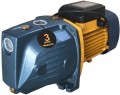 | 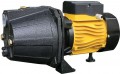 |
|---|---|---|
| Optima JET100 Prime | Optima JET100 | |
| Outdated Product | from $53.72 up to $95.04 | |
| User reviews | ||
| TOP sellers | ||
Model JET80-PL — Equipped with plastic impeller Model JET80S — Equipped with plastic impeller | ||
| Suitable for | clean water | clean water |
Specs | ||
| Maximum performance | 4200 L/h | 4200 L/h |
| Maximum head | 55 m | 44 m |
| Max. pressure | 9 bar | 8 bar |
| Pump type | centrifugal | centrifugal |
| Suction type | self-priming | self-priming |
| Suction height | 9 m | 9 m |
| Maximum liquid temperature | 40 °С | 50 °С |
| Ejector |  |  |
| Dry run protection | | |
| Suction system | single-stage | single-stage |
| Outlet size | 1" | 1" |
| Inlet hole size | 1" | 1" |
Engine | ||
| Maximum power | 1100 W | 1100 W |
| Power source | electric | electric |
| Mains voltage | 230 В | 230 В |
| Power cord length | 1.5 m | |
General specs | ||
| Protection class (IP) | 44 | 44 |
| Country of origin | Poland | Poland |
| Pump housing material | cast iron | cast iron |
| Impeller / auger material | brass | brass |
| Dimensions | 200x200x390 mm | |
| Weight | 12.6 kg | |
| Added to E-Catalog | june 2021 | december 2014 |


Compare Optima JET100 Prime and JET100
You may be interested in
My comparisons
Optima JET100 often compared


Glossary
Maximum head
The maximum head generated by the pump. This parameter is most often indicated in meters, by the height of the water column that the unit can create — in other words, by the height to which it can supply water. You can estimate the pressure created by the pump using a simple formula: every 10 m of head corresponds to a pressure of 1 bar.
It is worth choosing a pump according to this parameter, taking into account the height to which it should supply water, as well as adjusting for losses and the need for pressure in the water supply. To do this, it is necessary to determine the difference in height between the water level and the highest point of water intake, add another 10 to 30 m to this figure (depending on the pressure that needs to be obtained in the water supply), and multiply the result by 1.1 — this will be the minimum pressure required.
It is worth choosing a pump according to this parameter, taking into account the height to which it should supply water, as well as adjusting for losses and the need for pressure in the water supply. To do this, it is necessary to determine the difference in height between the water level and the highest point of water intake, add another 10 to 30 m to this figure (depending on the pressure that needs to be obtained in the water supply), and multiply the result by 1.1 — this will be the minimum pressure required.
Max. pressure
The highest pressure that the pump is capable of creating during operation. This parameter is directly related to the maximum head (see above); however, it is less obvious, and therefore, it is indicated rarely.
Maximum liquid temperature
The highest temperature of water at which the pump is capable of operating normally. Usually, in most models this parameter is 35-40 °C — at high temperatures it is difficult to ensure effective cooling of the engine and moving parts, and in fact, such conditions are rare.
Ejector
The presence of an ejector in the design or delivery set of the pump.
The main purpose of the ejector is to increase the effective suction height. Its action is based on the fact that part of the water pumped by the pump is sent back down to the intake point; this water in some way "pushes" the water in the main suction line. Thanks to this, the suction height can be increased from 7-8 m, available without an ejector, to 15-20 m. The main disadvantage of this device is a rather high noise level.
The main purpose of the ejector is to increase the effective suction height. Its action is based on the fact that part of the water pumped by the pump is sent back down to the intake point; this water in some way "pushes" the water in the main suction line. Thanks to this, the suction height can be increased from 7-8 m, available without an ejector, to 15-20 m. The main disadvantage of this device is a rather high noise level.
Dry run protection
A system that protects the unit from running without water.
The dry running mode is abnormal for any pump: at best, the mechanism of the unit in this mode experiences increased loads, and at worst, the device may fail and even a serious accident. This feature allows you to prevent such consequences. The specific method of protection against dry running may be different; one of the most popular options is a float switch (see below). However, in addition, flow sensors, pressure or level switches can be used. These details depend both on the general type of pump and on the specific model; they should be specified separately in each case.
The dry running mode is abnormal for any pump: at best, the mechanism of the unit in this mode experiences increased loads, and at worst, the device may fail and even a serious accident. This feature allows you to prevent such consequences. The specific method of protection against dry running may be different; one of the most popular options is a float switch (see below). However, in addition, flow sensors, pressure or level switches can be used. These details depend both on the general type of pump and on the specific model; they should be specified separately in each case.
Power cord length
The length of the cable that supplies electricity to the pump with the appropriate type of power supply (see above). The longer the cable the farther from the socket or other power source you can install the pump. This parameter is especially important for submersible models: if the cable is too short, it will simply be impossible to lower the pump to the maximum depth provided for by its design, because ordinary extension cords cannot be immersed in water.