
Comparison Wetron 775035 vs Pedrollo JSW 3BH
Add to comparison | 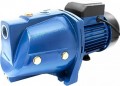 |  |
|---|---|---|
| Wetron 775035 | Pedrollo JSW 3BH | |
| Outdated Product | from $297.92 up to $329.59 | |
| TOP sellers | ||
| Suitable for | clean water | clean water |
Specs | ||
| Maximum performance | 5100 L/h | 4800 L/h |
| Maximum head | 85 m | 76 m |
| Pump type | centrifugal | centrifugal |
| Suction type | self-priming | self-priming |
| Suction height | 8 m | 8 m |
| Maximum particle size | 0.2 mm | |
| Mechanical impurities | 50 g/m³ | |
| Maximum liquid temperature | 40 °С | 40 °С |
| Suction system | single-stage | single-stage |
| Outlet size | 1" | 1" |
| Inlet hole size | 1" | 1 1/4" |
Engine | ||
| Maximum power | 1100 W | 1500 W |
| Power source | electric | electric |
| Mains voltage | 230 В | 400 В |
| Power cord length | 1 m | |
General specs | ||
| Protection class (IP) | X4 | 44 |
| Country of origin | China | Italy |
| Pump housing material | cast iron | cast iron |
| Impeller / auger material | brass | brass |
| Dimensions | 530x206x165 mm | |
| Weight | 25.1 kg | |
| Added to E-Catalog | september 2017 | january 2015 |


Compare Wetron 775035 and Pedrollo JSW 3BH
You may be interested in
My comparisons
Wetron 775035 often compared


Glossary
Maximum performance
The maximum volume of water that the device can pump in a certain amount of time. It is one of the key specs of any pump because characterizes the volume of water with which the device can work. At the same time, it does not always make sense to pursue maximum performance — after all, it significantly affects the dimensions and weight of the unit.
Some formulas allow you to derive optimal performance values for different situations. So, if the pump is designed to supply water to water intake points, its minimum required performance should not be lower than the highest total flow rate; if desired, a margin of 20-30% can be added to this value. And for sewer models (see "Suitable for"), everything will depend on the volume of wastewater. More detailed recommendations for choosing a pump depending on performance can be found in special sources.
Some formulas allow you to derive optimal performance values for different situations. So, if the pump is designed to supply water to water intake points, its minimum required performance should not be lower than the highest total flow rate; if desired, a margin of 20-30% can be added to this value. And for sewer models (see "Suitable for"), everything will depend on the volume of wastewater. More detailed recommendations for choosing a pump depending on performance can be found in special sources.
Maximum head
The maximum head generated by the pump. This parameter is most often indicated in meters, by the height of the water column that the unit can create — in other words, by the height to which it can supply water. You can estimate the pressure created by the pump using a simple formula: every 10 m of head corresponds to a pressure of 1 bar.
It is worth choosing a pump according to this parameter, taking into account the height to which it should supply water, as well as adjusting for losses and the need for pressure in the water supply. To do this, it is necessary to determine the difference in height between the water level and the highest point of water intake, add another 10 to 30 m to this figure (depending on the pressure that needs to be obtained in the water supply), and multiply the result by 1.1 — this will be the minimum pressure required.
It is worth choosing a pump according to this parameter, taking into account the height to which it should supply water, as well as adjusting for losses and the need for pressure in the water supply. To do this, it is necessary to determine the difference in height between the water level and the highest point of water intake, add another 10 to 30 m to this figure (depending on the pressure that needs to be obtained in the water supply), and multiply the result by 1.1 — this will be the minimum pressure required.
Maximum particle size
The largest particle size that the pump can handle without problems. This size is the main indicator that determines the purpose of the device (see above); and in general, the larger it is, the more reliable the device, the lower the risk of damage if a foreign object enters the suction line. If the risk of the appearance of too large mechanical impurities is still high, additional protection can be provided with filters or grids at the inlet. However, such a measure should be considered only as a last resort, because from constant exposure to solid particles, the grids become clogged and deformed, which can lead to both clogging of the line and filter breakthrough.
Mechanical impurities
The maximum amount of mechanical impurities in the suction water at which the pump can operate normally (of course, if the particles of these impurities do not exceed the maximum size possible for this model; see above for details). Pure water is considered to be water with an impurity content of up to 20 g per cubic meter, but in sewage, the bill can already go to tens of kilograms per cubic meter.
Inlet hole size
The size of the thread designed to connect the pump to the suction line. This parameter is completely similar to the size of the outlet (see above) — in particular, it can be specified both for the nozzle and for the inlet of the pump.
Maximum power
Rated power of the pump motor. The more powerful the engine, the higher the performance of the unit, usually, the greater the pressure, suction height, etc. Of course, these parameters largely depend on other features (primarily the pump type, see above); but models similar in design can be compared in terms of power.
Note that high power, usually, increases the size, weight and cost of the pump, and also implies high costs of electricity or fuel (see "Power source"). Therefore, it is worth choosing a pump according to this parameter taking into account the specific situation; more detailed recommendations can be found in special sources.
Note that high power, usually, increases the size, weight and cost of the pump, and also implies high costs of electricity or fuel (see "Power source"). Therefore, it is worth choosing a pump according to this parameter taking into account the specific situation; more detailed recommendations can be found in special sources.
Mains voltage
The supply voltage for which the pump with an electric motor is designed is electric or battery (see "Power source").
— 230 V. Voltage of ordinary household mains. Most pumps with this power supply can work directly from the socket, only the most powerful models (3 kW and above) require a special connection format (directly to the switchboard). However, 230 V mains are relatively poorly suited for high-power units. Therefore, this type of power supply is found mainly among electric pumps of low and medium power, designed mainly for domestic use.
— 400 V. Power supply from three-phase 400 V mains is suitable for electric pumps of any power — including heavy industrial equipment. However, this type of power supply is also found among relatively "weak" models — including 400 W and below. This is because a three-phase connection has several general advantages over a single-phase one: in particular, such mains are better able to withstand high loads (including power surges during motor starts), they are better suited for long-term continuous operation, and also allow more accurate accounting of consumed energy. If there is access to a 400 V mains at the pump installation site, it is most likely that such a power supply will be optimal.
— 12 V. A value that is practically not found among mains pumps, but quite popular in battery models (see "Power source"). In this case, voltage does not affect performance, but it may be useful when looking for a...replacement/replacement battery or third-party charger. At the same time, we emphasize that the use of 12-volt car batteries with pumps is highly discouraged: such energy sources are designed for a specific format of operation, and their abnormal use is fraught with accidents.
— 18 V. Another version of the operating voltage found in battery pumps; has no fundamental differences from the 12 V described above.
— 230 V. Voltage of ordinary household mains. Most pumps with this power supply can work directly from the socket, only the most powerful models (3 kW and above) require a special connection format (directly to the switchboard). However, 230 V mains are relatively poorly suited for high-power units. Therefore, this type of power supply is found mainly among electric pumps of low and medium power, designed mainly for domestic use.
— 400 V. Power supply from three-phase 400 V mains is suitable for electric pumps of any power — including heavy industrial equipment. However, this type of power supply is also found among relatively "weak" models — including 400 W and below. This is because a three-phase connection has several general advantages over a single-phase one: in particular, such mains are better able to withstand high loads (including power surges during motor starts), they are better suited for long-term continuous operation, and also allow more accurate accounting of consumed energy. If there is access to a 400 V mains at the pump installation site, it is most likely that such a power supply will be optimal.
— 12 V. A value that is practically not found among mains pumps, but quite popular in battery models (see "Power source"). In this case, voltage does not affect performance, but it may be useful when looking for a...replacement/replacement battery or third-party charger. At the same time, we emphasize that the use of 12-volt car batteries with pumps is highly discouraged: such energy sources are designed for a specific format of operation, and their abnormal use is fraught with accidents.
— 18 V. Another version of the operating voltage found in battery pumps; has no fundamental differences from the 12 V described above.
Power cord length
The length of the cable that supplies electricity to the pump with the appropriate type of power supply (see above). The longer the cable the farther from the socket or other power source you can install the pump. This parameter is especially important for submersible models: if the cable is too short, it will simply be impossible to lower the pump to the maximum depth provided for by its design, because ordinary extension cords cannot be immersed in water.
Protection class (IP)
An indicator that determines the degree of protection of dangerous (moving and current-carrying) parts of the hardware of the pump from adverse effects, namely solid objects and water. Since pumps, by definition, are used for pumping liquids, and many of them can normally pass quite large particles, in this case, we are talking about protection against moisture and foreign objects from outside.
The level of protection is usually indicated by a marking of the letters IP and two numbers, the first of which indicates protection against the effects of solid objects, and the second — against the ingress of water.
For the first digit, each value corresponds to the following protection values: 1 — protection against objects with a diameter of more than 50 mm (large body surfaces) 2 — against objects with a diameter of more than 12.5 mm (fingers, etc.) 3 — against objects more than 2.5 mm (most tools) 4 — against objects larger than 1 mm (virtually all tools, most wires) 5 — dust-proof (total protection against contact; dust can enter, but does not affect the operation of the device) 6 — dust-proof (case with full dust protection and contact).
For the second digit: 1 — protection against vertically falling drops of water 2 — against drops of water with a deviation of up to 15° from the vertical axis of the device 3 — against drops of water with a deviation of up to 60° from the vertical axis of the device (rain) 4 — against splashes from any direct...ion 5 — from jets from any direction 6 — from sea waves or strong water jets 7 — short-term immersion to a depth of up to 1 m (without the possibility of continuous operation in immersed mode) 8 — long-term immersion to a depth of more than 1 m (with the possibility of permanent operation) in immersed mode).
Note that in some cases one of the numbers can be replaced by the letter X — this means that official certification for the corresponding parameter has not been carried out. In pumps, X is usually put in place of the first digit, because. a high degree of moisture resistance (and for submersible models, for example, it must, by definition, correspond to 8) means a high degree of protection against solid contaminants.
The level of protection is usually indicated by a marking of the letters IP and two numbers, the first of which indicates protection against the effects of solid objects, and the second — against the ingress of water.
For the first digit, each value corresponds to the following protection values: 1 — protection against objects with a diameter of more than 50 mm (large body surfaces) 2 — against objects with a diameter of more than 12.5 mm (fingers, etc.) 3 — against objects more than 2.5 mm (most tools) 4 — against objects larger than 1 mm (virtually all tools, most wires) 5 — dust-proof (total protection against contact; dust can enter, but does not affect the operation of the device) 6 — dust-proof (case with full dust protection and contact).
For the second digit: 1 — protection against vertically falling drops of water 2 — against drops of water with a deviation of up to 15° from the vertical axis of the device 3 — against drops of water with a deviation of up to 60° from the vertical axis of the device (rain) 4 — against splashes from any direct...ion 5 — from jets from any direction 6 — from sea waves or strong water jets 7 — short-term immersion to a depth of up to 1 m (without the possibility of continuous operation in immersed mode) 8 — long-term immersion to a depth of more than 1 m (with the possibility of permanent operation) in immersed mode).
Note that in some cases one of the numbers can be replaced by the letter X — this means that official certification for the corresponding parameter has not been carried out. In pumps, X is usually put in place of the first digit, because. a high degree of moisture resistance (and for submersible models, for example, it must, by definition, correspond to 8) means a high degree of protection against solid contaminants.