
Comparison Aquatica 773424 vs Aquatica 773414
Add to comparison | 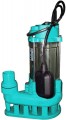 | 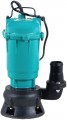 |
|---|---|---|
| Aquatica 773424 | Aquatica 773414 | |
from $159.88 up to $168.84 | from $156.00 up to $159.88 | |
| TOP sellers | ||
| Suitable for | waste water | waste water |
Specs | ||
| Maximum performance | 21000 L/h | 21000 L/h |
| Maximum head | 23 m | 23 m |
| Pump type | centrifugal | centrifugal |
| Maximum immersion depth | 5 m | 5 m |
| Maximum particle size | 35 mm | 35 mm |
| Maximum liquid temperature | 40 °С | 40 °С |
| pH value | 6.5 – 8.5 | 6.5 – 8.5 |
| Dry run protection |  |  |
| Grinder | | |
| Float switch | | |
| Suction system | single-stage | single-stage |
| Outlet size | 2" | 2" |
Engine | ||
| Maximum power | 1500 W | 1500 W |
| Power source | electric | electric |
| Mains voltage | 230 В | 230 В |
| Engine type | asynchronous | asynchronous |
| Power cord length | 10 m | 10 m |
General specs | ||
| Protection class (IP) | 68 | 68 |
| Country of origin | Ukraine | Ukraine |
| Pump housing material | stainless steel | cast iron |
| Impeller / auger material | cast iron | cast iron |
| Dimensions | 250x115x470 mm | 170x170x465 mm |
| Added to E-Catalog | november 2014 | november 2014 |


Compare Aquatica 773424 and 773414
You may be interested in
My comparisons
Aquatica 773424 often compared

Aquatica 773414 often compared

Glossary
Dry run protection
A system that protects the unit from running without water.
The dry running mode is abnormal for any pump: at best, the mechanism of the unit in this mode experiences increased loads, and at worst, the device may fail and even a serious accident. This feature allows you to prevent such consequences. The specific method of protection against dry running may be different; one of the most popular options is a float switch (see below). However, in addition, flow sensors, pressure or level switches can be used. These details depend both on the general type of pump and on the specific model; they should be specified separately in each case.
The dry running mode is abnormal for any pump: at best, the mechanism of the unit in this mode experiences increased loads, and at worst, the device may fail and even a serious accident. This feature allows you to prevent such consequences. The specific method of protection against dry running may be different; one of the most popular options is a float switch (see below). However, in addition, flow sensors, pressure or level switches can be used. These details depend both on the general type of pump and on the specific model; they should be specified separately in each case.
Grinder
A device for grinding large mechanical impurities contained in the pumped liquid.
The grinder is installed at the pump inlet, in front of the main mechanism. Its task is to protect this mechanism from jamming and/or damage: the grinder crushes the impurities contained in the water into small particles, which the pump itself can handle without any problems.
This function is most relevant when working with heavily contaminated liquids; so most units with grinders are designed for dirty water or sewerage (see “Suitable for”). At the same time, a similar function can also be found in models for clean water — it increases overall reliability and provides an additional guarantee in case large particles do end up in the water.
The grinder is installed at the pump inlet, in front of the main mechanism. Its task is to protect this mechanism from jamming and/or damage: the grinder crushes the impurities contained in the water into small particles, which the pump itself can handle without any problems.
This function is most relevant when working with heavily contaminated liquids; so most units with grinders are designed for dirty water or sewerage (see “Suitable for”). At the same time, a similar function can also be found in models for clean water — it increases overall reliability and provides an additional guarantee in case large particles do end up in the water.
Float switch
The presence of a float switch in the design of the unit.
The operation of such a switch is based on a sensor in the form of a float, which determines the level of the pumped liquid. At the same time, such a sensor can perform several functions at once. The main one is the protection of the pump from dry running: when the liquid level drops critically, the sensor turns off the pump, preventing air from entering the line and helping to save energy. In addition, the float can be used as an overflow sensor (warning of a critical increase in the liquid level), and in some models also as a general-level sensor (reporting the actual amount of liquid).
The operation of such a switch is based on a sensor in the form of a float, which determines the level of the pumped liquid. At the same time, such a sensor can perform several functions at once. The main one is the protection of the pump from dry running: when the liquid level drops critically, the sensor turns off the pump, preventing air from entering the line and helping to save energy. In addition, the float can be used as an overflow sensor (warning of a critical increase in the liquid level), and in some models also as a general-level sensor (reporting the actual amount of liquid).
Pump housing material
The material from which the pump housing is made. It is a structural element in which the working mechanism (impeller or auger) is installed. Note that the motor casing can be made of a different material — this is not important in this case; and in water pumps with the engine (see “Power source”), we are talking about the casing of the pump itself, and not about the support frame in which it is fixed.
The following options are most popular nowadays:
— Plastic. Inexpensive material that perfectly resists moisture and is not subject to corrosion. However, the reliability of plastic as a whole is not very high; the exception is special high-strength grades, but they are extremely rare in pumps (when strength is needed, metals are usually used). So plastic housing is mainly equipped with relatively simple and affordable models that are not designed for serious loads.
— Cast iron. An extremely popular material nowadays: cast iron is strong, reliable, durable and at the same time has a relatively low cost. However, in terms of corrosion resistance, this material is inferior to stainless steel (see below). Nevertheless, subject to the rules for operating the pump, the service life of the cast-iron housing is not inferior to the service life of most of the main components of the unit. Also note that such cases are quite massive, which makes transportation difficult; however, in some cases, a large weight is an advantage: it helps to dampen vibrati...ons.
— Stainless steel. By the name, one of the key advantages of stainless steel is high resistance to corrosion — and, accordingly, reliability and durability. On the other hand, this material also costs a little more than the same cast iron. The weight of such housing is somewhat less — this, again, can be both an advantage and a disadvantage, depending on the situation.
— Aluminium. Premium material. The aluminium alloys used in today's pumps are light, strong, durable, and virtually impervious to moisture, but cost accordingly.
— Brass. A fairly rare option found in some models of surface pumps. Brass is strong enough, reliable and resistant to moisture, but in most cases, it does not have key advantages over the same stainless steel or aluminium but costs a little more.
— Bronze. Another material similar to the brass described above is durable and practical but rarely used.
— Ceramics. A material found exclusively in sewage pumps in the form of toilet bowls (see "Pump design"). Most often, ceramics means vitreous china or more expensive and durable vitreous china — that is, the same materials as in ordinary toilets without built-in pumps.
The following options are most popular nowadays:
— Plastic. Inexpensive material that perfectly resists moisture and is not subject to corrosion. However, the reliability of plastic as a whole is not very high; the exception is special high-strength grades, but they are extremely rare in pumps (when strength is needed, metals are usually used). So plastic housing is mainly equipped with relatively simple and affordable models that are not designed for serious loads.
— Cast iron. An extremely popular material nowadays: cast iron is strong, reliable, durable and at the same time has a relatively low cost. However, in terms of corrosion resistance, this material is inferior to stainless steel (see below). Nevertheless, subject to the rules for operating the pump, the service life of the cast-iron housing is not inferior to the service life of most of the main components of the unit. Also note that such cases are quite massive, which makes transportation difficult; however, in some cases, a large weight is an advantage: it helps to dampen vibrati...ons.
— Stainless steel. By the name, one of the key advantages of stainless steel is high resistance to corrosion — and, accordingly, reliability and durability. On the other hand, this material also costs a little more than the same cast iron. The weight of such housing is somewhat less — this, again, can be both an advantage and a disadvantage, depending on the situation.
— Aluminium. Premium material. The aluminium alloys used in today's pumps are light, strong, durable, and virtually impervious to moisture, but cost accordingly.
— Brass. A fairly rare option found in some models of surface pumps. Brass is strong enough, reliable and resistant to moisture, but in most cases, it does not have key advantages over the same stainless steel or aluminium but costs a little more.
— Bronze. Another material similar to the brass described above is durable and practical but rarely used.
— Ceramics. A material found exclusively in sewage pumps in the form of toilet bowls (see "Pump design"). Most often, ceramics means vitreous china or more expensive and durable vitreous china — that is, the same materials as in ordinary toilets without built-in pumps.