
Comparison VODOMET VD60 vs Werk VM70
Add to comparison |  | 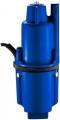 |
|---|---|---|
| VODOMET VD60 | Werk VM70 | |
| Expecting restock | from $16.81 up to $28.80 | |
| User reviews | ||
| TOP sellers | ||
| Suitable for | clean water | clean water |
Specs | ||
| Maximum performance | 1080 L/h | 1080 L/h |
| Maximum head | 70 m | 70 m |
| Pump type | vibratory | vibratory |
| Maximum immersion depth | 5 m | 3 m |
| Maximum liquid temperature | 35 °С | 40 °С |
| Suction system | single-stage | single-stage |
| Outlet size | 3/4" | 1" |
Engine | ||
| Maximum power | 250 W | 320 W |
| Power source | electric | electric |
| Mains voltage | 230 В | 230 В |
General specs | ||
| Protection class (IP) | 68 | |
| Country of origin | Slovenia | Germany |
| Pump housing material | aluminium | aluminium |
| Weight | 3.3 kg | |
| Added to E-Catalog | august 2024 | december 2014 |


Compare VODOMET VD60 and Werk VM70
You may be interested in
My comparisons
Werk VM70 often compared


Glossary
Maximum immersion depth
The maximum depth at which a submersible pump can be placed without the risk of failure or breakdown. It is usually indicated for fresh water, so in fact it is advisable not to lower the pump to the maximum depth level — after all, the density of the pumped liquid may be greater, which will create off-design loads on the structure.
Maximum liquid temperature
The highest temperature of water at which the pump is capable of operating normally. Usually, in most models this parameter is 35-40 °C — at high temperatures it is difficult to ensure effective cooling of the engine and moving parts, and in fact, such conditions are rare.
Outlet size
The thread size for connecting a hose or pipe to the pump outlet. If there is a branch pipe with an external thread in the design, the size is indicated for it; if not, for the internal thread of the inlet.
Anyway, the dimensions of the pump outlet and the mounts on the hose/pipeline connected to it must match — otherwise, you will have to look for adapters. This size is specified in inches and fractions of an inch.
This parameter is relevant primarily for surface models.
Anyway, the dimensions of the pump outlet and the mounts on the hose/pipeline connected to it must match — otherwise, you will have to look for adapters. This size is specified in inches and fractions of an inch.
This parameter is relevant primarily for surface models.
Maximum power
Rated power of the pump motor. The more powerful the engine, the higher the performance of the unit, usually, the greater the pressure, suction height, etc. Of course, these parameters largely depend on other features (primarily the pump type, see above); but models similar in design can be compared in terms of power.
Note that high power, usually, increases the size, weight and cost of the pump, and also implies high costs of electricity or fuel (see "Power source"). Therefore, it is worth choosing a pump according to this parameter taking into account the specific situation; more detailed recommendations can be found in special sources.
Note that high power, usually, increases the size, weight and cost of the pump, and also implies high costs of electricity or fuel (see "Power source"). Therefore, it is worth choosing a pump according to this parameter taking into account the specific situation; more detailed recommendations can be found in special sources.
Protection class (IP)
An indicator that determines the degree of protection of dangerous (moving and current-carrying) parts of the hardware of the pump from adverse effects, namely solid objects and water. Since pumps, by definition, are used for pumping liquids, and many of them can normally pass quite large particles, in this case, we are talking about protection against moisture and foreign objects from outside.
The level of protection is usually indicated by a marking of the letters IP and two numbers, the first of which indicates protection against the effects of solid objects, and the second — against the ingress of water.
For the first digit, each value corresponds to the following protection values: 1 — protection against objects with a diameter of more than 50 mm (large body surfaces) 2 — against objects with a diameter of more than 12.5 mm (fingers, etc.) 3 — against objects more than 2.5 mm (most tools) 4 — against objects larger than 1 mm (virtually all tools, most wires) 5 — dust-proof (total protection against contact; dust can enter, but does not affect the operation of the device) 6 — dust-proof (case with full dust protection and contact).
For the second digit: 1 — protection against vertically falling drops of water 2 — against drops of water with a deviation of up to 15° from the vertical axis of the device 3 — against drops of water with a deviation of up to 60° from the vertical axis of the device (rain) 4 — against splashes from any direct...ion 5 — from jets from any direction 6 — from sea waves or strong water jets 7 — short-term immersion to a depth of up to 1 m (without the possibility of continuous operation in immersed mode) 8 — long-term immersion to a depth of more than 1 m (with the possibility of permanent operation) in immersed mode).
Note that in some cases one of the numbers can be replaced by the letter X — this means that official certification for the corresponding parameter has not been carried out. In pumps, X is usually put in place of the first digit, because. a high degree of moisture resistance (and for submersible models, for example, it must, by definition, correspond to 8) means a high degree of protection against solid contaminants.
The level of protection is usually indicated by a marking of the letters IP and two numbers, the first of which indicates protection against the effects of solid objects, and the second — against the ingress of water.
For the first digit, each value corresponds to the following protection values: 1 — protection against objects with a diameter of more than 50 mm (large body surfaces) 2 — against objects with a diameter of more than 12.5 mm (fingers, etc.) 3 — against objects more than 2.5 mm (most tools) 4 — against objects larger than 1 mm (virtually all tools, most wires) 5 — dust-proof (total protection against contact; dust can enter, but does not affect the operation of the device) 6 — dust-proof (case with full dust protection and contact).
For the second digit: 1 — protection against vertically falling drops of water 2 — against drops of water with a deviation of up to 15° from the vertical axis of the device 3 — against drops of water with a deviation of up to 60° from the vertical axis of the device (rain) 4 — against splashes from any direct...ion 5 — from jets from any direction 6 — from sea waves or strong water jets 7 — short-term immersion to a depth of up to 1 m (without the possibility of continuous operation in immersed mode) 8 — long-term immersion to a depth of more than 1 m (with the possibility of permanent operation) in immersed mode).
Note that in some cases one of the numbers can be replaced by the letter X — this means that official certification for the corresponding parameter has not been carried out. In pumps, X is usually put in place of the first digit, because. a high degree of moisture resistance (and for submersible models, for example, it must, by definition, correspond to 8) means a high degree of protection against solid contaminants.
Country of origin
Country of origin of the brand under which the pump is marketed.
There are many stereotypes related to how the origin of goods from a particular country affects their quality. However, these stereotypes are unfounded. Firstly, this paragraph does not indicate the actual place of production of the unit, but the "homeland" of the trademark (or the location of the manufacturer's headquarters); production facilities may be located in another country. Secondly, the actual quality of the product depends not so much on geography, but on the organization of processes within a particular company. So when choosing, it is best to focus not so much on the "nationality" of the pump, but on the overall reputation of a particular brand. And paying attention to the country of origin makes sense if you fundamentally want (or do not want) to support a manufacturer from a certain state.
There are many stereotypes related to how the origin of goods from a particular country affects their quality. However, these stereotypes are unfounded. Firstly, this paragraph does not indicate the actual place of production of the unit, but the "homeland" of the trademark (or the location of the manufacturer's headquarters); production facilities may be located in another country. Secondly, the actual quality of the product depends not so much on geography, but on the organization of processes within a particular company. So when choosing, it is best to focus not so much on the "nationality" of the pump, but on the overall reputation of a particular brand. And paying attention to the country of origin makes sense if you fundamentally want (or do not want) to support a manufacturer from a certain state.