
Comparison Pumpman TVM60-10 vs Sturm WP9741A
Add to comparison |  | 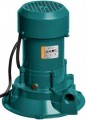 |
|---|---|---|
| Pumpman TVM60-10 | Sturm WP9741A | |
| Expecting restock | from $76.00 up to $79.96 | |
| TOP sellers | ||
| Suitable for | waste water | waste water |
Specs | ||
| Maximum performance | 1100 L/h | 3300 L/h |
| Maximum head | 70 m | 20 m |
| Pump type | vibratory | centrifugal |
| Maximum immersion depth | 5 m | 8 m |
| Maximum particle size | 35 mm | |
| Maximum liquid temperature | 35 °С | 35 °С |
| Suction system | single-stage | single-stage |
| Outlet size | 3/4" | 1" |
Engine | ||
| Maximum power | 250 W | 410 W |
| Power source | electric | electric |
| Mains voltage | 230 В | 230 В |
| Power cord length | 10 m | |
General specs | ||
| Protection class (IP) | 68 | 68 |
| Country of origin | China | Germany |
| Pump housing material | aluminium | cast iron |
| Impeller / auger material | cast iron | |
| Added to E-Catalog | august 2024 | january 2015 |


Compare Pumpman TVM60-10 and Sturm WP9741A
You may be interested in
My comparisons
Sturm WP9741A often compared

Glossary
Maximum performance
The maximum volume of water that the device can pump in a certain amount of time. It is one of the key specs of any pump because characterizes the volume of water with which the device can work. At the same time, it does not always make sense to pursue maximum performance — after all, it significantly affects the dimensions and weight of the unit.
Some formulas allow you to derive optimal performance values for different situations. So, if the pump is designed to supply water to water intake points, its minimum required performance should not be lower than the highest total flow rate; if desired, a margin of 20-30% can be added to this value. And for sewer models (see "Suitable for"), everything will depend on the volume of wastewater. More detailed recommendations for choosing a pump depending on performance can be found in special sources.
Some formulas allow you to derive optimal performance values for different situations. So, if the pump is designed to supply water to water intake points, its minimum required performance should not be lower than the highest total flow rate; if desired, a margin of 20-30% can be added to this value. And for sewer models (see "Suitable for"), everything will depend on the volume of wastewater. More detailed recommendations for choosing a pump depending on performance can be found in special sources.
Maximum head
The maximum head generated by the pump. This parameter is most often indicated in meters, by the height of the water column that the unit can create — in other words, by the height to which it can supply water. You can estimate the pressure created by the pump using a simple formula: every 10 m of head corresponds to a pressure of 1 bar.
It is worth choosing a pump according to this parameter, taking into account the height to which it should supply water, as well as adjusting for losses and the need for pressure in the water supply. To do this, it is necessary to determine the difference in height between the water level and the highest point of water intake, add another 10 to 30 m to this figure (depending on the pressure that needs to be obtained in the water supply), and multiply the result by 1.1 — this will be the minimum pressure required.
It is worth choosing a pump according to this parameter, taking into account the height to which it should supply water, as well as adjusting for losses and the need for pressure in the water supply. To do this, it is necessary to determine the difference in height between the water level and the highest point of water intake, add another 10 to 30 m to this figure (depending on the pressure that needs to be obtained in the water supply), and multiply the result by 1.1 — this will be the minimum pressure required.
Pump type
The basic principle by which the suction action of the pump is carried out.
— Centrifugal. As the name suggests, this type of pump uses centrifugal force. Their main element is the impeller installed in a round casing; the inlet is located on the axis of rotation of this wheel. During operation, due to the centrifugal force that occurs during the rotation of the wheel, the liquid is thrown from the centre to its edges and then enters the outlet pipe directed tangentially to the circle of rotation of the wheel. Centrifugal pumps are quite simple in design and inexpensive, while they are reliable and economical (due to high efficiency), have a large suction height (see below), and the fluid flow is continuous. At the same time, the performance of such units can drop dramatically with high resistance in the water supply system. In addition, if the liquid level is below the inlet, the pump will have to be refilled with water before each start.
— Vortex. Peripheral pumps are somewhat similar to centrifugal pumps: they also have a round casing and an impeller with blades. However, in such units, both the inlet and outlet pipes are directed tangentially to the impeller, and the blades differ in design. The method of operation is also fundamentally different — by the name, of it uses the vortices formed on the wheel blades. Vortex units are significantly superior to centrifugal ones in terms of pressure; in addition, they are usually self-priming (see "Suction...type"), and the design in most cases is such that the pump has to be filled with water only when it is first turned on after installation. On the other hand, such models are sensitive to contamination — even small particles entering the impeller can cause damage, significantly reducing efficiency. Yes, and the efficiency of vortex pumps is low — 2-3 times lower than that of centrifugal pumps; they are also inferior in suction height (see below).
— Centrifugal-vortex. Pumps that combine the two principles described above in operation. Such a unit is a pair of centrifugal and vortex pumps mounted on a common shaft and connected in series. During operation, water first enters the centrifugal wheel, which is responsible for suction, and then to the vortex wheel, which provides pressure. Due to this, it was possible to combine the advantages of both types in one unit — a large suction height, a high pressure and a self-priming device. However, these units cost accordingly.
— Vibratory. The term "membrane" is also used. The action of vibration pumps is based on the use of a flexible membrane, equipped with a device that makes it vibrate. This membrane is one of the walls of the working chamber, and the chamber itself has inlet and outlet valves. When the membrane moves "out" and the volume of the working chamber increases, the inlet valve opens (the outlet is closed), allowing fluid to enter; and when the membrane moves “inward” and pushes the liquid out, on the contrary, the outlet opens. The main advantages of this device are simplicity, compactness, versatility, low cost, ease of regulation and almost complete insensitivity to dry operation. At the same time, the service life of such units is relatively short due to the strong wear of the membrane.
— Auger. The main part of such pumps is precisely the auger — a rotor (or several rotors) in the form of a screw. This design makes the pump very reliable, allows it to achieve high outlet pressure and uniform liquid supply, provides self-priming (see "Suction type"), and also has a low noise level. At the same time, auger units are difficult to manufacture and, accordingly, expensive.
— Centrifugal. As the name suggests, this type of pump uses centrifugal force. Their main element is the impeller installed in a round casing; the inlet is located on the axis of rotation of this wheel. During operation, due to the centrifugal force that occurs during the rotation of the wheel, the liquid is thrown from the centre to its edges and then enters the outlet pipe directed tangentially to the circle of rotation of the wheel. Centrifugal pumps are quite simple in design and inexpensive, while they are reliable and economical (due to high efficiency), have a large suction height (see below), and the fluid flow is continuous. At the same time, the performance of such units can drop dramatically with high resistance in the water supply system. In addition, if the liquid level is below the inlet, the pump will have to be refilled with water before each start.
— Vortex. Peripheral pumps are somewhat similar to centrifugal pumps: they also have a round casing and an impeller with blades. However, in such units, both the inlet and outlet pipes are directed tangentially to the impeller, and the blades differ in design. The method of operation is also fundamentally different — by the name, of it uses the vortices formed on the wheel blades. Vortex units are significantly superior to centrifugal ones in terms of pressure; in addition, they are usually self-priming (see "Suction...type"), and the design in most cases is such that the pump has to be filled with water only when it is first turned on after installation. On the other hand, such models are sensitive to contamination — even small particles entering the impeller can cause damage, significantly reducing efficiency. Yes, and the efficiency of vortex pumps is low — 2-3 times lower than that of centrifugal pumps; they are also inferior in suction height (see below).
— Centrifugal-vortex. Pumps that combine the two principles described above in operation. Such a unit is a pair of centrifugal and vortex pumps mounted on a common shaft and connected in series. During operation, water first enters the centrifugal wheel, which is responsible for suction, and then to the vortex wheel, which provides pressure. Due to this, it was possible to combine the advantages of both types in one unit — a large suction height, a high pressure and a self-priming device. However, these units cost accordingly.
— Vibratory. The term "membrane" is also used. The action of vibration pumps is based on the use of a flexible membrane, equipped with a device that makes it vibrate. This membrane is one of the walls of the working chamber, and the chamber itself has inlet and outlet valves. When the membrane moves "out" and the volume of the working chamber increases, the inlet valve opens (the outlet is closed), allowing fluid to enter; and when the membrane moves “inward” and pushes the liquid out, on the contrary, the outlet opens. The main advantages of this device are simplicity, compactness, versatility, low cost, ease of regulation and almost complete insensitivity to dry operation. At the same time, the service life of such units is relatively short due to the strong wear of the membrane.
— Auger. The main part of such pumps is precisely the auger — a rotor (or several rotors) in the form of a screw. This design makes the pump very reliable, allows it to achieve high outlet pressure and uniform liquid supply, provides self-priming (see "Suction type"), and also has a low noise level. At the same time, auger units are difficult to manufacture and, accordingly, expensive.
Maximum immersion depth
The maximum depth at which a submersible pump can be placed without the risk of failure or breakdown. It is usually indicated for fresh water, so in fact it is advisable not to lower the pump to the maximum depth level — after all, the density of the pumped liquid may be greater, which will create off-design loads on the structure.
Maximum particle size
The largest particle size that the pump can handle without problems. This size is the main indicator that determines the purpose of the device (see above); and in general, the larger it is, the more reliable the device, the lower the risk of damage if a foreign object enters the suction line. If the risk of the appearance of too large mechanical impurities is still high, additional protection can be provided with filters or grids at the inlet. However, such a measure should be considered only as a last resort, because from constant exposure to solid particles, the grids become clogged and deformed, which can lead to both clogging of the line and filter breakthrough.
Outlet size
The thread size for connecting a hose or pipe to the pump outlet. If there is a branch pipe with an external thread in the design, the size is indicated for it; if not, for the internal thread of the inlet.
Anyway, the dimensions of the pump outlet and the mounts on the hose/pipeline connected to it must match — otherwise, you will have to look for adapters. This size is specified in inches and fractions of an inch.
This parameter is relevant primarily for surface models.
Anyway, the dimensions of the pump outlet and the mounts on the hose/pipeline connected to it must match — otherwise, you will have to look for adapters. This size is specified in inches and fractions of an inch.
This parameter is relevant primarily for surface models.
Maximum power
Rated power of the pump motor. The more powerful the engine, the higher the performance of the unit, usually, the greater the pressure, suction height, etc. Of course, these parameters largely depend on other features (primarily the pump type, see above); but models similar in design can be compared in terms of power.
Note that high power, usually, increases the size, weight and cost of the pump, and also implies high costs of electricity or fuel (see "Power source"). Therefore, it is worth choosing a pump according to this parameter taking into account the specific situation; more detailed recommendations can be found in special sources.
Note that high power, usually, increases the size, weight and cost of the pump, and also implies high costs of electricity or fuel (see "Power source"). Therefore, it is worth choosing a pump according to this parameter taking into account the specific situation; more detailed recommendations can be found in special sources.
Power cord length
The length of the cable that supplies electricity to the pump with the appropriate type of power supply (see above). The longer the cable the farther from the socket or other power source you can install the pump. This parameter is especially important for submersible models: if the cable is too short, it will simply be impossible to lower the pump to the maximum depth provided for by its design, because ordinary extension cords cannot be immersed in water.
Country of origin
Country of origin of the brand under which the pump is marketed.
There are many stereotypes related to how the origin of goods from a particular country affects their quality. However, these stereotypes are unfounded. Firstly, this paragraph does not indicate the actual place of production of the unit, but the "homeland" of the trademark (or the location of the manufacturer's headquarters); production facilities may be located in another country. Secondly, the actual quality of the product depends not so much on geography, but on the organization of processes within a particular company. So when choosing, it is best to focus not so much on the "nationality" of the pump, but on the overall reputation of a particular brand. And paying attention to the country of origin makes sense if you fundamentally want (or do not want) to support a manufacturer from a certain state.
There are many stereotypes related to how the origin of goods from a particular country affects their quality. However, these stereotypes are unfounded. Firstly, this paragraph does not indicate the actual place of production of the unit, but the "homeland" of the trademark (or the location of the manufacturer's headquarters); production facilities may be located in another country. Secondly, the actual quality of the product depends not so much on geography, but on the organization of processes within a particular company. So when choosing, it is best to focus not so much on the "nationality" of the pump, but on the overall reputation of a particular brand. And paying attention to the country of origin makes sense if you fundamentally want (or do not want) to support a manufacturer from a certain state.