
Comparison Dongyin 777372 vs Aquatica 778401
Add to comparison |  | 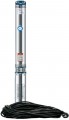 |
|---|---|---|
| Dongyin 777372 | Aquatica 778401 | |
| Expecting restock | Outdated Product | |
| TOP sellers | ||
| Max. performance | 2400 L/h | 2700 L/h |
| Max. head | 66 m | 48 m |
Specs | ||
| Operating principle | centrifugal | centrifugal |
| Max. immersion depth | 60 m | 60 m |
| Mechanical impurities | 1500 g/m³ | |
| pH value | 6.5 – 8.5 | 6.5 – 8.5 |
| Suction system | single stage | multistage |
| Number of suction stages | 11 | |
| Oulet size | 1" | 1" |
| Max. liquid T | 35 °С | 35 °С |
Motor | ||
| Power consumption | 370 W | 370 W |
| Mains voltage | 230 В | 230 В |
| Power cable length | 45 m | 25 m |
General specs | ||
| Country of origin | Ukraine | Ukraine |
| Impeller material | technopolymer | technopolymer |
| Added to E-Catalog | july 2024 | may 2024 |


Compare Dongyin 777372 and Aquatica 778401
You may be interested in
My comparisons
Aquatica 77840 often compared


Glossary
Max. performance
The maximum amount of water that the pump can deliver from the well per unit of time. The choice for this parameter depends on two main points: the maximum total consumption and productivity of the well.
The maximum total consumption is the amount of water that is necessary for the simultaneous normal operation of all points of water intake in the system. Different types of consumers (washbasins, showers, washing machines, etc.) require different amounts of water; exact values can be found in special tables or instructions for specific models of household appliances. And the total consumption can be calculated by adding the indicators of all points of water intake. As for the productivity of the well, this is the maximum amount of water that the well can produce in a certain time without draining it. This indicator is usually indicated in the documents for the well; if it is unknown, before buying a permanent pump, it is imperative to determine the productivity — for example, by trial pumping with an inexpensive unit.
Accordingly, the performance of the pump should not exceed the productivity of the well, and it should be at least 50% of the maximum total consumption of the connected water supply system. The first rule allows you to avoid draining the pump and the troubles associated with it, and compliance with the second guarantees a normal amount of water even with a rather intensive water intake. And, of course, do not forget that high performance...requires high power and affects the cost of the device.
The maximum total consumption is the amount of water that is necessary for the simultaneous normal operation of all points of water intake in the system. Different types of consumers (washbasins, showers, washing machines, etc.) require different amounts of water; exact values can be found in special tables or instructions for specific models of household appliances. And the total consumption can be calculated by adding the indicators of all points of water intake. As for the productivity of the well, this is the maximum amount of water that the well can produce in a certain time without draining it. This indicator is usually indicated in the documents for the well; if it is unknown, before buying a permanent pump, it is imperative to determine the productivity — for example, by trial pumping with an inexpensive unit.
Accordingly, the performance of the pump should not exceed the productivity of the well, and it should be at least 50% of the maximum total consumption of the connected water supply system. The first rule allows you to avoid draining the pump and the troubles associated with it, and compliance with the second guarantees a normal amount of water even with a rather intensive water intake. And, of course, do not forget that high performance...requires high power and affects the cost of the device.
Max. head
The maximum head is the maximum height to which the pump can raise water during operation (the highest height of the water column that it can support). This parameter describes the pressure created during operation, but since the operation of well pumps is directly related mainly to lifting liquid to a great height, it is easier to use head data in metres than pressure data. However, if necessary, one can be easily translated into another — 10 m of pressure corresponding to a pressure of 1 bar.
When choosing a pump for this parameter, it is not necessary to chase a large pressure, but it is necessary to take into account several factors.
The first of these is the actual height to which the water must be raised; it can be determined by adding the immersion depth of the pump and the height of the highest draw-off point above the ground. The immersion depth is displayed taking into account the so-called dynamic water level in the well — i.e. distance from the surface of the earth to the water surface during continuous operation of the pump (this indicator is greater than the static level, since when the water is pumped out, its level decreases). The dynamic level is usually indicated in the well passport; the pump should be at least a metre deep underwater, plus a margin of 2 – 3 m should be taken as an adjustment for seasonal level fluctuations. Accordingly, for a well with a dynamic depth of 40 m, supplying a house with...an upper draw-off point of 6 m above the ground, the total height difference will be at least 40 + 6 + 4 = 50 m.
The second point is the hydraulic resistance of the system. Even with horizontal pipes, pressure is required to move fluid through them; usually, when calculating, it is assumed that for every 10 m of the pipeline, 0.1 bar, or 1 m of head, is required. For a water supply system inside an average house, resistance losses are about 5 m of head (0.5 bar). Accordingly, if in our example the house is located 10 m from the well, then the margin to overcome the resistance should be at least 1 + 5 = 6 m of head.
And the third point is the pressure at the points of water intake because the pump must not only “push” the water to the tap, but also provide pressure at the outlet. Here, the optimal values may be different depending on the situation. For example, let's take at least 1 atm (1 bar), which corresponds to 10 m of pressure.
Thus, in our example, the pump head must be at least 50 m (height difference) + 6 m (resistance) + 10 m (outlet head) = 66 m. Of course, this is a calculation for the most general case; in special situations, the formulas may differ, so it makes sense to refer to special sources for them.
When choosing a pump for this parameter, it is not necessary to chase a large pressure, but it is necessary to take into account several factors.
The first of these is the actual height to which the water must be raised; it can be determined by adding the immersion depth of the pump and the height of the highest draw-off point above the ground. The immersion depth is displayed taking into account the so-called dynamic water level in the well — i.e. distance from the surface of the earth to the water surface during continuous operation of the pump (this indicator is greater than the static level, since when the water is pumped out, its level decreases). The dynamic level is usually indicated in the well passport; the pump should be at least a metre deep underwater, plus a margin of 2 – 3 m should be taken as an adjustment for seasonal level fluctuations. Accordingly, for a well with a dynamic depth of 40 m, supplying a house with...an upper draw-off point of 6 m above the ground, the total height difference will be at least 40 + 6 + 4 = 50 m.
The second point is the hydraulic resistance of the system. Even with horizontal pipes, pressure is required to move fluid through them; usually, when calculating, it is assumed that for every 10 m of the pipeline, 0.1 bar, or 1 m of head, is required. For a water supply system inside an average house, resistance losses are about 5 m of head (0.5 bar). Accordingly, if in our example the house is located 10 m from the well, then the margin to overcome the resistance should be at least 1 + 5 = 6 m of head.
And the third point is the pressure at the points of water intake because the pump must not only “push” the water to the tap, but also provide pressure at the outlet. Here, the optimal values may be different depending on the situation. For example, let's take at least 1 atm (1 bar), which corresponds to 10 m of pressure.
Thus, in our example, the pump head must be at least 50 m (height difference) + 6 m (resistance) + 10 m (outlet head) = 66 m. Of course, this is a calculation for the most general case; in special situations, the formulas may differ, so it makes sense to refer to special sources for them.
Mechanical impurities
The largest amount of mechanical impurities in the pumped water, which the pump can handle normally. When used with dirty water, this parameter should be taken into account along with the maximum particle size (see above): if the impurity content is too high, the pump may fail even if the individual particle size does not exceed the norm.
Suction system
— Single stage. Suction system with one impeller or similar element. Although this design loses to multistage in terms of efficiency and power, at the same time, its characteristics are quite enough for most entry-level and mid-level pumps; at the same time, single-stage units are simpler and cheaper.
— Multistage. This suction system consists of several impellers (or other similar parts that directly provide suction). Such pumps are noticeably superior to single-stage ones, they provide powerful pressure and are less sensitive to impurities. At the same time, multistage systems are quite expensive.
— Multistage. This suction system consists of several impellers (or other similar parts that directly provide suction). Such pumps are noticeably superior to single-stage ones, they provide powerful pressure and are less sensitive to impurities. At the same time, multistage systems are quite expensive.
Number of suction stages
Number of suction stages.
Single-stage systems assume the presence of one impeller or other similar element, while multi-stage systems — several. The latter makes it possible to obtain a strong water pressure with an overall compact size.
Single-stage systems assume the presence of one impeller or other similar element, while multi-stage systems — several. The latter makes it possible to obtain a strong water pressure with an overall compact size.
Power cable length
The length of the standard power cable provided in the design of the pump.
Ideally, the length of this cable should not be less than the maximum immersion depth — this will ensure maximum ease of connection: the connection point of the cable to the mains will be above the water (in the best case, even outside the well), and you will not have to worry about insulation. At the same time, for several reasons, many pumps are equipped with rather short cords — about 1.5-2 m, and not long cables; in such cases, it is necessary to use special waterproof equipment.
Ideally, the length of this cable should not be less than the maximum immersion depth — this will ensure maximum ease of connection: the connection point of the cable to the mains will be above the water (in the best case, even outside the well), and you will not have to worry about insulation. At the same time, for several reasons, many pumps are equipped with rather short cords — about 1.5-2 m, and not long cables; in such cases, it is necessary to use special waterproof equipment.