
Comparison Liectroux YW-910 vs ABIR WD8
Add to comparison |  | 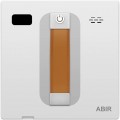 |
|---|---|---|
| Liectroux YW-910 | ABIR WD8 | |
| Outdated Product | Compare prices 1 | |
| TOP sellers | ||
Protection against falls for 20 minutes when disconnected from the network. | Protection against falling when disconnected from the network. | |
| Type | window robot | window robot |
| Power supply | mains | |
| Controls | remote control / smartphone | remote control / smartphone |
Battery | ||
| Battery type | Li-Ion | Li-Ion |
| Battery capacity | 0.65 Ah | 0.65 Ah |
| Autonomy time | 30 min | |
More specs | ||
| Noise level | 65 dB | |
| Dimensions | 7x21.6x21.6 cm | 21.6x21.6x6.2 cm |
| Weight | 1.3 kg | 1.3 kg |
| Added to E-Catalog | july 2025 | july 2024 |



Compare Liectroux YW-910 and ABIR WD8
Price comparison
You may be interested in
My comparisons
ABIR WD8 often compared


Glossary
Power supply
— Network. Connection to a regular household outlet. The advantage of this option is its almost unlimited operating time. On the other hand, the power cord limits mobility and does not allow you to move away from sockets, and in their absence the device becomes useless. In addition, in some cases, the power cord can interfere with operation - for example, it will be clearly unnecessary for a heavy machine with a steering wheel and an operator's seat.
— Battery. Battery-powered devices are extremely mobile: they do not depend on sockets and do not have a wire that limits movement. In addition, the absence of a wire has a positive effect on the overall convenience of work - it “doesn’t fit into your hand.” On the other hand, the continuous operation time of such a device is limited by the battery charge, and the machines themselves are heavier, bulkier and more expensive than similar mains-powered models. However, in some cases, the described advantages have a decisive advantage over the disadvantages: in particular, scrubber-drying robots (see “Type”), as well as heavy professional machines with steering control (see below), are powered by a battery.
— Network/battery. Devices that can operate both from the mains and from a built-in battery. The features of these types of nutrition are described in detail above; and their combination is used quite rarely. In particular, this method of power...supply is provided in some window robots: the device uses a battery as standard, but if it is possible to run a wire, you can connect it to the network, saving battery power.
— Battery. Battery-powered devices are extremely mobile: they do not depend on sockets and do not have a wire that limits movement. In addition, the absence of a wire has a positive effect on the overall convenience of work - it “doesn’t fit into your hand.” On the other hand, the continuous operation time of such a device is limited by the battery charge, and the machines themselves are heavier, bulkier and more expensive than similar mains-powered models. However, in some cases, the described advantages have a decisive advantage over the disadvantages: in particular, scrubber-drying robots (see “Type”), as well as heavy professional machines with steering control (see below), are powered by a battery.
— Network/battery. Devices that can operate both from the mains and from a built-in battery. The features of these types of nutrition are described in detail above; and their combination is used quite rarely. In particular, this method of power...supply is provided in some window robots: the device uses a battery as standard, but if it is possible to run a wire, you can connect it to the network, saving battery power.
Autonomy time
Operating time of a battery-powered cleaning machine on one charge of a standard battery.
This parameter itself is quite approximate: it is most often indicated for standard operating modes and simple conditions. However, the actual autonomy is usually not very different from the stated one; so, based on the stated operating time, it is quite possible to both evaluate the capabilities of different models and compare them with each other.
This parameter itself is quite approximate: it is most often indicated for standard operating modes and simple conditions. However, the actual autonomy is usually not very different from the stated one; so, based on the stated operating time, it is quite possible to both evaluate the capabilities of different models and compare them with each other.
Noise level
The noise level created by the harvesting machine during operation.
Low noise levels are important for the comfort of both the operator and others; the latter is especially true in some specific places such as hospitals or kindergartens. On the other hand, the higher the power, the louder, as a rule, the unit operates and the more difficult it is to reduce this noise to a certain level; despite the fact that in many cases high volume operation is not a particular problem. So you should specifically look for a “quiet” cleaning machine only if a low noise level is more critical for you than high cost and/or reduced power.
When assessing specific loudness values, it is worth considering that the decibel used to indicate the noise level is a non-linear quantity. Therefore, the easiest way is to evaluate specific values using comparative tables. Here's a simplified table for the range that most modern harvesting machines fit into:
55 dB - background noise in an office without special noise sources;
60 dB - loud conversation;
65 dB - city street with average traffic intensity;
70 dB - a conversation between several people in a raised voice.
75 dB – high power vacuum cleaner.
80 dB - traffic noise on a busy street.
Low noise levels are important for the comfort of both the operator and others; the latter is especially true in some specific places such as hospitals or kindergartens. On the other hand, the higher the power, the louder, as a rule, the unit operates and the more difficult it is to reduce this noise to a certain level; despite the fact that in many cases high volume operation is not a particular problem. So you should specifically look for a “quiet” cleaning machine only if a low noise level is more critical for you than high cost and/or reduced power.
When assessing specific loudness values, it is worth considering that the decibel used to indicate the noise level is a non-linear quantity. Therefore, the easiest way is to evaluate specific values using comparative tables. Here's a simplified table for the range that most modern harvesting machines fit into:
55 dB - background noise in an office without special noise sources;
60 dB - loud conversation;
65 dB - city street with average traffic intensity;
70 dB - a conversation between several people in a raised voice.
75 dB – high power vacuum cleaner.
80 dB - traffic noise on a busy street.