
Comparison Husqvarna 545RX vs Oleo-Mac 755 Master
Add to comparison | 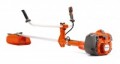 | 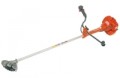 |
|---|---|---|
| Husqvarna 545RX | Oleo-Mac 755 Master | |
from $683.23 up to $965.96 | from $615.96 up to $751.24 | |
| User reviews | ||
| TOP sellers | ||
| Type | grass trimmer | grass trimmer |
| Motor type | petrol | petrol |
Mowing | ||
| Cutting width | 45 cm | 42 cm |
| Trimmer blade width | 30 cm | |
| Cutting system | rotary | rotary |
Trimmer design | ||
| Motor location | top | top |
| Shaft type | straight | straight |
| Handle type | bike handle | bike handle |
| More features | shoulder strap | shoulder strap |
In box | ||
| Nozzles | 2-tooth blade spool of line | spool of line saw blade |
Motor | ||
| ICE type | 2-stroke | 2-stroke |
| Engine size | 46 cm³ | 53 cm³ |
| Motor power | 2.8 hp | 2.8 hp |
| Motor power | 2100 W | 2100 W |
| Fuel tank volume | 0.9 L | 1.5 L |
General | ||
| Deck material | plastic | plastic |
| Noise level | 100 dB | 102 dB |
| Weight | 8.9 kg | 8.5 kg |
| Added to E-Catalog | july 2012 | april 2011 |


Compare Husqvarna 545RX and Oleo-Mac 755 Master
You may be interested in
Husqvarna 545RX often compared


Oleo-Mac 755 Master often compared


Glossary
Cutting width
The capture width provided by the unit, in other words, the width of the strip of land cultivated in one pass. In fact, this size corresponds to the width of the working nozzle.
The large working width is useful when processing large open spaces, as it allows you to finish the job in a small number of passes. On the other hand, for hard-to-reach places, relatively narrow tools are better suited, able to go where a wider unit will not fit. In addition, the width of the tool directly affects the weight and price.
In general, it makes sense to compare in terms of working width only units of the same type (see above). However, it is worth noting here that trimmers do not differ so much from each other — most models capture from 25 to 45 cm (and a wide processing band is provided by moving the nozzle from side to side). As for the other types, in the most modest models the capture width does not exceed 40 cm, in the heaviest and most powerful it can be 56 – 60 cm or even more(in mini tractors — up to 1.5 m).
The large working width is useful when processing large open spaces, as it allows you to finish the job in a small number of passes. On the other hand, for hard-to-reach places, relatively narrow tools are better suited, able to go where a wider unit will not fit. In addition, the width of the tool directly affects the weight and price.
In general, it makes sense to compare in terms of working width only units of the same type (see above). However, it is worth noting here that trimmers do not differ so much from each other — most models capture from 25 to 45 cm (and a wide processing band is provided by moving the nozzle from side to side). As for the other types, in the most modest models the capture width does not exceed 40 cm, in the heaviest and most powerful it can be 56 – 60 cm or even more(in mini tractors — up to 1.5 m).
Trimmer blade width
The width (diameter) of the trimmer knife characterizes the size of the paddle knife (or saw blade). Such a nozzle has a smaller capture width than a fishing line, however, it allows you to mow more dense thickets, including shrubs.
Nozzles
— Blade knife. A knife in the form of a pair of blades, rotating around a vertical axis in the manner of propeller blades. Two blades are the most popular, almost standard option for rotary lawn mowers (see “Cutting system”). Note that in the case of trimmers, using a knife allows you to achieve higher performance and cope better with thick grass than using a reel with fishing line. On the other hand, the blades do not tolerate contact with stones and other hard objects very well; in case of such troubles, various tricks may be provided (for example, automatic engine brake).
— Spindle knife. Attachments used in spindle-type lawn mowers. For more information about such units, see “Cutting system”; here we would like to remind you that spindle blades are inferior to blade blades in terms of productivity and efficiency in thick grass, but they provide a cleaner cut, which allows you to give the lawn the most neat appearance possible. So this option is well suited for regularly trimming relatively sparse, well-groomed vegetation.
- Reel with fishing line. Most often used in trimmers (see “Type”). According to the general principle of operation, it is similar to a blade knife (see above), however, the working tool in this case is not blades, but pieces of thick fishing line rotating at high speed. The main advantage of a fishing line over a bladed knife is it...s almost complete insensitivity to collisions with stones and other hard objects: upon impact, such a “blade” will simply bend and literally immediately straighten due to centrifugal force. True, such attachments cope somewhat worse with thick stems, but in practice everything depends on the thickness of the fishing line (see above) and the speed of its rotation.
— Cultivator. An attachment designed to loosen the soil. Externally, it is a set of gears mounted on a horizontal axis with teeth of a specific curved shape. Due to the rotation of these wheels, loosening is carried out. Combisystems are mainly equipped with such attachments (see “Type”). At the same time, the width of the cultivator is usually small; it is poorly suited for full-fledged garden work, but it can be useful when cultivating a small flower bed or several beds.
— Saw blade. Attachment for cutting relatively thick woody stems (for example, bushes or small tree branches). Installed mainly on trimmers (see “Type”). Externally, this attachment is very similar to the working element of a circular saw: it uses a rotating rim with characteristic teeth along the edges. The disc may have holes to reduce weight.
— Scissor mower. In this case, we mean a special attachment, most often used in mowers (see “Type”). This attachment has the appearance of a characteristic horizontal “comb” with two rows of teeth moving relative to each other. Its design is described in more detail in the paragraph “Cutting system - Scissor”, but here we note that trimmer-mowers are indispensable when working with dense vegetation and thick stems; they can easily cope with thickets that are too tough for other attachments.
— Brush cutter. As a rule, the brush cutter attachment is used in trimmers (see “Type”). It is a long blade with teeth for trimming and trimming bushes or hedges, and trimming small tree branches.
— Without attachments. Absence of any attachments in the standard configuration of the lawn mower. It is assumed that the customer will purchase them separately for specific needs.
— Spindle knife. Attachments used in spindle-type lawn mowers. For more information about such units, see “Cutting system”; here we would like to remind you that spindle blades are inferior to blade blades in terms of productivity and efficiency in thick grass, but they provide a cleaner cut, which allows you to give the lawn the most neat appearance possible. So this option is well suited for regularly trimming relatively sparse, well-groomed vegetation.
- Reel with fishing line. Most often used in trimmers (see “Type”). According to the general principle of operation, it is similar to a blade knife (see above), however, the working tool in this case is not blades, but pieces of thick fishing line rotating at high speed. The main advantage of a fishing line over a bladed knife is it...s almost complete insensitivity to collisions with stones and other hard objects: upon impact, such a “blade” will simply bend and literally immediately straighten due to centrifugal force. True, such attachments cope somewhat worse with thick stems, but in practice everything depends on the thickness of the fishing line (see above) and the speed of its rotation.
— Cultivator. An attachment designed to loosen the soil. Externally, it is a set of gears mounted on a horizontal axis with teeth of a specific curved shape. Due to the rotation of these wheels, loosening is carried out. Combisystems are mainly equipped with such attachments (see “Type”). At the same time, the width of the cultivator is usually small; it is poorly suited for full-fledged garden work, but it can be useful when cultivating a small flower bed or several beds.
— Saw blade. Attachment for cutting relatively thick woody stems (for example, bushes or small tree branches). Installed mainly on trimmers (see “Type”). Externally, this attachment is very similar to the working element of a circular saw: it uses a rotating rim with characteristic teeth along the edges. The disc may have holes to reduce weight.
— Scissor mower. In this case, we mean a special attachment, most often used in mowers (see “Type”). This attachment has the appearance of a characteristic horizontal “comb” with two rows of teeth moving relative to each other. Its design is described in more detail in the paragraph “Cutting system - Scissor”, but here we note that trimmer-mowers are indispensable when working with dense vegetation and thick stems; they can easily cope with thickets that are too tough for other attachments.
— Brush cutter. As a rule, the brush cutter attachment is used in trimmers (see “Type”). It is a long blade with teeth for trimming and trimming bushes or hedges, and trimming small tree branches.
— Without attachments. Absence of any attachments in the standard configuration of the lawn mower. It is assumed that the customer will purchase them separately for specific needs.
Engine size
The size of the engine installed in the petrol or diesel model (see "Engine type"). Power directly depends on this indicator, however, only engines of the same type can be compared by volume (see "Type of internal combustion engine"). And even in the same type of units of the same power, the volume can be different. In such cases, note that a larger volume means more fuel consumption, but the engine itself may cost less than a smaller one.
Fuel tank volume
The volume of the fuel tank in a gasoline or diesel mower (see "Engine type").
A large tank allows you to work longer without refueling, but an excessive increase in capacity affects the dimensions and weight of the entire unit. So manufacturers usually select this indicator taking into account the power and fuel consumption of a particular engine, and in general, the volume of the tank is not critical when choosing. However, knowing the tank capacity and fuel consumption (see above), you can estimate how much one refueling will approximately last.
A large tank allows you to work longer without refueling, but an excessive increase in capacity affects the dimensions and weight of the entire unit. So manufacturers usually select this indicator taking into account the power and fuel consumption of a particular engine, and in general, the volume of the tank is not critical when choosing. However, knowing the tank capacity and fuel consumption (see above), you can estimate how much one refueling will approximately last.
Noise level
The level of noise produced by the device during operation. Usually, a certain average indicator is indicated in the characteristics — in the standard mode of operation; however, the actual values usually do not differ much from the claimed ones.
The lower the noise level, the more convenient the unit to use and the less tired the operator. In the case of lawn mowers, this is especially true, since such equipment is quite noisy — even the quietest models (some robots) give out about 47 – 48 dB, which is comparable to talking at an average volume. Note that the decibel is a non-linear quantity, and it is easiest to evaluate the actual loudness using comparative tables. Here is the simplest table for the values found in modern lawn mowers:
— 60 – 65 dB — talking in raised tones at a distance of about 1 m;
70 dB — loud conversation of several people at the same distance;
75 dB — loud laughter at a distance of 1 m;
80 dB — motorcycle engine, medium power vacuum cleaner.
90 dB — loud screams, freight car at a distance of 7 – 10 m;
100 dB — a subway train or a loud car signal at a distance of 5 – 7 m, an industrial workshop;
110 dB — tractor engine at a distance of about 1 m.
In addition to subjective sensations, there are specific sanitary standards that limit the impact of strong noise. So, according to European standards, noise of 85 dB is allowed to be heard without protective equipment for 8 hours, 91 dB — 2 hours, 97...dB — half an hour, and 103 dB — only 7 minutes. So when choosing a unit, you should take into account the duration of work with it — with high noise, you may need protective headphones.
The lower the noise level, the more convenient the unit to use and the less tired the operator. In the case of lawn mowers, this is especially true, since such equipment is quite noisy — even the quietest models (some robots) give out about 47 – 48 dB, which is comparable to talking at an average volume. Note that the decibel is a non-linear quantity, and it is easiest to evaluate the actual loudness using comparative tables. Here is the simplest table for the values found in modern lawn mowers:
— 60 – 65 dB — talking in raised tones at a distance of about 1 m;
70 dB — loud conversation of several people at the same distance;
75 dB — loud laughter at a distance of 1 m;
80 dB — motorcycle engine, medium power vacuum cleaner.
90 dB — loud screams, freight car at a distance of 7 – 10 m;
100 dB — a subway train or a loud car signal at a distance of 5 – 7 m, an industrial workshop;
110 dB — tractor engine at a distance of about 1 m.
In addition to subjective sensations, there are specific sanitary standards that limit the impact of strong noise. So, according to European standards, noise of 85 dB is allowed to be heard without protective equipment for 8 hours, 91 dB — 2 hours, 97...dB — half an hour, and 103 dB — only 7 minutes. So when choosing a unit, you should take into account the duration of work with it — with high noise, you may need protective headphones.