
Comparison Lutian LT3600ES2 vs EnerSol EPG-3000SE
Add to comparison |  | 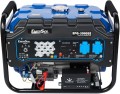 |
|---|---|---|
| Lutian LT3600ES2 | EnerSol EPG-3000SE | |
| Outdated Product | Outdated Product | |
| User reviews | ||
| TOP sellers | ||
Electric starter. Automatic voltage regulator (AVR). Output 12 V. | ||
| Fuel | petrol | petrol |
| Output voltage | 230 B | 230 B |
| Rated power | 3.2 kW | 2.7 kW |
| Max. power | 3.5 kW | 3 kW |
| Alternator | synchronous | synchronous |
| Alternator winding | copper | copper |
Engine | ||
| ICE type | 4-stroke | 4-stroke |
| Motor type | LT168F-I | ES-210G |
| Engine size | 210 cm³ | 210 cm³ |
| Power | 6.5 hp | 7 hp |
| Fuel consumption (75% load) | 1.8 l/h | |
| Fuel tank volume | 15 L | 15 L |
| Fuel level indicator |  | |
| Starter type | electric starter (key) | electric starter (key) |
| Motor cooling | air | air |
Connection (sockets) | ||
| Total number of sockets | 2 | 2 |
| Sockets 230 V | 16 A x2 | 16 A x2 |
| Output 12 V | terminals | terminals |
Features | ||
| Features | automatic voltage regulator (AVR) display hour metre voltmeter | automatic voltage regulator (AVR) display hour metre voltmeter |
General | ||
| Wheels | |  |
| Protection level | IP 23 | IP 23 |
| Noise level | 95 dB | |
| Sound level (7 m) | 75 dB | |
| Dimensions | 615x440x440 mm | |
| Weight | 43 kg | 40.5 kg |
| Added to E-Catalog | february 2025 | january 2023 |


Compare Lutian LT3600ES2 and EnerSol EPG-3000SE
You may be interested in
My comparisons
Lutian LT3600ES2 often compared


EnerSol EPG-3000SE often compared


Glossary
Rated power
The nominal power of a generator is the highest power that the unit can supply without problems for an unlimited period of time. In the “weakest” models, this figure is < 1 kW, in the most powerful ones – 50–100 kW and even more ; and generators with welding capabilities (see below) usually have a nominal power from 1–2 kW to 8–10 kW.
The main rule of choice in this case is as follows: the nominal power must not be lower than the total power consumption of the entire connected load. Otherwise, the generator will simply not be able to produce enough energy, or will work with overloads. However, to determine the minimum required generator power, it is not enough to simply add up the number of watts indicated in the characteristics of each connected device - the calculation method is somewhat more complicated. Firstly, it should be taken into account that only the active power of various equipment is usually indicated in watts; in addition, many AC electrical appliances consume reactive power ("useless" power consumed by coils and capacitors when working with such power). And the actual load on the generator depends on the total power (active plus reactive), indicated in volt-amperes. There are special coefficients and formulas for its calculation.
The second nuance is related to the power su...pply of devices in which the starting power (and, accordingly, the power consumption at the moment of switching on) is significantly higher than the nominal one - these are mainly devices with electric motors such as vacuum cleaners, refrigerators, air conditioners, power tools, etc. You can determine the starting power by multiplying the standard power by the so-called starting coefficient. For equipment of the same type, it is more or less the same - for example, 1.2 - 1.3 for most power tools, 2 for a microwave oven, 3.5 for an air conditioner, etc.; more detailed data can be found in special sources. Starting load characteristics are necessary primarily to assess the required maximum generator power (see below) - however, this power is not always given in the characteristics, often the manufacturer indicates only the nominal power of the unit. In such cases, when calculating for equipment with a starting coefficient of more than 1, it is worth using the starting power, not the nominal power.
Also note that if there are several sockets, the specific division of the total power between them may be different. This point should be clarified separately - in particular, for specific types of sockets (for more details, see "230 V sockets", "400 V sockets").
The main rule of choice in this case is as follows: the nominal power must not be lower than the total power consumption of the entire connected load. Otherwise, the generator will simply not be able to produce enough energy, or will work with overloads. However, to determine the minimum required generator power, it is not enough to simply add up the number of watts indicated in the characteristics of each connected device - the calculation method is somewhat more complicated. Firstly, it should be taken into account that only the active power of various equipment is usually indicated in watts; in addition, many AC electrical appliances consume reactive power ("useless" power consumed by coils and capacitors when working with such power). And the actual load on the generator depends on the total power (active plus reactive), indicated in volt-amperes. There are special coefficients and formulas for its calculation.
The second nuance is related to the power su...pply of devices in which the starting power (and, accordingly, the power consumption at the moment of switching on) is significantly higher than the nominal one - these are mainly devices with electric motors such as vacuum cleaners, refrigerators, air conditioners, power tools, etc. You can determine the starting power by multiplying the standard power by the so-called starting coefficient. For equipment of the same type, it is more or less the same - for example, 1.2 - 1.3 for most power tools, 2 for a microwave oven, 3.5 for an air conditioner, etc.; more detailed data can be found in special sources. Starting load characteristics are necessary primarily to assess the required maximum generator power (see below) - however, this power is not always given in the characteristics, often the manufacturer indicates only the nominal power of the unit. In such cases, when calculating for equipment with a starting coefficient of more than 1, it is worth using the starting power, not the nominal power.
Also note that if there are several sockets, the specific division of the total power between them may be different. This point should be clarified separately - in particular, for specific types of sockets (for more details, see "230 V sockets", "400 V sockets").
Max. power
The maximum power output that the generator can provide.
This power is slightly higher than the nominal (see above), but the maximum performance mode can only be maintained for a very short time - otherwise an overload occurs. Therefore, the practical meaning of this characteristic is mainly to describe the efficiency of the generator when working with increased starting currents.
Let us recall that some types of electrical appliances consume several times more power (and, accordingly, power) at the moment of starting than in the normal mode; this is typical mainly for devices with electric motors, such as power tools, refrigerators, etc. However, increased power for such equipment is needed only for a short time, normal operation is restored in literally a few seconds. And you can estimate the starting characteristics by multiplying the nominal power by the so-called starting coefficient. For equipment of the same type, it is more or less the same (1.2 - 1.3 for most power tools, 2 for a microwave oven, 3.5 for an air conditioner, etc.); more detailed data is available in special sources.
Ideally, the maximum power of the generator should be no less than the total peak power of the connected load - that is, the starting power of equipment with a starting factor greater than 1 plus the rated power of all other equipment. This will minimize the likelihood of overloads.
This power is slightly higher than the nominal (see above), but the maximum performance mode can only be maintained for a very short time - otherwise an overload occurs. Therefore, the practical meaning of this characteristic is mainly to describe the efficiency of the generator when working with increased starting currents.
Let us recall that some types of electrical appliances consume several times more power (and, accordingly, power) at the moment of starting than in the normal mode; this is typical mainly for devices with electric motors, such as power tools, refrigerators, etc. However, increased power for such equipment is needed only for a short time, normal operation is restored in literally a few seconds. And you can estimate the starting characteristics by multiplying the nominal power by the so-called starting coefficient. For equipment of the same type, it is more or less the same (1.2 - 1.3 for most power tools, 2 for a microwave oven, 3.5 for an air conditioner, etc.); more detailed data is available in special sources.
Ideally, the maximum power of the generator should be no less than the total peak power of the connected load - that is, the starting power of equipment with a starting factor greater than 1 plus the rated power of all other equipment. This will minimize the likelihood of overloads.
Motor type
Model name of the engine installed in the generator. Knowing this name, you can, if necessary, find detailed data on the engine and clarify how it meets your requirements. In addition, model data may be needed for some specific tasks, including maintenance and repair.
Note that modern generators are often equipped with branded engines from famous manufacturers: Honda, John Deere, Mitsubishi, Volvo, etc. Such engines are more expensive than similar units from little-known brands, but this is offset by higher quality and/or solid warranty conditions , and in many cases, the ease of finding spare parts and additional documentation (such as manuals for special maintenance and minor repairs).
Note that modern generators are often equipped with branded engines from famous manufacturers: Honda, John Deere, Mitsubishi, Volvo, etc. Such engines are more expensive than similar units from little-known brands, but this is offset by higher quality and/or solid warranty conditions , and in many cases, the ease of finding spare parts and additional documentation (such as manuals for special maintenance and minor repairs).
Power
The operating power of the engine installed in the generator. Traditionally stated in horsepower; 1 HP approximately equal to 735 watts.
First of all, the rated power of the generator directly depends on this indicator (see above): in principle, it cannot be higher than the engine power, moreover, part of the engine power is spent on heat, friction and other losses. And the smaller the difference between these capacities, the higher the efficiency of the generator and the more economical it is. However high efficiency affects the cost, but this difference can pay off with regular use due to fuel savings.
First of all, the rated power of the generator directly depends on this indicator (see above): in principle, it cannot be higher than the engine power, moreover, part of the engine power is spent on heat, friction and other losses. And the smaller the difference between these capacities, the higher the efficiency of the generator and the more economical it is. However high efficiency affects the cost, but this difference can pay off with regular use due to fuel savings.
Fuel consumption (75% load)
Fuel consumption of the generator at 75% load (75% of the nominal power of the power unit). The amount of fuel consumed is indicated for gasoline and diesel models, as well as units on combined fuel (in this case, gasoline consumption is usually implied).
Since the generator's efficiency is not always linear, fuel consumption may vary disproportionately with different loads. In this case, the amount of fuel consumed by the generator when operating with a load of about 75% of the nominal power is given. Knowing the fuel consumption and tank volume, you can roughly estimate how long one fill will last.
Since the generator's efficiency is not always linear, fuel consumption may vary disproportionately with different loads. In this case, the amount of fuel consumed by the generator when operating with a load of about 75% of the nominal power is given. Knowing the fuel consumption and tank volume, you can roughly estimate how long one fill will last.
Wheels
The electric generator has wheels for moving from place to place. Most often, the design provides for a pair of wheels and a pair of parking supports: during working hours, the supports play the role of brakes, and when moving, they need to be raised above the ground and the generator rolled on two wheels; however, there are models on 4 wheels. Anyway, this feature greatly simplifies transportation: it is much easier to roll the unit than to carry it on weight. This is especially true in light of the fact that the weight of a modern generator can exceed 100 kg: several people will be needed to carry such a weight, while wheels often make it possible to manage by one person.
Noise level
The noise level produced by the generator when operating in normal mode. The less noise the unit makes, the more comfortable it is to use, the closer it can be placed to people, but the higher its price, all other things being equal.
It is also worth considering that generators with internal combustion engines are, in principle, quite noisy equipment. Thus, even the "quietest" units produce < 70 dB - this is the volume of a conversation in tones from medium to high. Accordingly, it is recommended to install the device remotely from the place of use. At the same time, we note that the noise level is not directly related to the power: for example, among units of 80 dB and more, there are both heavy and relatively low-power models.
It is also worth considering that generators with internal combustion engines are, in principle, quite noisy equipment. Thus, even the "quietest" units produce < 70 dB - this is the volume of a conversation in tones from medium to high. Accordingly, it is recommended to install the device remotely from the place of use. At the same time, we note that the noise level is not directly related to the power: for example, among units of 80 dB and more, there are both heavy and relatively low-power models.
Sound level (7 m)
Sound pressure level in decibels at a distance of 7 m between the noise source and the ear of the equipment operator. Since people do not work in the immediate vicinity of the generator, the parameter will be useful for estimating the noise level at a distance. For example, current European Union regulations require that the sound power of generating sets with a power of more than 2 kW does not exceed 97 dB — at a distance of 7 m, the noise from the generator engine will correspond to a sound pressure of about 72 dB.
Weight
The total weight of the unit - usually excluding fuel; the weight on full tank can be easily determined knowing the tank capacity.
In general, more powerful generators are inevitably heavier, but models with similar characteristics can differ significantly in weight. When assessing these differences and generally choosing an option based on weight, it is worth considering the specifics of the generator's use. So, if the device is often to be moved from place to place - for example, when used "on the road" - it may be worth paying attention to lighter units that are more convenient to transport. However, it is worth considering that the downside of a lightweight design is often an increased cost or a reduced degree of protection. But for stationary use, you can not pay special attention to this parameter - or even the opposite: choose a heavier (and, as a rule, more advanced and functional) option.
Regarding specific figures, it is worth noting that modern generators are generally quite massive. Thus, a small weight for such equipment is considered not only < 20 kg, but even 20-30 kg ; many units weigh 150-200 kg, or even more, and the weight of stationary industrial models is measured in tons.
In general, more powerful generators are inevitably heavier, but models with similar characteristics can differ significantly in weight. When assessing these differences and generally choosing an option based on weight, it is worth considering the specifics of the generator's use. So, if the device is often to be moved from place to place - for example, when used "on the road" - it may be worth paying attention to lighter units that are more convenient to transport. However, it is worth considering that the downside of a lightweight design is often an increased cost or a reduced degree of protection. But for stationary use, you can not pay special attention to this parameter - or even the opposite: choose a heavier (and, as a rule, more advanced and functional) option.
Regarding specific figures, it is worth noting that modern generators are generally quite massive. Thus, a small weight for such equipment is considered not only < 20 kg, but even 20-30 kg ; many units weigh 150-200 kg, or even more, and the weight of stationary industrial models is measured in tons.