
Comparison Konner&Sohnen Basic KSB 30A vs Konner&Sohnen Basic KS 2800C
Add to comparison | 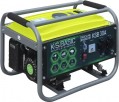 | 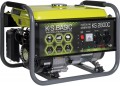 |
|---|---|---|
| Konner&Sohnen Basic KSB 30A | Konner&Sohnen Basic KS 2800C | |
| Outdated Product | Outdated Product | |
| TOP sellers | ||
| Fuel | petrol | petrol |
| Output voltage | 230 B | 230 B |
| Rated power | 2.5 kW | 2.5 kW |
| Max. power | 2.8 kW | 2.8 kW |
| Alternator | synchronous | synchronous |
| Alternator winding | copper | copper |
Engine | ||
| ICE type | 4-stroke | 4-stroke |
| Motor type | KSB 220 | KS-200B |
| Engine size | 210 cm³ | 196 cm³ |
| Power | 7 hp | 6.5 hp |
| Fuel consumption (50% load) | 1.25 l/h | |
| Fuel tank volume | 12 L | 15 L |
| Fuel level indicator |  | |
| Starter type | manual | manual |
| Motor cooling | air | air |
Connection (sockets) | ||
| Total number of sockets | 2 | 2 |
| Sockets 230 V | 16 A x2 | 16 A x2 |
| Output 12 V | cigarette lighter | terminals |
Features | ||
| Features | automatic voltage regulator (AVR) voltmeter | automatic voltage regulator (AVR) voltmeter |
General | ||
| Protection level | IP 23 | IP 23 |
| Noise level | 96 dB | 96 dB |
| Sound level (7 m) | 71 dB | 71 dB |
| Dimensions | 605x440x435 mm | 588x428x435 mm |
| Weight | 36.2 kg | 37.4 kg |
| Added to E-Catalog | december 2022 | february 2018 |


Compare Konner&Sohnen Basic KSB 30A and Basic KS 2800C
You may be interested in
My comparisons
Konner&Sohnen Basic KSB 30A often compared


Konner&Sohnen Basic KS 2800C often compared


Glossary
Motor type
Model name of the engine installed in the generator. Knowing this name, you can, if necessary, find detailed data on the engine and clarify how it meets your requirements. In addition, model data may be needed for some specific tasks, including maintenance and repair.
Note that modern generators are often equipped with branded engines from famous manufacturers: Honda, John Deere, Mitsubishi, Volvo, etc. Such engines are more expensive than similar units from little-known brands, but this is offset by higher quality and/or solid warranty conditions , and in many cases, the ease of finding spare parts and additional documentation (such as manuals for special maintenance and minor repairs).
Note that modern generators are often equipped with branded engines from famous manufacturers: Honda, John Deere, Mitsubishi, Volvo, etc. Such engines are more expensive than similar units from little-known brands, but this is offset by higher quality and/or solid warranty conditions , and in many cases, the ease of finding spare parts and additional documentation (such as manuals for special maintenance and minor repairs).
Engine size
The working volume of the engine in a gasoline or diesel generator (see "Fuel"). Theoretically, more volume usually means more power, but in fact, everything is not so clear. Firstly, the specific power strongly depends on the type of fuel, and in gasoline units, also on the type of internal combustion engine (see above). Secondly, similar engines of the same power can have different volumes, and there is a practical point here: with the same power, a larger engine consumes more fuel, but by itself it can cost less.
Power
The operating power of the engine installed in the generator. Traditionally stated in horsepower; 1 HP approximately equal to 735 watts.
First of all, the rated power of the generator directly depends on this indicator (see above): in principle, it cannot be higher than the engine power, moreover, part of the engine power is spent on heat, friction and other losses. And the smaller the difference between these capacities, the higher the efficiency of the generator and the more economical it is. However high efficiency affects the cost, but this difference can pay off with regular use due to fuel savings.
First of all, the rated power of the generator directly depends on this indicator (see above): in principle, it cannot be higher than the engine power, moreover, part of the engine power is spent on heat, friction and other losses. And the smaller the difference between these capacities, the higher the efficiency of the generator and the more economical it is. However high efficiency affects the cost, but this difference can pay off with regular use due to fuel savings.
Fuel consumption (50% load)
Fuel consumption of a petrol or diesel generator when operating at half power, and for combined models when using petrol (see “Fuel”).
Fuel consumption usually increases with load. However, generator efficiency is not always linear - fuel consumption may vary disproportionately with different loads. In this case, the approximate amount of fuel consumed by the generator when operating at half power (50% of the rated power) is given. Knowing the fuel consumption and tank capacity, you can at least estimate how long one fill-up will last.
Fuel consumption usually increases with load. However, generator efficiency is not always linear - fuel consumption may vary disproportionately with different loads. In this case, the approximate amount of fuel consumed by the generator when operating at half power (50% of the rated power) is given. Knowing the fuel consumption and tank capacity, you can at least estimate how long one fill-up will last.
Fuel tank volume
The volume of the fuel tank installed in the generator.
Knowing the fuel consumption (see above) and the capacity of the tank, you can calculate the operating time on one gas station (if it is not indicated in the specifications). However, a more capacious tank is also more bulky. Therefore, manufacturers choose tanks based on the general level and "voracity" of the generator — in order to provide an acceptable operating time without a significant increase in size and weight. So in general, this parameter is more of a reference than practically significant.
As for the numbers, in low-power models, tanks are installed for 5 – 10 liters, or even less ; in heavy professional equipment, this figure can exceed 50 liters.
Knowing the fuel consumption (see above) and the capacity of the tank, you can calculate the operating time on one gas station (if it is not indicated in the specifications). However, a more capacious tank is also more bulky. Therefore, manufacturers choose tanks based on the general level and "voracity" of the generator — in order to provide an acceptable operating time without a significant increase in size and weight. So in general, this parameter is more of a reference than practically significant.
As for the numbers, in low-power models, tanks are installed for 5 – 10 liters, or even less ; in heavy professional equipment, this figure can exceed 50 liters.
Output 12 V
Existence in the generator of an output with a direct current and voltage of 12 V. The main function of this output is to charge car batteries, as well as power devices originally intended for cars (recall, 12 V is the standard voltage of on-board networks in cars).
The following types of 12-volt outputs are found in generators:
- Terminals. Terminals are used to connect wires directly without using any plugs. This connection is the most reliable.
- Socket. Socket outlet for a plug with two flat pins, designed to connect 12-volt consumers. Holes in sockets come in different layouts, which you need to pay attention to.
- Cigarette lighter. The so-called "car socket", which in many cars is combined with a cigarette lighter socket (hence the name). Such connectors are used to power various automotive devices and accessories.
The following types of 12-volt outputs are found in generators:
- Terminals. Terminals are used to connect wires directly without using any plugs. This connection is the most reliable.
- Socket. Socket outlet for a plug with two flat pins, designed to connect 12-volt consumers. Holes in sockets come in different layouts, which you need to pay attention to.
- Cigarette lighter. The so-called "car socket", which in many cars is combined with a cigarette lighter socket (hence the name). Such connectors are used to power various automotive devices and accessories.
Weight
The total weight of the unit - usually excluding fuel; the weight on full tank can be easily determined knowing the tank capacity.
In general, more powerful generators are inevitably heavier, but models with similar characteristics can differ significantly in weight. When assessing these differences and generally choosing an option based on weight, it is worth considering the specifics of the generator's use. So, if the device is often to be moved from place to place - for example, when used "on the road" - it may be worth paying attention to lighter units that are more convenient to transport. However, it is worth considering that the downside of a lightweight design is often an increased cost or a reduced degree of protection. But for stationary use, you can not pay special attention to this parameter - or even the opposite: choose a heavier (and, as a rule, more advanced and functional) option.
Regarding specific figures, it is worth noting that modern generators are generally quite massive. Thus, a small weight for such equipment is considered not only < 20 kg, but even 20-30 kg ; many units weigh 150-200 kg, or even more, and the weight of stationary industrial models is measured in tons.
In general, more powerful generators are inevitably heavier, but models with similar characteristics can differ significantly in weight. When assessing these differences and generally choosing an option based on weight, it is worth considering the specifics of the generator's use. So, if the device is often to be moved from place to place - for example, when used "on the road" - it may be worth paying attention to lighter units that are more convenient to transport. However, it is worth considering that the downside of a lightweight design is often an increased cost or a reduced degree of protection. But for stationary use, you can not pay special attention to this parameter - or even the opposite: choose a heavier (and, as a rule, more advanced and functional) option.
Regarding specific figures, it is worth noting that modern generators are generally quite massive. Thus, a small weight for such equipment is considered not only < 20 kg, but even 20-30 kg ; many units weigh 150-200 kg, or even more, and the weight of stationary industrial models is measured in tons.